A Theologian Evaluates Intelligent Design: Part 1 of 3
I’ve been thinking and reading about the Intelligent Design (ID) movement and its ideas for some time. I’m ready to put my evaluation in writing.
My varied roles and activities in the science-and-religion dialogue allows me to view ID from multiple perspectives. After reading widely, attending dozens of conference over the years, and enjoying multiple in-depth conversations, I can now report to having mixed feelings about Intelligent Design ideas and the movement.
Given the volatile rhetoric in the debates of ID, a person with mixed feelings might feel like a lone duck. Most people think Intelligent Design is either the most promising development in recent years or the most depressing. For most, it’s ID: Love it or Hate it.
I’ve decided to write a three-part blog series on ID. A clumsy by descriptive title for the series might be, “Five Things I Like about ID, Five Things I Don’t, and One Theological Issue that Should Carry More Weight in the Debate.” (The title’s length would have been perfect in the eighteenth century!)
I know my title will likely please few people. But it reflects my mixed views on Intelligent Design. And given my commitment to evaluate important issues as fairly as possible, it probably stands to reason that I see assets and liabilities in Intelligent Design.
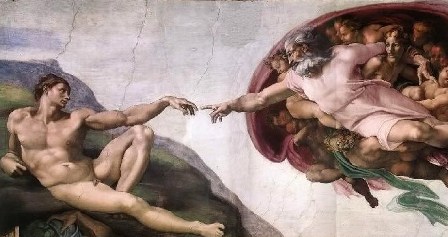 The first part of my series will explore five things I like about ID. Here they are:
First, most ID folk are eager to speak about the world as, in some sense, God’s creation. I share this eagerness. After all, I believe God created the heavens, earth, and all living creatures.
I admit to preferring the historic Christian language of “creating” over “designing.” But I share the ID view that the world is God’s handiwork. In this sense, I am a creationist.
Second, many ID proponents are angry that some prominent scientists draw anti-God or no-God conclusions from science. I join ID advocates who criticize the argument that science in general or evolution in particular negates grounds for believing in God. I stand alongside ID supporters who reject atheistic fundamentalism.
Some ID folk are unsatisfied with the modern tendency to compartmentalize science and theology. They rightly recognize that we can’t keep science and religion entirely separate. The human quest to speculate about how all life fits together – implicit in both theology and science — eventually shows the folly of the view that we can neatly separate the two.
Just as parents can keep quarreling children separate in the minivan for only a short time, we cannot keep science and theology separate for long. Harmony requires interconnected relations.
The dissatisfaction with compartmentalization means that ID sympathizers often bring issues of science to bear on Christian faith. Although I don’t always agree that the particular ideas being proposed are compatible with or evidence for the truth of Christian theology, I appreciate their motive. I seek to unite scientific knowledge and vital Christian piety.
Fourth, I appreciate the ID movement, because it doesn’t rely on a literal reading of Genesis. It doesn’t require a person to regard the Bible as a science book. The vast majority of biblical scholars and theologians – conservative, moderate, or liberal – urge us NOT to interpret biblical creation stories as literally supportive of the details of contemporary science.
ID folk don’t ask their listeners to agree with the Bible, for instance, when it says that the mustard seed is the smallest of all seeds (Mt. 13:31). While this statement may have reflected the truth of what passed as science in biblical times, contemporary people know that many seeds are much smaller.
Not requiring us to regard the Bible as a book of science allows us to affirm the classic Christian view that the Bible’s primary purpose is to encourage us to find salvation. ID permits one to affirm the old saying that the Bible tells us how to go to heaven, not how the heavens go. I like to say the Bible tells us how to find abundant life, not the science of how life became abundant.
Fifth, I agree with the ID affirmation that life is not entirely the result of random mutations and pure chance. Of course, the vast majority of scientists reject the view that evolution involves completely random mutations and pure chance.
It remains an open question in the minds of many whether evolution has ultimate purpose, however. I join ID supporters in seeking overall explanations for life that emphasize ultimate purpose and include an essential role for a creative and loving God.
So, that’s what I like about Intelligent Design. In a future post, I’ll tell you what I don’t like.

Newsletter
For a 200-page book of Thomas Jay Oord's best-selling writings and to receive his newsletter, add your email address...
Comments
So, in other words, what you like about ID are facters that are not unique to it, but shared by numerous other theological and scientific approaches. That’s a very extrinsic way of liking it. It’s like my saying I like the Dallas Maverics because they’re not the Lakers. True. But I don’t really like basketball at all.
I have to agree with all of your positive assessments of ID. I was a radical atheistic fundamentalist (neo-Atheist, is that the term now?) as well as a molecular cell biologist. I once viewed science and spirituality as mutually exclusive. This was a stumbling block to my coming to Christ for a long time. Because the literalists are so very vocal I thought I had to reject reason and science to be a Christian. When I did convert I found I was wrong and most Christians are not of the neo-fundamentalist type. However, I ignored creation for a long time. I could not abandon what I know to be an accurate description of the material world for mythology (or the party line). But then As I came to realize that God IS the Creator, created and continues to create, there is nothing in that fact that negates what science has learned. Likewise, there is nothing in my reading of Genesis that negates what science has learned. A big help, for me, in this was Michael Lodahl’s book, “The Story of God”.
I look forward to the next installment of this series.
Blessed are the peacemakers…
I appreciate how how you are approaching the topic.
And I’m guessing that the theological concept you will speak of is….love?
Good points. Amen to them all. I eagerly await the next post (with bated breath). I’m hope you deal with your theory of knowledge and what consititues valid inference. Also, I hope that you don’t engage in any dimissal of ID for the perceived motives of its advocates. That wouldn’t be relevant. I can have base motives and still be technically correct. (Whether for false motives or true, Christ is preached.) All truth is God’s truth even if the devil says it.
I am curious on what to expect with the five “don’t like’s”. I also agree with your “likes”. I always feel drawn to the tension in keeping science and creation and it’s Source in tune. Still I’m not really so worried about it all. Even if I don’t understand it all. It’s okay, for there is the Love and Hope that keep me going, not the need to know it all.
Well, can’t say I noticed much here other than basic affirmations… I assume you will get to it in the next two…
I am glad that you made reference to this article on Facebook, or I might have missed it. I have spent most of my time in this discussion sandwiched between fundamentalists, both atheistic and christian. After reading your post and thoughful responses I am refreshed by the dialogue.
Three things in particular:
“I hope that you don’t engage in any dimissal of ID for the perceived motives of its advocates.” -Christopher Wiley
“…literalists are so very vocal I thought I had to reject reason and science to be a Christian.” -Paul DeBauf
“I seek to unite scientific knowledge and vital Christian piety.” -Thomas Oord
I feel like I am sitting in on a recovery group for christian thinkers.
It is nice to have a safe place to talk!
I love what you say about the combination of science and theology. Being a science major and learning more about such amazing discoveries, such as DNA, this seems to me to say how can this structure alone, not include science and theology. This structure was eventually discovered through science, but it seems that only some intelligence could possibly be behind this.
Thanks for all of these helpful responses!
You used the example from the Bible that states the mustard seed as the smallest seed, and you said that was incorrect. You are using this example to show that literal interpretation of the Bible can be disproved by scientific findings. I know that it is proven that there are smaller seeds than the mustard seed; but I struggle with applying this concept of science discrediting the scriptures to other parts of the Bible. Science could prove a lot of things that I couldn’t accept true because of my faith. For instance, if science “proves” man came from ape, how can I throw out the literal story of God creating Adam?
Even though I must admit I am not a fan of ID, I really liked this first installment regarding ID because is revealed to me areas of common ground between my perspective and that of ID. However, I would suggest to the author (regarding his fifth point) to be more rigorous in his use of language regarding chance, randomness, and purpose. There is an excellent book written by a mathematician and statistician entitle God, Chance and Purpose. The author is David Bartholomew. It changed my mind about the concept of “chance” and convinced me that science’s emphasis on chance in such areas as Quantum Theory is not at odds with God’s purposeful action. I hope that after you read this book that you will not use the term “pure chance” any longer.
I, too, like intelligent design, though on slightly different grounds. I am neither an atheist, nor do I believe in a personal god or in classical deism. I feel that ID (broadly defined) does, however, face up to serious problems in the neo-darwinian model (such as the presence of seeming order and the contrasting presumption of chaotic determinism yielding biological order). I think, however, that the arguments for ID are vague to the point that there is no one theory that we flatly call ID. Stuart Kauffman and his philosophical ilk attribute life to a self-ordering process in the universe, where someone like Tim Anstine accepts ID from a (tacit) cartesian ontology, where God orders from the outside. Kauffman appeals to me a little more, since the other model mentioned seems less epistemically amenable with the fields that I study.
I like the ID perspective that we should not look at the Bible as a science book. I know too many folks who treat the Bible as a science book and want to tear it apart when they find any stories that don’t line up word for word, or when they find examples of things like the mustard seed. We have to view the Bible as the Word of God revealing God’s will and showing us what is necessary for salvation. If it is viewed in a scientific way, it won’t have the same power.
This is the start of a very interesting topic for me. I really like what you said in this sentence “I like to say the Bible tells us how to find abundant life, not the science of how life became abundant.”
There are times when we get so tunnel visioned we do not realize just how big our God is. That is sad. I am looking forward to reading the next blog on this topic.
There are number of theories and ideas to think about in the world today. Evaluating many of these various ideas are both important and necessary as individuals live out their lives. Thomas Oord has taken the time study and share his thoughts regarding Intelligent Design. It would be my hope that Christians evaluate not only his thoughts and the thoughts of various scholars, but also take the time to evaluate Intelligent Design through a Biblical viewpoint also known as a Biblical world view. Christians are better equipped to make important decisions regarding Intelligent Design as we view them with an understanding of God and His Holy Word, affectionately known as the Bible.
I appreciate the first five points discussed in this blog. I agree that we should talk about the world in a sense that God created it and had a part in its development. In this way, I agree with ID. I also like the fact that, as you explained, ID works to pair science and religion together in unity instead of compartmentalizing these different kinds of thoughts. I’m interested and excited to read the next several parts on this blog topic.
I actually like the concept of Intelligent Design. I believe that God did have some sort of design to his creation. I agree with point four and five. Point four states that Intelligent Design does not rely on any literature like the Bible, or more specific, the literal meaning of Genesis. To me, this means that God did have a method to his madness of his creation . The fifth point said that creation does not rely on evolution and pure chance completely. Like I said before, I believe God had a design when He made His creation. We have similar DNA to animals because we are all children of God, we are all His creation. But yes I still believe in some aspects of Theistic Evolution. My beliefs are all over the place….
Intelligent design definitely identifies certain aspects of theology that are important. A more allegorical approach to Genesis, and allowing God to be more than a literal creation story has offered. How if does offer some very important questions on how science should be done, and how religion and science are allowed to interact.
I really appreciated this blog post! I really tend to consider myself a world class pacifist, and therefore I really appreciated that you found a way to reconcile pieces of ID with evolution. You are absolutely right in knowing that there is a piece of everything that can be taken as good from each belief. I thought Timpe’s interpretation of your passage very interesting, because while maybe your positive points weren’t really 100% the meat and potatoes, I think that ID people questioning the exclusivity and the literal readings are incredibly debated issues!
While most ID folks are eager to show that God is the creator, they claim that ID is not a religious theory. I feel that ID has some valid points, if it didn’t it wouldn’t have this much discussion and debate. At the same time, it seems to more of a theory pieced together to join people who don’t agree with Darwinism together; more of a way to challenge evolution by natural selection than a theory in itself.
I respectfully disagree with my class mate. I do not think that science and religion work together in ID. I think that while many of the ID fellows would disagree with me all of the time I have spent working on my ID presentation showed me just how much division there was amongst the significant figures in The ID movement. I think that they need to agree on just exactly what their theory is because it looks like to me and many other creationists that the ID theory is embarrassed of their own beliefs, if they believe personally that god is the creator then why do they not admit it.?
Intelligent design is a curious topic for me. As I agree that God did create each and every one of us, I am also inclined to believe that he started creation and through the act of free will being given, and as such certain aspects of life have devolved on their own. Beyond this I agree greatly with point four, in that we are guided into salvation through the bible, not be lectured on each and every particular.
My current beliefs of origin theories are most closely associated with ID, so I am interested to see what your thoughts are on it. I don’t agree with everything about it either, most specifically that it can lead to a God of the Gaps mentality, but I agree with the points you raised here. Sometimes it seems that evolution/creationism are built up to be two extremes- one excludes God and the other excludes science- and this is frustrating for Christians such as myself who recognize that Biblical accounts aren’t completely scientifically accurate, but also believe that God created the world, in whatever method he chose.
I was actually expecting something about how ID has implications for theology or vice versa, i.e. some kind of engagement of ID’s content with connections, if any to theological ideas. Instead, most of this post is about people and what they are saying – ID proponents, quarreling children, ID sympathizers, ID folk, ID folk, and oh – ID folk.
Oh well…I guess I’ll look somwhere else
Ok so I am not sure that we are supposed to post to each of these or not but. I find a great deal of value in everything Dr Oord Just said. I am very much in agreement that there is need for us to accept that science and the Bible go hand in hand. Meaning that because the true author of science is God therefore how can you dare to separate them.