God Can’t!—and the Bible Says So
I sometimes hear the argument that we should not speculate about the attributes of God’s nature. Overall, I don’t find this argument convincing.
We Know in Part
A couple of the underlying assumptions of the argument seem on target, however. One assumption is that humans often overreach in their claims about who God is. Finite minds should not pretend to grasp entirely the essence of an infinite God. I agree with this. There is always a role for mystery in theology. Folks just don’t always agree about what that role is.
This assumption to the argument reminds us “we know in part” (1 Cor. 13:12). We should remain humble in our words about God. After all, we occasionally realize in hindsight that our previous claims are not as helpful or accurate as we once thought.
The second assumption against speculating about the attributes of God’s nature is justified by the inadequacies of the ancient Christian tradition. This assumption says that many Christians today identify ancient theological claims they no longer find plausible.
For instance, a good number of theologians today think the ancient Christian claim that God does not suffer (i.e., is not affected by creatures) is faulty. Although this claim was common among ancient theologians, the Bible suggests otherwise. Sometimes abstract speculation about God’s nature fueled ancient theological claims that most Christians now believe erroneous.
As another example, take the issue of God’s power and creaturely freedom. Many if not most ancient theologians implicitly or explicitly denied that creatures are free. Many if not most contemporary theologians argue otherwise.
Given these concerns, some Christians today say we should resist making any claims whatsoever about God’s nature. We should restrict ourselves instead, they say, to descriptive comments about the way God has acted in history.
Pondering God’s Nature
I disagree with the view that we should refrain from making claims about God’s nature. Instead, I think we ought to offer humble hypotheses about what we believe God’s nature is like. In humility, we ought always be ready to modify our views. “We know in part,” not in full.
 My primary argument for why we are justified in speculating about God’s nature comes from the Bible. Biblical authors OFTEN make statements about God’s nature or attributes. They don’t just describe God’s actions. Here are a few:
“God is love” (I Jn 4:16). “God is spirit…” (Jn. 4:24). “The Lord our God is holy” (Ps. 99:9).
“The Lord is one” (Deut. 6:4). “God … knows everything” (1 Jn. 3:20). “God is just” (2 Thess. 1:6). “God is not unjust” (Heb. 6:10).
In God’s nature “there is no change or shadow of alteration” (James 1:17). “God is not a God of disorder but of peace” (1 Cor. 14:33).
“Since the creation of the world, God’s invisible qualities—his eternal power and divine nature—have been clearly seen, being understood from what has been made, so that men are without excuse” (Rom. 1:20)
Jesus Reveals God
The last biblical passage I cite is especially powerful. Paul claims our observations of the world – not just the Bible – can tell us something about God’s invisible qualities and divine nature.
Most Christians also believe that Jesus Christ reveals important information about God’s nature. In part, this belief fuels Christians to claim that Jesus is fully human and fully divine. The Bible witnesses to the revelation of God’s nature through the life of Jesus.
Here are two passages from the many I could quote to support the idea that Jesus reveals God’s nature:
“In the beginning was the Word, and the Word was with God, and the Word was God” (Jn 1:1). The Word “became flesh and dwelt among us” (John 1:14).
“We know also that the Son of God has come and has given us understanding, so that we may know him who is true. And we are in him who is true—even in his Son Jesus Christ. He is the true God and eternal life” (1 Jn. 5:20).
Does God’s Nature Constrain God’s Actions?
I mention the issue of speculating about God’s nature to get to a question I’ve been asking for some time: Is there something about God’s nature that makes it impossible for God to act in certain ways?
To put it succinctly: Should we say God CAN’T do some things?
A number of theologians are comfortable saying God voluntarily chooses not to act in certain ways. God voluntarily self-limits, creates space for creation, and gives creatures freedom, say theologians as influential as Jurgen Moltmann and John Polkinghorne. This limitation is based on God’s free decision.
Can’t vs. Won’t
Instead of wondering whether God could or would do something, however, I’m wondering if God essentially CAN’T do some things. There’s a big difference between “can’t” and “won’t.” I’m asking the can’t question.
The distinction between “God can’t” and “God won’t” is especially important for accounting for God’s action or inaction to prevent genuine evil. I try to account for this in light of the genuine evil caused by pain and suffering in our world. The recent Haiti earthquake and the million or more people negatively affected brought the problem of evil to the fore of my mind again.
If God won’t prevent evil even though God could, we’re left with the same essential questions about evil. But if God can’t prevent the evil, a completely new way of thinking emerges.
The Bible Says God Can’t Do Some Things
For some people, of course, merely asking the question, “Should we say God CAN’T do some things,” is blasphemous. For them, the Bible clearly indicates that God can do all things.
A few passages – but not many – explicitly support the view that God can do anything. The most well known is probably when Jesus says, “with God all things are possible” (Mt. 19:26 and elsewhere). In this passage (and the other gospels reporting the same conversation), Jesus seems to be saying that offering salvation is always possible for God. That would be different that saying literally nothing is impossible for God to do.
There are passages in the Bible that specifically say God CAN’T do some things. Notice: these passages aren’t saying God voluntarily chooses not to do some things. They say God simply cannot do them. Here are four biblical verses as illustrations:
“It is impossible for God to lie” (Heb. 6:18). See also Titus 1:2.
“God cannot be tempted by evil” (Js. 1:12).
“If we are faithless, [God] remains faithful — for he cannot deny himself” (2 Tim. 2:13).
I personally think the statement in the last of these passages — God cannot deny himself — covers the others. Paul seems to be saying that God’s own nature places limits on what God can do. God must be God, and God cannot be otherwise.
We must come to terms with the fact that the Bible says God can’t do some things. Christians like me who privilege the Bible on theological matters can’t ignore statements that seem to tell us something about God’s nature and God’s inherent limitations.
Admitting that God is Limited
If we think about it a bit, however, these limitations based on God’s nature aren’t that big a deal. They shouldn’t shock us, even if we haven’t thought much about it previously.
Does it diminish our view of God, for instance, to admit that God can’t lie? I doubt it. And I doubt our view of God is diminished if we consider other attributes we typically think apply to God.
For instance, I doubt many of us worry that God can’t voluntarily decide to be 671 instead of triune. Most Christians assume that trinity is part of what it means to be God. (By the way, if to be three is to be triune, what’s the word for 671?!)
Or, for another instance, we probably don’t think it’s a significant limitation that God must be omnipresent rather than confined to one place or another. And we probably don’t worry about God being limited to leading an everlasting life instead of being able to choose to have a beginning or end.
Upon reflection, the fact that God can’t do or be some things doesn’t seem so bad after all.
God Must Love
One of the most important biblical statements about God’s nature is that God’s eternal and unchanging nature includes steadfast love. God cannot not love, to use the double negative.
Here’s where I wonder if thinking about God’s nature as love helps with the problem of evil. Here’s the love theo-logic I’m proposing: perhaps we are justified in speculating that part of what it means for God to love others is that God never controls others entirely. To put it positively, God’s love always involves giving freedom and/or agency to creatures. Because God’s nature is love, God cannot do otherwise.
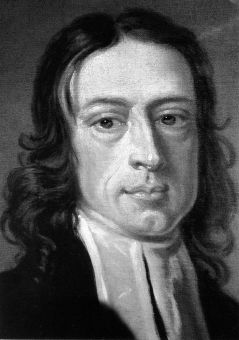 I was reading the works of John Wesley the other day. I came across a line of argumentation from him that supports my view of God’s nature making God incapable of controlling others entirely. Wesley writes, “were human liberty taken away, men would be as incapable of virtue as stones. Therefore (with reverence be it spoken) the Almighty himself cannot do this thing. He cannot thus contradict himself or undo what he has done.”
God is Powerful but Not Controlling
If God’s loving nature prevents God from controlling others entirely, we might have to rethink how we understand God’s mighty acts recorded in Scripture and evident in our contemporary lives. We don’t have to reject that God acts in mighty and miraculous ways. God still acts providentially and miraculously. But we might need to think of God’s acts as not involving the entire control of others.
Admittedly, looking at God’s power through the lens of God’s love and not total control is new to some people. But I know of nothing in the Bible to suggest that thinking in this way does injustice to the overall biblical witness. After all, most folk think God always acts lovingly – even when biblical writers report God being angry with sinners.
I don’t have it all figured out. I see through a glass darkly. And I admit there are a few biblical passages that aren’t easily explained by the idea that God always acts loving. They are the exceptions.
But I am trying to propose a biblically supported view of God’s nature that helps us make sense of why God doesn’t prevent genuine evil. God can’t prevent genuine evil, because God’s nature of love always gives freedom and/or agency to others.
My speculation is based upon the biblical witness that God can’t do some things. I have the Bible as my primary resource. I affirm with the Bible that God’s inabilities to do some things come from the truth that God “cannot deny himself” (2 Tim. 2:13).
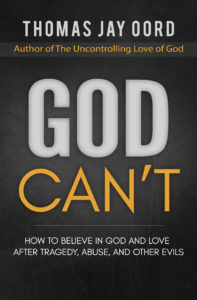
If you’d like to read more, check out God Can’t: How to Believe in God and Love after Tragedy, Abuse, and Other Evils.
John Wesley, “On Divine Providence,” Sermon 67, The Works of John Wesley, vol. 2 (Nashville, Tenn.: Abingdon, 1985) paragraph 15.

Newsletter
For a 200-page book of Thomas Jay Oord's best-selling writings and to receive his newsletter, add your email address...
Comments
On a tangential thought . . . if “God cannot be tempted by evil” as James submits, what do we do with the God-Man who was tempted in the wilderness of his 40-day fast? Was that not God? Were his temptations not of evil? Was he not truly tempted?
I am convinced that Jesus, of one being with the Father, was in fact tempted by evil to do evil (perhaps this is a stretch of the term, “evil”? Surely he was tempted to go against the “will of the Father.”).
I also wonder then, was it impossible for Jesus to sin? While among us would it be true to say, “Jesus CAN”T sin,” because that is outside his nature? Is Jesus an exception to the “God rule”?
I don’t necessarily disagree with your argument, but I am concerned about the implications it has regarding God in Christ Jesus.
You write that, “God can’t prevent genuine evil…” What difference would it make if you were to say, “God doesn’t prevent genuine evil”? To me it does not appear that your argument would be interfered with in any meaningful way.
In addition, how do you define “genuine evil”?
“Many if not most ancient theologians implicitly or explicitly denied that creatures are free.”
Who? I’m working on an article on free will skepticism, and would like to know who you are thinking of here.
Tom,
I agree that God can’t do certain things, and that he cannot entirely control others. But like a prison warden who cannot entirely control his prisoners, he definitely can avoid them causing harm in society. In fact, that is part of the very purpose of the prison. God doesn’t, however (yet). I’m still left with the question why.
Tom,
Very nicely stated. I make a similar argument in my thesis that creation (I know we disagree on the nature of this) was a risk and act of faith for God because once God created God would never be able to “uncreate.” That is, God would forever be different by God’s act of creation. God would for ever be a creator and unable to ever erase this fact. I also agree that God had no choice but to create humans to be free. God could have created a world full of nonrelational objects and creatures but to create a being in God’s image that was relational meant that God could not do otherwise than create them to be free. In other words, I don’t speak about the “gift” of free will but the necessity of it.
All this to say, very nicely said and I think I will share this with my class…assuming this is alright with you.
Thanks for this thought provoking post.
I think Bart agrees with you!
http://www.recycleyourfaith.com/2010/02/08/god-is-not-in-control/
It is interesting that in I Cor. 13 Paul doesn’t simply tell us what love does, but what it does not do. Because God is love, there must be things He doesn’t or can’t do. Open Theists have insisted that creaturely freedom is a prerquisite for genunine love and relationship. Is this true of God? Does he choose to love us, or does he love us because his nature constrains Him to? Can he not love us? If his nature constrains him to love us, why couldn’t God have made our nature so we are constrained to love and obey him? Or must we ascribe to God the freedom to not love us? I fear I see through a glass even more darkly.
Thanks for all your hard work, Tom. I agree with Kevin’s bewilderment, though. (I’m guessing Timpe.) What is striking to me is just how adamantly human freedom is affirmed and protected in early Christian theological writings, from Justin Martyr to Irenaeus to Athanasius to the Cappadocians, and many others. So I think you have more allies among the early theologians than you’re suggesting. And that’s a good thing!
A very interesting topic. From a more philosophical perspective is a paper by Phillip Clayton on “Can there be Theology after Darwin”, Prof Clayton has some interesting comments about what God can and cannot do. However, he does not ignore the Bible entirely. He relates his view to the ancient hymn found in Phil. 2 to present a kenotic theology. The apophatic theologian from Harvard, Gordon Kaufman has some interestint ideas about the nature of God also. I think Kaufman’s books “In the Beginning…Creativity” and “Jesus and Creativity” are very readable
Dr. Oord, I love the tone of this piece and of the logical progression you take us through. I also appreciate your use of Scripture and your effort to acknowledge the necessarily humble attitude that any theory about God’s nature must be accompanied with.
However, I think I’d like to offer that God’s decision not to intervene in a “won’t” sense can be just as powerful as a God “can’t” understanding. I find this especially poignant in light of the idea of God’s active suffering. What could it mean if God is actively protecting human free will by refusing to interact with us in a way that jeopardizes it? How much more might God be suffering, especially when it could be theoretically in God’s capacity to act and prevent evil, but God can’t because our free will is the most loving thing God can offer us? Thank you for your thoughts here!
On determinism in the history of the Church: Augustine is a prime example of a theological determinist. Aquinas wiggles a bit but in the end a consistent Thomist has to adopt theological determinism (after all its one simple divine act that results in all of creation as its laid out temporally for us, but is, as it were laid out as a big banquet table before God.. fixed and determined. Remember that the Dominicans rejected Molinism not, as some of us do, because, even if it made sense, it would render God the greatest possible manipulator, but because they thought the existence of counterfactuals of freedom negated God’s sovereignty. I don’t need to mention Luther and Calvin (but I did anyway)
On the other hand the Greek Fathers—I have in mind theCappadocians and Origen.. were all about libertarian free will.
Tom:
I truly appreciate that you consider God’s nature an appropriate topic of discussion. I’m often surprised at what people avoid discussing. In my opinion, it’s perfectly acceptable that we ask, “What is God really like?”
As valuable as speculation can be, it should never trump revelation. The musings of a follower of Christ should be both constrained and tempered by Scripture. Along those lines, would you please clarify the following?
>> I disagree with the view that we should refrain from making claims about God’s nature…Biblical authors OFTEN make statements about God’s nature or attributes.
Here’s why I ask: you seem to suggest that, because the writers of Scripture ‘made statements’ about God’s nature, we should engage in the same kinds of activities. I may have misunderstood, of course…but you seem to have reduced Scripture to the musings of ancient men, subject to revision. I’d like to know whether I’ve misread you.
Thanks for making us all think. Have a great day!
Tom-
I would have to agree with your thoughts here. Because God is good and God is love (things I think most Christians are okay saying even if they suggest they don’t know everything about Him), would in essence suggest there is a long list of non-loving, evil, and bad things God cannot do. It is important we realize that the simple things we say God IS also imply there are certain things God IS NOT and therefore there are certain things He CANNOT do. Thanks for your thoughts.
The idea of God not being able to do certain things has been growing on me since your Philosophy of Love class. This idea of God not being able to interfere with freedom in creatures which would violate some form of characteristics of God’s essential nature makes sense. The one question I do have is does this thought process somehow limit God’s ‘God’ ability? If we put a limitation which makes sense for us does it diminish the power of God?
I enjoy the idea that characteristics of God are boiled down to love. That which goes against the ultimate love God shares to creation cannot happen. Love always plays the role of final word or authority, if it goes against love, as holding authority of our free will would, it cannot happen.
As I read this blog post I thought of the children’s song I used to sing in Sunday School and at Children’s camp.
“My God is so great, so strong and so mighty, there’s nothing my God cannot do…”
I think that this is a helpful way of thinking for a child, and even a new Christian. However, I think, and I believe that Oord thinks, that this avenue of thinking and believing are the equivalent of “spiritual milk” (Hebrews 5:12-14). It may be a helpful rubric as one explores the basics of Christianity.
However, as one grows and matures as a Christian one must move on to “spiritual meat” (see above scripture reference). One moves from a children’s bible to an adult bible; from cute pictures to the ugly reality of sin and the cross (not that it can’t be argued that the cross can be seen as beautiful in it’s message). One moves from the idea that God can do absolutely anything without reserve to understand that there are some things that God cannot, not just will not, do.
I believe that Oord illustrates this well.
I think an interesting point that I feel you have brought to light, as I read this, is how it is in the way that we say things that makes a difference. You wrote, “Is there something about God’s nature that makes it impossible for God to act in certain ways?” I feel that this sounds different than a description of God which states that “it is impossible for God to act”. Clearly, the intention is the same, but the perception of the reader/hearer is different when comparing these ideas.
Your suggestion of why genuine evil exists makes sense to me when we consider that a loving God can’t interfere with the free will that He has given humankind.
I totally agree with the assumption that God cannot do some things because He is love and love just would not complete some of the actions of evil. I also learned this week that God is, most likely, an isolated spirit that does not take human form thus, partaking in some human decisions would not be like God. I do believe that God intensely wanted to have a relationship with all of humankind so He sent Jesus to suffer evil and relate to humankind in a more intense way.
God also would never associate himself with evil and suffering as a choice to partake in that evil and suffering. I am not sure we could totally say that there are things God cannot do, but things that do not match His nature nor would He associate with those decisions. Does that mean He cannot do them or that He has never thought or even considering doing those things?
This is an interesting perspective, and really was informative in certain ways. I struggle with the idea of God cannot do something, because it seems limiting to say that, unless of course it is God who self-limits for the sake of his character. In the essence of things that are evil, it is counter to God’s character to be or do any of those things, so I guess in a way that is that he cannot do those, as it is Biblical, it just seems like it could become a gray area if we are not careful to explain in depth the meaning when referring to God can’t. This is an interesting thought that I need to look at more to hopefully understand on a deeper level.
Again, I think that Tom presents a very strong argument here. When it comes to essential kenosis, I have no difficulty accepting that God is loving by nature or that God suffers with us. As he notes, I share the struggle of many others in saying that there are certain things that God cannot do. I appreciate his approach, and I agree with some of the assertions he makes. For instance, I had not considered if God could be something other than Triune, but I guess I would be comfortable saying God cannot violate this part of his nature.
The issue of necessary evil vs. genuine evil is one that I am still struggling with, and I am beginning to wonder if natural evil falls under the umbrella of necessary evil since it allows for the kind of world that we live in. Either way, I think this essay does an excellent job of acknowledging the tension created by this perspective and relating it back to Scripture.
The logic behind this argument makes sense: there are certain things that God cannot do because God said God cannot do them. These certain things cannot be done because they would go against the very nature of God. God, who creates in love, for love and out of love, created each of us with a free will. In doing so, God granted each one of us the ability to choose, sometimes moment by moment, whether to seek God or seek evil. If God is truly love, as the Scriptures point out, God cannot create in any other way. And, if God is that love, I can understand how God cannot step in and change that which God created in and out of God’s own nature.
This, in my mind, does not diminish the power of God. In fact, for me, it actually reinforces the character of God.
This was a very interesting piece. The “can’t” and the “won’t” are so intertwined with each other it is almost impossible to distinguish where one ends and the other begins. God won’t because He gave us free-will-His gift to us. Because He values that, as do we, He will not intervene on certain levels, causing the “can’t” to appear. It seems that one causes the other to take place. Would it be different if God have not given us free-will? Would “can’t” even be an issue anymore? And if that is the case, could there actually be a “can’t”. If we no longer had free-will; just woke up one morning and it was gone, would God change? Would He become different and be capable of everything?
Tom,
I appreciate the fact that you are willing to ask “the hard questions” regarding Gods nature and the issue of evil. Overall, I would agree with your statements, especially when examined in the light of 2 Tim. 2:13. I am one of those people who have difficulty (or at least in the past)using the words “God” and “cannot” in the same sentence. However, I am am of the opinion that the gift of free will that was given to us from a loving Creator plays a huge role in the circumstances, both good as well as evil, that we encounter in this world. Thank you for this insightful essay.
There is a big difference between can’t and wont. When we think of God in terms of “He can’t” do a certain thing, then we are making the claim that He is limited by His nature. When we say that God can but simply will not, then we are emphasizing God’s will. This concept of God’s will versus His nature gets complicated when we start discussing certain topics like evil. The idea of saying God “cannot” was not something I grew up with; when I initially heard that I didn’t like it. I felt like it undermined the power of God. How can God be omnipotent if He “cant.” After I wrestled with this perception of who God is, and what He can and cannot do, I’ve decided that to say that God “cant” does not destroy my faith in who I believe Him to be.
This is an interesting thought. Is God self-limiting or not? The answer to this question may never be known, but it will be a question we try and answer throughout the ages. The reason I bring this up is because I think it is important when dealing with this question, the question of whether God suffers or not. I would say God suffers. I say this because I believe God is a relational being, and our actions as humans affect how God responds to us. This is way we have a relationship with God, not a God who foreordains our every move. I get this from Exodus 32, where Moses was able to change God’s mind. Many will disagree with this, but I am okay with that. This shows that God did have a relationship with the people, and thus was affected by what Moses had to say to him. Due to this, God is in relationship with humankind He has to suffer when we mess up. If God did not suffer then what would be the point of God being in relationship with humankind?
I tend to struggle with the idea that God “can’t” do something because that does limit a traditional understanding of omnipotence. However, I do see how claiming that He cannot do something lines up with his nature as an omni-loving God. Bear with me as I think out loud (well, in typing). Many people would say that God can prevent evil and has done so. For example, we attribute the healing of a loved one to God or the redirection of a storm. I guess the question, then, would be if those things are controlled by God. I also wonder what the role of miracles is in the conversation about genuine evil. Being blind or lame obviously do not make the world a better place; thus, those handicaps are genuine evil but are overcome by the miracle of healing by Christ. I suppose that would imply that God is working in the midst of genuine evil rather than preventing it. Anyway, I do not know exactly where I stand on whether or not God “can’t” or “won’t” do things. I would like to think that God’s choosing to limit God’s self can be a characteristic of His loving nature but I do see where that is problematic to the problem of evil. This topic makes my brain hurt, but I am looking forward to future conversations about it.
This conversation makes me think of the story of Mother Teresa’s call to form the sisters of charity. In her call experience she saw a vision of Christ asking her to “carry me into the holes of the poor, I can’t go alone, carry me to them.” Her whole ministry was based off of the concept of carrying Christ to the broken people who did not know him. The idea that Christ could not go to these people without a Child of God carrying him to them lead to one of the most well known ministries in the world. Perhaps God can’t do certain things. I am okay with that because it helps me to better understand my role and responsibility in bring the light of the Gospel to those living in darkness. I think the beautiful paradox in this is that God perhaps empowers God’s followers to do what could not have been accomplished without them. It is an interesting thought at least.
Dr Oord,
I am very intrigued by your argument and it has got me thinking more about God’s limitations. It is clear in Scripture that there are things that God cannot do such as tell a lie or commit evil. Also, God’s nature is love and God cannot contradict his own nature, which means God cannot do anything outside of that love. The part where I get hung up on this argument is admitting there are things that God cannot do. The more I think about it, the more I am okay with the fact that there are things God can’t do. But, soteriologically, it does not make a difference whether God “can’t” or God “won’t.” At the end of the day, God won’t do those things which you talked about here.
This issue of whether God can or cannot do certain things is an interesting one, I tend to lean more on the side with Dr. Oord, mostly because it provides a good explanation of the problem of evil. There are just certain things that God cannot do or prevent from happening.
By giving a description of God that suggests his love reigns above all, and with that love creaturely freedom and the “God can’t” concept, will He never act outside of human action? I was wondering about this while reading the blog. It would seem to follow the line of thought concerning God not being able to control human life. If God cannot, will not, does not, would not, whatever kind of ‘not’ that could be used here, do certain things, and does not do them to preserve out creaturely freedom, to me this speaks to an extreme responsibility for humanity. Preventing genuine evil may not be God’s task because, as this blog suggests time and again, God is loving. God’s uninvolve-ment does not have to correlate with his lack of care for addressing genuine evils, but he has given his greatest creation a mind and able body to do it, with HIs help.
I agree entirely with the notion that first off, we should not expect to understand an infinite being as finite creatures. With that being said, it is important we delve as deeply as possible into what we believe and why.
My previous comment accidentally got cut short!
It is important to decided whether we believe that God can’t or that God won’t. In most instances, He won’t because He chooses to give us free will. However, I believe that there are times that God can’t entirely based on who God is. Think about a time you yourself said “I can’t” but the reason was because you physically couldn’t bring yourself to do the thing. You couldn’t because you couldn’t bring yourself to do it, however, physically, you actually could have done it. I see this issue in a similar light. God can’t because of who He is.
I do enjoy this blog post, but I’m not sure if I am completely satisfied with it. This is because you mention things like the idea of God not suffering, and how that belief is now faulty, and most people today think that God actually does suffer, but no detail is mentioned on why that is. I am very interested in why they think that God suffers with us, in opposition to the idea that God doesn’t suffer. This is something that I frequently wonder about as well, so I would like to know both sides of the argument. This isn’t a complaint, however, just an observation. Off that topic however, I don’t think it’s too far fetched to say that God can’t do some things. The biggest example of this that got me thinking a lot is the notion of aseity. If God necessarily has to exist, God can’t kill himself. If God can’t kill himself, what’s to say He can’t do other things as well?
Dr. Oord,
One particular line struck me to be the most thought provoking piece of information I have received since classes got out, “if God won’t prevent evil even though God could, we’re left with the same essential questions about evil. But if God can’t prevent the evil, a completely new way of thinking emerges.” This ongoing conversation of “Can’t” is somehow reflected in the the “won’t” aspect of the argument. For instance, I find it helpful, like Dr. Oord’s stand, to say that God will do what his will has allowed him to. Since humans have free will, God ultimately respects that.
Dr. Oord,
I know that trying to understand what God’s role is with the evil that exists in the world today is cumbersome. I know that as a pastor in a post-Christian world I am confronted with this problem. It’s a question that I don’t really have a great answer to. In fact, I feel like it exposes how great a faith we have to have to be Christians today. I think that my answer is directly connected to the problem of sin. I feel like in our Western mindsets today that we have forgotten how bad sin really is. Because we have forgotten this we have forgotten how deeply it really affects our spirits, bodies, relationships and our world. How can a loving God let this or that happen? How can a loving God allow starvation, wars, tidal waves, earthquakes, cancer, abortions, etc, etc, etc….
Maybe our loving God has to allow the consequences and affects of sin take it’s toll on the world and the people that He loves until the marked end of time?!? In some ways this kind of an answer feels like a cop-out, but in most ways it feels like the only answer that can start to makes sense to me these days.
In reading your thoughts Dr. Oord, I appreciate your research and study of this issue. It would make sense that for God to be God (or at least a classic understanding of God), there are certain characteristics and actions that would not be consistent with the nature or character of God. And your use of scripture is great, even though it flies in the face of one of evangelical’s favorite verses to quote (Matthew 19:26). I would be interested in thinking about the different between God “can’t” and God “won’t” do something, and if it would be more in the nature/character of God to be naturally limited or to intentionally be self-limited. Lots of thoughts and questions, but good stuff all around.
Dr. Oord,
I agree wholeheartedly with you that we should not avoid making claims about God’s nature, but rather form our own humble hypotheses about who God is. We should also recognize that God may manifest different to different people, taking into account their unique perspective on life. For us to avoid any attempt to speculate about God’s nature would mean avoiding the search for a deeper personal relationship with God. Even in our finite human terms, we strive to understand those who we love better. We (I) am looking for a God I can know personally, not some unknown deity that is unknowable and untouchable.
Additionally, your statements regarding God’s inability to do some things is very intriguing. I agree with Wesley that God cannot be in control of all things for freewill to be preserved. If God were in total control, then everything that happens would be dictated by God’s control and not a freedom of choice. The old saying goes, “if you love someone let them go and if they love you back they will return to you.” This is what I feel is at the essence of freewill. God letting us go in hopes that we love God and return.
As I read your post, Dr. Oord, I realized that a shift in my perception, and consequently the way I express it, in what concerns God and God’s control in the world, has been occurring within me. I have always understood and explained the events of life (mine and others) in terms of God’s absolute and God’s permissive (in the sense of allowing something to happen) will. That perception helped satisfactorily to explain why certain things, particularly bad ones, happen in the world or to specific individuals. Reflecting deeper on the subject, I recognize my pride in thinking that I had figured out a way to understand God, in the eagerness to have a straight answer to the problem of evil. In reality that perception does not “solve” the problem, because even when it is not God’s absolute will, why does God even allow certain things to happen? That does not fit the ground essence of God – love and goodness.
I feel privileged and humbled for the opportunity to have understood years ago that God’s essence is love, and all that God is and does flows from that. And again in realizing my finitude in grasping all of this, I realize how great God’s love is. Because it is again based on God’s essence, love, that I can have another perspective on the problem of evil.
Genuine love is the one that loves so unconditionally that sets the recipient of that love free. Part of loving someone is to set them free, to love back or not. It is in this way I understand God’s love. In order for the response to be truthful, it needs to be the result of choice: to return or not.
Although God continues to act “in mighty and miraculous ways”, God cannot contradict God’s nature, which implies not having total control over the world and creatures. In giving freedom to human beings, as it is implicit in God’s nature (love), God limits God’s power in acting/preventing evil. And so it is that God is in control, but not total control, because this is limited by the freedom God gave to human beings to choose between bad, good or best (which is the possibility that God is always persuading us to choose, though grace).
I can’t “not agree” with much of what is said here. It seems reasonable that God doesn’t mind if we speculate about God’s nature. After all, anyone considering God’s nature after the final pen stroke of Scripture has speculated. Anyone who pondered what the original authors meant was speculating. Given God’s intense desire for relationship it seems that speculation isn’t just something permissible, but something desirable. I believe I have just speculated.
It is also clear that there are things God cannot do. Defining the limits of these things requires speculation.
Speculation raises the issue of whether omnipotence is the power of compulsion. If compulsion means total control, I must agree that this is not the nature of omnipotence. Control is inconsistent with fundamental aspects of what Scripture says God is. Yet if compulsion means placing requirements or imposing some degree of initiative I cannot be as certain. God required specific behaviors and choices in Scripture. Paul was, for example, forbidden to go into Asia Minor. The key to my current understanding is distinguishing the degree of “compelling” God exerts. I do not believe that God controls. That, I believe, is something God cannot do.
The idea that God is self-limiting because his nature is love is something that should not surprise us. Think about the following analogy.
A business man is travelling and and as he is eating at a restaurant a women strikes up a conversation with him. She propositions him to go to her hotel room. His response, “I cannot because I love my wife”
This is an active self-limitation that the man puts on himself. Motivated and coming out of the love he has for his wife. God does the same thing. The cannots and the will nots come from the very nature of who he is. He loves.
Mr Oord,
You had stated that their were specific scriptures in the bible that say “God CAN”T” do some thing. You even listed a few examples. My question is: Is it because God Can’t do these things or is it he can’t because he chooses not to. God created the entire world in 6 days and he even says for us that if we have faith in a mustard seed we can do a lot. God is so powerful. He can make the lame walk, he can rise people from their death. A God who is that powerful to do so much, I would imagine can if choose to be tempted by evil. Jesus who was God was even tempted. I know you had mentioned that the passages you gave aren’t saying God voluntarily choose not to do some things, but say he cannot do them. If we say that God cannot do some things, then are we putting limits on God?
Illuminating! This post cleared up so much about process theology. Focusing on God’s nature of love brings the issues into perspective in regards to evil and sin, as well as God’s omnipotence. I am particularly thankful for the Scriptural background and support being given to demonstrate the truth of Oord’s statement, “God’s love always involves giving freedom and/or agency to creatures. Because God’s nature is love, God cannot do otherwise.” This brings to light that all of God’s actions and characteristics are encompassed by love because it holds priority; love is God/God is love has taken on more fullness of meaning. Jason’s phrase encapsulates all of this when he says “the cannots and the will nots come from the very nature of who he is. He loves.” On this basis, I can embrace the thought that can’t do some things because they would go against the very nature of Godself.
Yet, more than any other thought, the beginning of this post grabbed me. “One assumption is that humans often overreach in their claims about who God is. Finite minds should not pretend to grasp entirely the essence of an infinite God. I agree with this. There is always a role for mystery in theology. Folks just don’t always agree about what that role is. This assumption to the argument reminds us “we know in part” (1 Cor. 13:12). We should remain humble in our words about God. After all, we occasionally realize in hindsight that our previous claims are not as helpful or accurate as we once thought.” Thank you for clarifying this, Dr. Oord! From this qualification, I was then able to better accept and reason out the rest of the post.
This was an interesting set of statements. I do feel that God feels suffering. I base this on God being a relational God. If God does not care about God’s relationship with us humans, then we would have been left to our own devices and never offer the chance for salvation. However, God is loving God’s creation. God created us humans in God’s image. Therefore, we do have a free will just like God’s will. Our whole purpose is to align ourselves with God’s will. When we do not align ourselves with God, we sin. God is always seeking goodness in everything God has created and in the world itself. When the world goes against that design, evil or bad things happen. People have problems and I believe that God uses those problems to help build character within the person affected by the problem. I have had many medical issues. However, I have been blessed to have them because I have grown in my understanding and love for God. God never deserted me throughout those situations. I believe that most of my health issues came from my own abuse of my body. These were sins caused by my decision in life style. I could not blame God for these problems like so many others do in these cases. God is not at fault. God gave me the freedom to choose. I made the wrong choices. Evil is created by our choices or those choices of others. Therefore, I believe that God cannot do certain things. If God did intervene, then my freedom of choice would be compromised. God would then be going against God’s nature.
Dr. Oord,
I believe that the problem of evil and the role that God plays in regards to evil is one that we will always have troubles reasoning. Using two of the passages of scripture I would like to purpose maybe a slightly different way of understanding God’s role in not chasing to act upon genuine evils in the world. The statements are, “God cannot deny himself” and “God is just”. Because God cannot contradict himself and God is just, is it not possible to say that God doesn’t choose to act because the consequence of sin is death and evil. I believe that God is love and there are attributes of God’s character that are unchanging, so in a way that would speak of things God cannot be or do, but I do not believe I can say that God could not stop an evil if God saw that it was acting in a just manner. What would make some evils just and other unjust I cannot expound upon at this time, but God is love and is not a God of disorder but of peace so everything that happens I believe happens for a purpose according to God’s will.
Accepting God from a perspective of what He cannot do, is not threatening. A God with boundaries reinforced by love is helpful! I think our restrictive language creates barriers that obstruct our understanding God. I find the relationship between God, love, and sin to be less influenced by God’s level of control or lack thereof. Sin is a consequence of freewill. From this blog post I would have to redefine love to include an acceptance of one’s freewill. I do accept that there are things that God simply can’t do; however, I do not understand why He can’t do them.
This is very interesting to think about. I haven’t thought that God COULD’NT stop evil. Instead, I’ve always thought that God chooses not to stop evil because of free will. I don’t know yet if I can fully accept that God cannot or doesn’t stop evil because of those instances within Scripture that talk about God preventing evil in terms of interceding on behalf of Israel when being attacked by the enemy – God routing the enemy, and other such characterizations. We know God provides and protects – but not always, sometimes we are not protected and we become victims of evil. Maybe God CAN’T prevent evil by interrupting or preventing free will because God’s nature of love always gives free will. But I wonder this. Does God speak direction into us that could prevent us from falling into evil hands? Does God use persuasion in these instances and then leave it up to us to act on, and listen to the leading? Does God set up detours or put up boundaries or confuse the situation to prevent evil actions from occurring? If so, then the question would be why would’t God do this ALL the time? I’m continuing to chew on this!
Dr. Oord,
The first thing I want to say is this blog post actually provides answers to nearly every question I had for this week. I think I am beginning to open up more and more when it comes to this approach on God’s nature. There is nothing new or concerning in this post, so it’s harder to reflect on the ideas when I’ve heard the argument before and tend to agree with it. Saying that God is all-knowing, or all-powerful doesn’t change with these assumptions because God can still know everything that can be known, which doesn’t mean that everything is knowable.
Dr. Oord, I really enjoyed your introductory to this blog post. You started out by sating the importance of giving definitive attributes to God rather than relying in the mystery of God. We can find false comfort in the idea of a God who is mysterious, that since God is, and should be, out of the box then we should know nothing of this God. However, this is dangerous because we then make our own assumptions and also are affected in how we respond to this God. Attributes are important to give to God, but also lead us into many debates into what those attributes should be. One of the main claims that you have in this blog is that God Can’t do everything in compared to Won’t do everything. With this view of God we are given comfort in the face of our theodicy questions that come up about God. If our God Can’t act because of God’s nature in love then we have a reason for bad things happening in the world. However, I do like this conclusion, but I also have concerns. With the false comfort that that some find in relying in the mystery in God can we also have false hope in simply stating that God Can’t do some things because of God’s nature. I wonder if we are just simply putting ourselves in another box?
I thoroughly enjoyed reading this post. The notion that God cannot do things is something that is fairly new for me to understand, but is just as vital to the true understanding of God’s nature. As finite beings, it is very hard to try to understand the true power of an infinite God. I do however believe that the ability to question certain aspects of Christianity should not be viewed as a negative aspect, but instead as a means to gain an understanding of appreciation for the faith that we have. It is a way to make that faith our own. A solid foundation is the key to living the Christian faith to the fullest.
I am one of the people who are really cautious about being anthropocentric when thinking/talking about God’s nature. I do understand it is not really possible for us to completely avoid being anthropocentric, but I think it is still important to be aware of it. Overall, I do not think we can understand God completely; however, if this fact prevent us from even trying to understand God, then we would fall into practical atheism. So I do appreciate the effort you put into this post.
However, regarding to the idea of “God Can’t”, I think such notion is directly contradicting part of the very definition of God, which is, Omnipotence. God can do all things by definition, in this sense, “God Can’t” is invalid. However, there is the possibility that we got the very definition of God completely, or partially at least, wrong, and I think this is what you are trying to show in this post. I do think the traditional definition of God (Omnipotent, Omnipresent, Omniscient, omnibenevolent) is problematic because “Omnipotence” and “Omnibenevolence” are incompatible with the existence of problem of evil. And after all, I do not really have a solution with such incompatibility.
This seems to be one of those topics that ends up dictating whether someone “leaves the faith.” Many people try and understand the totality of God, but that endeavor is simply impossible because of our finite minds, as you suggested. I believe that we know exactly what God wants us to know about Him and Creation. Some need to simply accept that fact and have faith that God does, whether it’s to stop a catastrophe or not, have absolute control. He is all loving, and in that He gives us free-will. Bad things happen and natural disasters do occur as a result of our world being imperfect, and it will remain that way until the coming of our Lord.
Attempting to define God is something that I have always felt uncomfortable engaging in. However, the way of thinking that is presented in this blog is not something I am entirely apposed to. In fact, I like the idea that God is essentially all-loving (it is a fundamental aspect of my believe) and I see a lot of room for faith with that perspective. From my experience, God is one of the most ambiguous terms in our language and I see no problem in opening up this avenue for characterization, however I do see it as essential that we make seeking relationship a priority that far surpasses our desire to define God in any way.
This blog is one of my favorites we’ve had because I frequently wonder where God is in our suffering. I like to believe that God is suffering right there with us. He hurts when we hurt. That is what an all loving God is in my mind. I don’t like to think that we are alone in our suffering and that God is just watching from above. He is the shoulder we can cry on and the warm embrace we need in times of anguish. I understand that this may not be something everyone else agrees with, but that’s what I love about faith. We get to build our own and it can be different for everyone.
I think there is a distinct difference between God wont do something in comparison to God cant do something. God cannot prevent all evil because humans have free will and the devil is real. Sometimes we need suffering in order to draw nearer to God. Sometimes our greatest steps in faith come in our sufferings from evil. If God took out all evil then where would faith be. We wouldn’t necessarily need it.
The ideas proposed in this topic were not what I was expecting. Even though I am unsure where I stand about the idea that God cannot prevent evil and God will not prevent evil or the idea of “Cannot” and “Will Not;” I think that the point here is not just purely about whether God cannot or will not, but that he lovingly gives us the freedom to make our own decisions. Calling upon his guidance provides some direction to where it is He wants us to go, but we do make those decisions. I believe Christians and non Christians will always question and dispute God’s nature and his qualities. I think that there is beauty in the mystery and part of what makes God so great. I don’t personally feel that this topic needs to be defined, rather we should focus on the good that we can do through God.
This is a difficult topic for anyone I think. It is definitely something that I struggle with. Every time I have thought about this, I get kinda frustrated. All sorts of questions start to pop in my head. I think that it is good to reason through God’s word and to try and wrap or heads around it, struggle with it. But, I also believe that at the end of the day, God’s ways are completely above our ways. Regardless of whether we can make sense of it or not, the Bible says he is all-powerful, all-knowing, and loving all at the same time. This doesn’t make sense if we put the world’s definition on those terms along with the world’s scenarios to understand it, but that is because we are human and can’t understand in the way God can. Besides, what would be the fun in worshiping a God that we could totally understand? There would be nothing else to learn!
This post was very thought provoking and definitely seemed to be opposing most aspects I had learned about God growing up. I had always thought that He is perfect and controls every aspect of life. That nothing happens without His knowledge or doing; in a sense His hands are on every circumstance and all of our lives. However, this reading had me think again on what exactly God can and can’t do or when He chooses to intervene; or if He even can make that decision. I have always understood that God is omniscient, but I am always challenged about why bad things happen to good people and even babies that have no understanding of this world and have done nothing wrong. The intervening part is what I don’t understand, with my conscience there are certain situations where I think that if I was all powerful I would save that person…but that is the interesting part about God, there are many times that He doesn’t intervene when I believe He should.
I have often struggled with the dilemma of whether our minds, as humans, are capable of even assessing who God is or what He is capable of. The stance seems pretty appealing at first. I mean, if God is almighty and it says in the Bible that we cannot comprehend ways in which God works then a natural response might be to not even try to put a finger on what He can do. The defense given by Dr. Oord was helpful to me, specifically about giving ‘humble hypotheses’ about his nature. Moreover, Oord mentioned in class that we should gather evidence from throughout the Bible and use that to mold an overall sculpture of what we think God is like. It will most likely not be perfect, as we know, but I think it is important try. Like he said, if we do not try, then why hold a belief at all?
This topic is something that I have always thought about, even when I was a little girl. Although we can not exactly know certain attributes about God, I have always thought it fun to imagine them. When I was younger, I would try to imagine God doing certain activities with me that I enjoyed, such as playing basketball with me, or swinging with me on the swings at the playground. Although this was maybe a childish thing to imagine, I think it can also apply to things I do today. All the attributes I associate with God are relatable to me, which helps me as I am trying to understand God. By relating myself to him, I find it easier to connect with him and associate him with more than just a Supreme Being in the sky. Just like you said, I agree that there is always a role for mystery in theology, but I do not think that means we cannot imagine what that mystery is.
We, as human beings, are designed as relational beings. This relational ability does not just exist between other beings and us, but also between God and us. Which is part of the reason we were created to be relational beings. I think that because of this we can affect God, even if it is in a small way. This affect not only happens between a person and God, but also between a community and God. While this can sound rather simple, it becomes difficult when we being to think that God can or cannot do something. I say this because I have just brought up the relationship many theologians think we have with God. If this is the case, then it is possible for God to not be able to do something. By even saying that this is a type of relationship God has with humans already puts limits on things God can do. If we are saying God is relational, then God cannot act in a way that would harm the relationship. By saying this I feel compelled to ask the question; “are we putting God in a box?” This is just some food for thought, but overall a very compelling article.
This is a perfect blog to follow up with what we talked about in class earlier this evening asking why God can’t do certain things and it was interesting because it was the first time I had ever heard the words “God can’t do some things.” I have always been taught that God is all powerful and everything happens for a reason because God wanted it to happen that way and the truth is that it is almost impossible for us to understand it. It is stated perfectly when saying, we can’t understand God because we can’t think like God. Very similarly, as stated in the second paragraph of the blog, our finite minds cannot even begin the grasp the entirety of God’s existence, mind, or whatever you want to call it. God is so much bigger and therefore it’s hard to find answers.
This is one of the hardest blogs to think about for me. I’ve always thought that God can do everything and anything He wants and challenging that is something I’ve never even thought about doing. I’ve always believed that God just chooses not to do some things because He knows what will be best for us in the end. It’s never been something I’ve questioned and something I tend to avoid because it’s one of those things that you just have to have faith in. But I love that these blogs actually make us think deeper about these things. I still don’t like the idea of saying God can’t do something, but I do agree that if He could do something to prevent awful, evil things from happening He would. I’m excited to think deeper and learn more about this from the scripture to figure out what I really believe.
A difficult subject indeed, but one I have pondered with for a long time. When I was young, I always believed that God was omnipotent and such, but as I grew up and began to see the world and what was going on in it, I began to wonder why this was happening if it was said that God would protect us and that he loved all. I then came to a similar solution that was discussed in this blog. I began to think, maybe wondered, what if God was similar to those who who want to help but can’t or can only do so much. Perhaps he’s limited like we are, who’s to truly say for certain.
On the subject of Free Will, I want to quote a line from a tv show I once saw , “Like the good book says, he moves in mysterious ways, his plan is a mystery, but here’s what isn’t. HE GAVE US FREE WILL. WE CHOOSE OUR FATE, FOR GOOD OR ILL.” If God were to deny us freewill, then he would be no better than some of those who are and was considered evil.
When I began reading the part of this blog where thought was purposed that “God Can’t,” I was totally ready to write a lengthy paragraph on how God is all powerful so there is nothing He can’t do. This is an idea I was raised to believe. But, then I kept reading and I found that I agree! According to my understanding, which very well could be flat out wrong, God is an all-loving God. If His nature is love, then it would make sense that there would be certain actions that aren’t loving that God literally could not do because it’s not a part of who He is. For the record, I believe even if He was capable of evil, He would never choose it, because there is not even a speck of evil in His nature.
I am one of those people who have a hard time saying that God can’t do something. I believe that God is multi-dimensional and there is no possible way to fathom all that he is and is capable of doing. With that said, I also don’t feel that it would be right for me to say that He can do everything. I am stuck, so good for you to have the ability to step out and question our beliefs of what God IS.
I do agree with Rachel , that if God was capable of evil- He would never do it because he is a God of love.
Growing up in the church I have always learned that God is omnipresent and he suffers with us. He is able to do everything and knows what we will do. That is where I get confused and start asking questions. If God knows everything and knows what action I will take, what is up with the concept of free will? The way it was explained to me is God is like an earthly father. He lets us do what we want and just provides guidance along the way. But then there comes up the question of well why does bad things happen to us. It is a very interesting topic and I don’t know if I will ever know the answer. But it is very nice to investigate.
My thoughts are if God can’t do somethings? Who is the one saying to God “You can’t prevent evil.” If it is God saying to God “I can’t prevent evil”, then it is God creating his own limitations and might imply God won’t prevent evil. If it is some other being greater than God creating the rules then whoops.
If God can’t lie can he omit the truth? = Abraham and Issac
This is a really challenging topic, and I am glad that we are able to talk about it and discuss so that we can come to conclusions for ourselves. I have always struggled with the problem of evil and why it is allowed by God. It is very hard to say that God cannot do certain things, however I do believe that even when people say that God is no where to be found in a horrible situation there always seems to be some person or group of people that stand up and make a difference in the name of God. People are so quick to say that God is not present in a situation because he isn’t physically changing the situation, however why is it that we ignore the fact that God had an impact on the lives of the people that ended up making the difference. I believe that God does not create evil, nor does he ignore it, however he does everything he can to give us the decision to make a difference and do his will. I think that it is important that he works through us with our permission or cooperation because otherwise we are just puppets on this earth. It is hard to say that God cannot do certain things however I am excited to look at this more, as I believe it falls more in line with my view of the topic.
“Should we say God CANT do things”… I don’t believe I could say this statement or ever agree with this statement because I look at in the opposite way. What I mean by this is that I see in a way that if you have faith, God CAN do things. Therefore, if you do not have faith I can see how you could believe that God “CANT” do things. Without faith it would be easy to agree with that statement but with faith I find it hard to agree with. As a faithful Christian there are things in my life that God possibly could have done something about when I “needed” Him to and just because He didn’t do something about it doesn’t mean that He CANT do something about.
I found this blog extremely thought-provoking. I struggle with the phrase, “God can’t” because it seems to go against his all-powerful nature. However, after last night’s lecture and this week’s blog, I’m starting to understand how God’s all-loving nature limits his all-powerful nature. I think it’s an extremely difficult concept to grasp, but I do believe that God limits himself in order to maintain his all-loving character. In other words, God can’t do somethings that would contradict his steadfast love.
As I scrolled through a few student’s posts, I noticed that a couple people mentioned that God doesn’t act in some ways because he chooses not to, not because he can’t. I, on the other hand, believe that God cannot act in someways not because of a choice, but because of who he is. His perfect character prevents him from being able to act in a way that would make him imperfect.
With all that said, I know that I will never be able to complete understand God’s character. As an finite being, I don’t have the capacity to comprehend such an infinite being. However, I believe that God’s mystery is a crucial part of our existence. God wants us to love him with a blind faith. In other words, if we knew exactly, with 100% certainty, who God was, there would be no reason for faith.
This is a very interesting concept to talk about. God’s nature is something that will never be fully known or figured out, but I don’t think this means that we can’t try and learn about his nature. I believe God gives us opportunities to discover his nature and we learn this as we grow closer to Him. It is like any relationship we have, as you grow closer to someone you learn more and more about them. However, I believe we can’t make permanent assumptions about God’s nature, but realize that we can always be wrong.
This article is definitely thought provoking. Since we know God to be all powerful it is hard to think that there are things that he CAN’T do. However, if we see him as all-loving than there are certain things God could not be able to do. Not because he does not have the power to do so, but it is not in his nature to do certain things.
I thought this post was really interesting . I have heard a lot about the different arguments for what God can and can’t do during my time here at NNU. I like the different takes and views that this discussion always brings and I think that this blog post does a good job of reiterating all of the main topics mentioned in class. This is a very thought provoking article and it encourages the reader to wrestle with the question presented.
I am of the firm standing that God can’t do in miracle in my life what I am not will ing to do in obedience. With that said, I make choices in my life and all that happens in and to me has the consequences. good and bad because I ask God to intervene in my life I have given Him reign over my life. I Chose Christ….so I believe all that happens to me is a direct result of my choices
I think that as Christians we have a responsibility to speculate about God’s nature, not only because we have committed our lives to him, but also because we are to give others the opportunity to know him as well. In order to properly evangelize, I feel like we have to at least have some form of concept of who and what we think God is, and I truly believe wrestling with the concept itself is so much more effective than being told what to believe. Being a loving and religious person requires that we have a relationship with our God, and just like any other relationship, we ought to pursue to know the other as much as we possibly can. For our own sales and the the sakes of those who have yet to follow God, we must address the problem of evil and be able to understand how and why or God acts in many cases. This not only allows but makes it necessary for us to speculate about God’s nature, and if anything hope that it will lead us to a better relationship with him.
This whole concept is still a little blurry to me. But in some ways I kinda understand it. When we speak about “theodicy” and how or where God is when bad things are happening. I like to think that GOd is right with us suffering and feeling the pain and disparity that we might go through. But then “free will” is brought in the conversation and I think to myself, Does God not choose to do something in cases of evil because of fee will? Just like Jesus took time to get to know the people he associated with, we as Christians should take the time to know one another. Our intention should never be to judge each other, but to help and understand each other.
First of all, what is the basis behind the statements saying we shouldn’t try to learn about the attributes of God? Are we not called to know him intimately and as best we can? Does he not wan’t to reveal himself to his children? Discovering more about our God is something I firmly believe is more of a duty and a privilege.
I do however also believe that our minds are much less capable of understanding the fullness of God. The Bible tells us that merely standing in His presence will overcome us even to the point of death. We are not capable of understanding his every attribute, however we can always learn and strive for more.
It is interesting to note that “many if not most contemporary theologians” argue for humans having free will, because this claim would not apply as clearly in philosophy. Vargas argues that theologian’s prephilosophical commitments are the reason that that are almost the only people who still affirm an incompatibilist view of free will, and that these beliefs are on shaky logical ground because of the irrational nature of strong prephilosophical commitments. This does not automatically discredit these views, but it is interesting to consider. In fact the free will element of any theological system is something that is hard to talk about in general terms. Exactly how free will is understood has profound implications for the rest of the theory.
The most important thought that I enjoy entertaining in this discussion is that fact that If God truly values our free will more than controlling every aspect of our lives than we really can change things for ourselves. This may be for better or for worse but, I like o think that it would be mostly for the good of everyone involved. When I think of God controlling every single part of my life and even my future, I begin to wonder what it the point of even trying because God will take care of what I need. I would hope that I can have the free will to go to college or get married if I want, while also having the ability to punch my neighbor in the face.
You make a good point. However, it is still so difficult for me to think of God as being literally unable to do something. My understanding of God, while maybe not strictly biblical, is defined by complete power over every single thing and in every single way. While His/Her/It’s nature is Love, I do not believe that He is bound by that nature/that nature limits His power. I think He has self-control/the ability to self-limit, but if He so chose, I think that He could do anything.
To an extent I agree with what you say as it is supported by the bible and reality. However I think its very important to add that “genuine evil” as you’De love to call it is result of sin. Had there been no seen ,we wouldn’t be living such a sad and dramatic life. And knowing that God doesn’t deny himself or rather contradict himself, He told his prophets what would happen in the latter days before (Daniel ,Revelation, Matthew 24) and it is some that is happening today (Natural disasters, Wars and conflicts ,Economic crisis etc). God is truly a loving God that he wouldn’t let us suffer but since he doesn’t deny himself he can not take away the results of sin that is in the world. However there is a promise of eternal life in John 3:16 that’s stands as hope in such hard life. If we believe we shall get to see him and understand his nature more! Thank you
Wesley writes, “were human liberty taken away, men would be as incapable of virtue as stones. Therefore (with reverence be it spoken) the Almighty himself cannot do this thing. He cannot thus contradict himself or undo what he has done.” – See more at: https://thomasjayoord.com/index.php/blog/archives/god_cant_–_and_the_bible_says_so#sthash.TuLR5im8.dpuf
I really like this line of thinking about God. In my life we have had large amounts of death. My daughter even suffered for a time with PTSD in some form from it. I do not believe that these deaths were an act of God as some kind of punishment but my husband believes it is a lack of action on Gods part in our favor. I believe that there are those who make choices that end their lives prematurely from what God would have desired for them. I also believe that there are those things that are just beyond control that nature takes its course like SIDS and miscarriage. I also believe that we serve a loving God by that token alone it is a must for me to believe that there are some things God cannot change or interfere in. However, I do believe he is there waiting for us to use everything that stumbles into our lives as a tool to grow and become closer to him (Genesis 50:20). I will admit there was a time in all of that I struggled with why God did not intervene and save some of the people who died. Now I have come to the conclusion that God is loving and he did not have the option. He loves us and not everything is that simple.
“There is always a role for mystery in theology” (Oord). This is very true. I cannot count the number of times that I have been asked a question regarding Scripture, that is so seemingly obscure that it makes you wonder where it came from. This has happened whether I am working with teens or with the adults. We have to understand when to “draw the line.” I have ultimately ended up asking them back, is this something that we need to know or that we want to know. At the same time, there are some things that we should know. One of the biggest topics brought up here is evil. I do not believe that God “can’t” do something, but instead will not. This is not to say that God is a proponent of evil. Instead, sin as it started with Adam of Eve opened the world to the choice of evil in the world. If apart of God, a person chooses to do evil, this is not a topic of whether or not God wants this or supports this person choice. Instead, it is seemingly allowed by God as this course of action is the persons choice. This may seem wrong, but at the same time, to think otherwise to play with the idea that God should override a person’s ability of free choice.
Word Count: 225
Oord, Thomas Jay. “God Can’t–and the Bible Says So.” 24 February 2010. Thomas Jay Oord. Web. 11 November 2015.
I found the progression of the blog to logical for sure. I like how the scripture was added to both explain and support your thought. For me that speaks to someone that is wanting to explore more of who and what God is and what He can and cannot do.
This has been an area in my life that I have always battled back and forth with. Why God allows certain things to happen in our world, such as child abuse, rape, and pointless murders of all types. My original battle is that God will not interfere simply because of “free will” and if He chose to do so would take away the freedom of choice that He gives to us. He would then be micromanaging.
But as I read and wrestle with this some more (as your Scripture points out) there are some things that God “Can’t” do. Many Christians I know want to argue against this and say we should not question things that God does or does not do, but I disagree with that. They say it questions my faith in God. I say that it strengthens my faith and helps me to better understand why I believe in my God.
As I was teaching a small group last night I raised the very question that you wrote about and that was the distinction between “God Can’t” and “God Won’t.” Could my dad had been saved when he was sick. He was a good Christian man and was making an impact for the Kingdom. I heard all the ‘Christian’ things that people say…it was not comforting at all. I struggled for a long time on this issue, but have come to a peace that there are some things (for whatever reason) that God can’t do.
Thanks for this article.
I have many questions and many thoughts after reading this article. First off I would like to say that God is definitely a mystery. Like you mentioned, we can’t assume that we know all there is about God because we just don’t and won’t while on this earth. We only know what we can fully understand, and honestly I am learning that I don’t understand as much as I thought I did, but that is okay because I am definitely still learning. Like you said, there are bible passages not easy to explain that God always acts loving. Once scripture that immediately came to mind is when Jesus went into the temple courts and found people buying and selling there. Jesus overturned tables and benches. To me, this tells me that Jesus/God was angry. Could Jesus have handled things in more of a loving way? I’m not sure just sitting down with these people explaining why it was wrong what they were doing would help. So was there a better way for Jesus to handle that situation? My next thought is if God can’t be tempted by evil, because evil is going against God, then why would God allow himself to be tempted in the wilderness?
After reading this article several times, I wonder, ‘Is it that God can’t control every situation or is it that because of sovereignty, God chooses whether to intervene or not or when to intervene or not?
Then my mind went to Job. It could be just a story told to teach something about God or life or the limits to Satan’s power or all of these. However, one would imagine that it seemed to Job’s wife that God could not help her husband so she told him to curse God and die. This was a scenario where evil seemed to be holding sway- but there was a happy ending. Not only was Job’s health restored, but he received a new family and even more of this world’s wealth.
I am certainly not claiming to understand fully this concept of ‘God can’t’, and I fully accept that God’s perfect love prevents any display of control over human beings. That being the case I consider the current situation with the Syrian refugees walking with whatever possessions they can carry, scrambling to get into overcrowded boats just to get somewhere, anywhere other than the place they called home for years. I remember in horror the image of that little boy washed up on the seashore and I ask- ‘Is it that God can’t or is it that in some inexplicable way, this human tragedy can be part of a future plan?’
Dr. Oord,
I appreciate the flow of your article and agree that there are some things God cannot do. One of my brain teasers is “Can God create a rock that God cannot pick up?” Perhaps this is a self-serving question. Clearly, as you show in your article there are some things God cannot do (great use of scripture). I agree that God’s love prevents God from “entirely” controlling others. God cannot go against God’s nature. It defines God. It seems, however that we cannot fully understand or articulate that definition. If I read the account of Sodom and the destruction of that city, God stopped many people from living and experiencing the next day. Some may argue that in this case, God made them die (which sounds pretty controlling and perhaps even “unloving”). There are other occasions in the Bible where it seems God’s actions or commands are unloving (such as not sparing even children when taking over places in the Promised Land). However, like most others, I accept that God acted from love, while acknowledging I do not understand why. I, like you, see through a glass darkly.
Rev. Leon R. Drake II
Adding on to the two passages that you “quote to support the idea that Jesus reveals God’s nature,” my favorite of all is John 1:18: “No one has seen God at any time; the only begotten God who is in the bosom of the Father, He has explained (exēgēsato) Him.” Jesus is the exegesis, the interpretation, or maybe I could say the hermeneutic for God’s nature.
If God is incapable of stopping “genuine evil,” then we may have to rethink (reinterpret? reimagine?) some of the events in the Gospel narrative. Certainly, I think it calls for a re-processing (pun fully intended) of Jesus’ wilderness temptation. According to Matthew, in the first trial the tempter attempted to have Jesus “command” (coerce) creation for Jesus’ benefit. In the second trial, the tempter attempted to have Jesus do something in order to have God “command” (coerce) creation for Jesus’ benefit. In the third trial, the tempter attempted to have Jesus forsake God completely. If God is incapable of stopping “genuine evil” and works through loving non-coercive persuasion in creation, then the contrast between God’s nature and the first two temptations is quite profound. If God’s nature is actually that of loving non-coercive persuasion (which I am inclined to believe), then the tempter was actually attempting to tempt Jesus/God into contradicting God’s nature. I’ve not heard a sermon or teaching like that yet, in fact, it’s quite a different monster to previously heard.
Discussions on what God can or cannot do are some of my favorite to have. It allows us to explore God’s identity on a deep level. I used to ask people the question, “Can God make a rock so heavy that he cannot lift it?” The answer: yes and no. The simple question create a paradoxical moment. Our quest to figure out if there is anything impossible for God leads us to a similar paradox. Jesus is one of my most trusted sources when it comes to the attributes of God. He tells us, as the blog says, that with God all things are possible, implying that nothing is impossible. Could it be that the things we declare as being impossible for God are simply things that God limits himself to? It is hard to say. We cannot fully know God while we are here on Earth. We would do well to avoid proclaiming we know God’s nature in its entirety. When we do, we are bound to find out we are wrong at least on some level. I am comfortable thinking of God in terms of what the blog says concerning what he cannot do. I am equally comfortable with the idea that nothing is impossible for God. I am willing to allow God to be who he is, revealed with the time is right and loved up until that moment.
I too see through a glass darkly and it is with the most humble of hearts that I respond to this blog. I don’t begin to understand many things about God. I do most certainly agree that there are certain things that God can’t do. The scriptures outlined make a very clear statement about God not be able to lie and is without sin (holy). To say that God can’t stop evil is not, in my view fully, supported by the scripture from Timothy 2:13. The full verse reads “if we are faithless, he remains faithful—for he cannot deny himself.” God cannot deny himself, even we are faithless. God doesn’t prevent evil may very well be because he chooses not to, not because he can’t. Saying that God can’t prevent evil sounds like we are rendering God powerless over evil. I don’t believe that to be true.
God gave each of us the gift of free will. God has provided the freedom to choose good or evil. If God were to prevent evil it would mean violating our free will. Without Free Will, God would exert total control and we would all be like robots. Without our free Will there would be no relationship, there would be no love. God not preventing evil does not mean that God stays out and does not protect. He does. There will come a time when the Lord Jesus will return and the battle will be fought. The Lord will win, the new earth will be formed and the old will pass away (Rev. 21).
Excellent points, most of which I had not considered. For me, it was that could do anything; however, he chose not to act on occasion. This bring up the not so pretty image of God freely allowing evil, which I have struggled with explaining. You said “God can’t prevent genuine evil, because God’s nature of love always gives freedom and/or agency to others” and I have to say that this is the first time I have heard it put that way. I never made the correlation with 1 Timothy 2:13 saying He “cannot deny himself” and it makes perfect sense. God did not give free will to just Christians, he gave it all humanity. If he were to choose when we could have free will and when we couldn’t, it wouldn’t really be free will. Finally, since we are taught that God cannot lie and cannot deny himself, t would stand to reason that he could not take away the free will he has given to all humanity.
I found this blog post to be extremely interesting, thought-provoking but really hard to digest in terms of really coming to grips with nature of God explanation. The fact that God cannot deny Himself, hence, go against His own nature is understandable and of course Biblical! The fact that God’s nature of love would allow people to make choices, knowing that that choice is an evil choice, and allowing that evil choice to run its course, is hard to digest.
Of course it supports the arguments that as finite beings, we cannot adequately speculate about the nature of God but it also points to my own inadequacies in really understanding what love is all about. My love for my kids is a preventative almost controlling love and I would go to lengthy measures in insuring that they do not make the “incorrect decisions”. This being said, God’s nature of love is also preventative but my dilemma would be in questioning if God’s love would not have a more controlling measure in place in the prevention of evil which has the outcome of expanding distance between Himself and man? Would a God of love want that distance to grow between Him and His most valuable creation?
Hey there fam 🙂 as dumb and puny as I am i’d thought id give my humble opinion on this matter. To say that God is good by way of mere necessity is to make God into an automaton & in so doing diminish Him of His liberty and thereby His goodness. For liberty is good and without liberty there can be no goodness nor evil. And what can be more good than that absolutely free Being we call God? But if He is not absolutely free and so voluntarily chooses to be perfectly good for all eternity then He is but a mere robot. God cannnot lie because He is God and so freely chooses not to lie for all eternity. For God is not subservient to anyone or anything but is Lord over all.
Sometimes I feel that speculation about aspects of God’s nature that we only know in part, but not fully is not helpful. Not only does it distract us from simply loving and trusting God, giving up the often white and masculine desire to figure it all out, speculation can also lead to divisive doctrine. As we see in history and as you point out , speculation about the nature of God has produced theologies that are not loving. One could also question the motives of theological speculation. Is the speculation for speculations sake, only for the academy? Or is it to assist others in their construction of loving theological frameworks? Yet, while speculation may not always be helpful, a return to the Biblical witness, our own experience of God, a critical look at tradition, and revelation of the Holy Spirit can help us better understand God and perhaps better explain the good news to others.
This article is hard to digest for me. As we find in the article “A good number of theologians today think the ancient Christian claims that God doesn’t suffer.” If God doesn’t suffer on the cross how can we get the redemption? Saying that “Jesus is fully human and fully divine.” Through the suffering of his human life, we all are saved from our sins. This is the core of God’s love for us. So that we could gain the eternal life.
And also I have some doubt if “God cannot be tempted by evil,” as James supports. How can we relate, God- man, who was tempted in the wilderness of his forty days without eating anything for his life? This article is interesting but not easy to agree.
To be honest, I find the notion that God can’t do anything about evil more troubling than God won’t. I also frankly wonder at most of our assumptions about God: They’re very human-centric. That’s the only perspective we have, but given our scientific advances and how complex we’re realizing this uni- or multiverse is, I wonder if there’s some truth to the idea that we can’t ever really speculate about God’s true nature.
To say that God or the Divine can’t control or eradicate or just stop evil doesn’t seem in line with a being who is purported to have created the very universe itself. Whether or not one believes God created ex nihilio, whether or not God was always in relation to something (even primordial matter) in the beginning, this gives the idea that God’s in control: that God’s shaping matter out of love. To suggest that God can’t control evil suggests, at least to me, that the universe has gotten somewhat out of God’s grasp: an experiment gone awry. Surely a loving parent, who gives their children freedom and then sees them proceed to go down the path of self-destruction, wouldn’t say, “You know what? I gave you freedom. You abused it. Now I have to step in for your own good. . .”
Christians would no doubt point to Yeshua here and say, “That’s God stepping in.” But, as a non-Christian, I have issues with this claim. God (or, the God of the Abrahamic faiths) made a covenant not only to Abraham on behalf of the people of Israel but for all nations. Paul, in fact, believed that Yeshua was integral to ushering in this new kingdom, this eschatological age where all nations would honor Israel’s God. The idea existed in ancient Judaism that even a righteous pagan could, in fact, still be righteous and abide by God’s covenant with all nations (they just wouldn’t be part of the covenant God made with Israel, of course). So . . . what do modern Christians do with this? It seems to be putting a monopoly on God’s convenantal language which originally, theoretically, seemed to extend to all peoples.
I believe that God is love. Therefore, God necessarily has all the attributes of love. And as He is love, He cannot also be anything that is contrary to love. I do not claim to understand why this is; but neither do I take issue with anyone who would like to speculate about such a thing. On the contrary, I believe that God created our ability and desire to speculate about such things, even if we never get it exactly “right.” God delights in our God-fearing, God-honoring, loving discussions and debates. As long as we acknowledge that we are not God and are not ever going to be God, we can use our God-given logic and reason for good purposes, such as having theological discussion and debate. This can actually be a form of both prayer and worship. I liken it (loosely, in terms of relationship) to a group of children sitting together, speculating about what their mother or father might like to have as a birthday or holiday gift. They might discuss their parent’s qualities, their likes and dislikes, their experiences, etc., all in an effort to come to some conclusion about the very best gift to get. And in the end, they might not choose exactly what their parent might have chosen for her/himself. The gift they choose, therefore, would not be termed “perfect” in that way. But it is perfect because it was given out of a heart of love from children who were in relationship with the parent. And the parent would enjoy and prize that gift on the basis that their children thought about it carefully and selected it for them. In the same way, the conclusions we reach about God, when reached with hearts and Spirits of love and devotion, are good conclusions not if they are “logically sound” or “right,” but because they are generated worshipfully and in community.
I agree with the possibility that there are things that God can’t do, but I have to say that the biblical evidence presented above is not compelling in support of the thesis that God can’t prevent evil. The examples above, in a moral and ethical way, are things that I applaud God for not being able to do, and of course it doesn’t “diminish our view of God” to think that God can’t “lie,” “be tempted by evil,” or “deny himself.” Aren’t those things that we would typically associate with sin, with a lack of perfection, which God clearly is perfect and acts perfectly? In using those examples aren’t we just saying God can’t be human? However, I will still affirm that a God who can’t do something is preferable to a God who won’t do something, and I affirm this for they very kinds of moralistic and ethical reasoning I might apply to the agency of another human. A God who won’t is not a God I could trust, it is a fickle God whose action in history must be consistently evaluated and judged, and I don’t want a God I have to judge!
For this model, love logically precedes freedom. Yet, it is undeniable that freedom is a critically essential element for this model to “work.” Out of God’s love, all of creation maintains its freedom (as well as laws of nature, etc.). And yet, you also point to how ancient theologies denied the freedom of humans, and how many in modernity find this unpalatable. I wonder what would the effect be to bring different notions of freedom into play. For example, in a Western, post-Enlightenment, post-modern context, our notion of freedom difference essentially from the notion of many of the earlier church fathers (and mothers). I wonder if we are being consistent when we compare these notions of freedom across centuries and cultures, or if we have made a fundamental error in defining this theological model against some notions of centuries ago. Of course, a mere acknowledgement of this does no good towards creating a theology that makes sense today. But I wonder how the interaction might be richer between this model and “ancient” models if we did some translation work with the ancient models first.
Part of this logic fits Jesus’ crucifixion. God can’t help Jesus being sent to the cross to die when he prays for deliverance from what is to come. Out of love God has to let Jesus die and let the free will of humans play out its course of action. When it comes to Lazarus’ resurrection however, while Mary and Martha wished Jesus had been there, it was Jesus who was deeply moved was moved to action. Lazarus was dead for four days and they said there was a smell of death so he was clearly dead. Jesus acts on his own when he speaks back and forth with the Father. Then Jesus calls out and Lazarus comes out of the tomb. This seems to be an instance where God is acting in showing God’s power. So does God act out of power or love? To me in this instance it seems God is acting out of power. This means he is controlling Lazarus’ life in a way to display God’s power. It seems in this case, God set limits on acting, rather than God can’t act.
Dr. Oord asks: Should we resist making any claims about God’s nature at all or should we just describe God’s acts in history? His response: “We ought to humbly offer hypotheses about what we believe God’s nature to be and be ready to modify our views.” One of the most challenging aspects of our class this week for me has been deconstructing some of my long-held beliefs about God’s nature. Although I’ve always understood God’s nature to be loving, I haven’t held love to be the pre-eminent attribute of God. Today’s blog asks the “Can’t” or “Won’t” question, and I’m still working through the implications of the concept that God can’t do some things. The thought that God can’t act to prevent evil, and perhaps doesn’t know the future, puts into perspective for me a question of evil that has plagued me for eight years, since the time I was involved in responding to a campus shooting that took the lives of six people, including the shooter. The idea that God was unaware that Steven was so troubled that he would take the lives of six students and injure many more had never been a possibility for me, although I’d early believed that God suffered with us through this tragedy. Steven had agency and freedom to commit this action without intervention from God. This insight doesn’t bring me greater peace, but it may put to rest some of my lingering questions.
We talked about this issue a long time in class today . The claim that God has to love (or: can’t not love) convinced me (or: is convincing me more and more), I guess. But I’m still trubled with the idea that God cannot prevent evil – it seems powerless to me. That God can’t protect his creation from genuine evil seems to be a greater issue than that God can’t lie or not love – this is another level, isn’t it? God sees the genuine evil, he sees its affects, but he cannot do anything… God seems to be powerless and helpless. He promotes his love – but we do not, want not, cannot hear.
In contrast, these thoughts evoke another image of God in me: God as loving, patient, uncomplaining, caring, and enduring Creator. I like this image more…
I’m struggling – I’m not (yet) convinced…
I find myself reading much of this and nodding along with your conclusions about what passages you’re using and also agreeing with the opinions you’re saying you don’t agree with because they are not substantiated enough. Perhaps this is due to my still being rather new to the world of thinking critically about scripture and having to figure out how to express the at times dialectical nature of my beliefs about God and Christ.
I absolutely agree with the idea you propose of “Finite minds should not pretend to grasp entirely the essence of an infinite God. There is always a role for mystery in theology.” I would say based on conversations we’ve had that you while agreeing with this do not agree with how far I am willing to let this be the answer to why I do not make as firm of claims as you do on some topics. I would additionally agree with you that is not necessary, despite the trend that some who believe in this mystery over assumption model about God, to simply talk about descriptions of how God has previously acted in the world. That said I think that I logically draw any conclusions I am willing to make about God’s nature from what I know of God’s actions in history.
I am willing to say that God is loving and faithful because we know a history that tells of a loving and faithful God. While you continue forward with saying it is in God’s nature and God cannot change that nature, and use 2 Timothy to support your assertion I don’t go there with you. I would say that it is in God’s nature because it is how God has always been, but that God can change God’s nature and has not chosen to do so because God does not desire to. I believe that I can still draw on 2 Timothy in the same way that you do though. Would it not be God changing who God is and forsaking God’s self in the process to change that nature? The relationship of humanity to God would certainly change if the nature of God was not longer loving. The relationship to humanity would change if God no longer was faithful despite our actions.
I am also still uncomfortable with this idea of God cannot as the answer to evil. I’m not sure I have a better one to offer and I even would say that I think maybe the idea that in love God does not control people and take away their freewill can be the answer to why God does not stop evil.
I can agree with the model of a God who is interested in the well-being of all and of individuals at the same time, so let us start from there. Why is it not equally probably that this loving God who is interested in both of these well-beings does not stop evil because God won’t; because the maintaining of freewill for all of humanity is more important as an act of love than to interfere in a single situation. To not take away our freewill is an act of love, freewill is a thing we are promised by God and to take that freewill away would be an act that creates mistrust. The act of God is to love us by not compromising our trust in the promises of God.
This image of God I’m attempting to hash out is still a God who’s love is primary.
It is a God who could choose differently or could have in a time passes but does/did not, and who does/will continue to have that nature.
It is a God who does not act against evil out of love, but instead of it being out of an inability does so out of a lack of desire to be unloving.
It is a God acting out of motives to not only be loving to us but to also continue to be in a mutually loving relationship with humanity.
There is a lot of comfort that can be taken from a God who ‘cannot’ do certain things. I take comfort in the notion that God is immortal (He cannot die) How awful would it be if he could and did! He couldn’t hear or answer our prayers. I take comfort in the fact that God cannot lie- Wouldn’t it be awful if we died and were being judged before God and He says “J/K I lied when I said I loved you- no go to Hell!” It is comforting to know that God isn’t a hypocrite, and doesn’t break the commandments that he issues, that he can’t sin. (he cannot contradict himself). To say that God is good and does good is to say that He is not evil and cannot do evil. Think about it- what is the consequence of sin (committing evil)? Death. God cannot die! Therefore he cannot commit evil. He can’t even command us to do something that isn’t evil. God is omniscient- and knows how to walk the razors edge of good. And we are commanded to be perfect like him- Matthew 5:48. Ponder that one. In the Book of the Mormons there is a quote- “God would cease to be God” it says it a few times- I wonder if that is what happens when God does things he ‘doesn’t want to do or ‘cannot’ do. Muslims assert that Allah can literally do anything that he want do to. Essentially that he can change the rules according to his fancy. All interesting view points. Nice article- always good not to stick your head in the sand when it reason gets a little choppy. Better yet- I wish we could ask and receive answers from God on the matter and receive them.
I did not read all of the comments on this article so do not know if this has been addressed but we forget sometimes that Jesus was God in human flesh and in his humanity he was able to be tempted. In his Divinity, I believe it was impossible. And thankfully he was victorious in his humanity and thus was without sin. Is that not the reason why he came to show us how to live as humans and thus become the perfect sacrifice to take away our sin. I believe it is the same in his death. In his humanity he died to save us. In his Divinity He did not die.
Tom,
As I was reading this blog post, I had a strange déjà vu’ moment! I thought I had read this before and sure enough I added a comment way back in November 2014! After re-reading my comments, my position has not changed a great deal, although I do have better understanding of the issues at hand. You open up discussing the flawed view that we should never question or try form ideas concerning God’s nature. Personally, I believe this is one of the reasons that we have an intellect, in order to try to understand God and our universe better. If God is a relational God, then would God not want us to know God better? After all, this is an essential part of relationship building in my mind.
Initially, when the idea that there were things that God could not do was introduced to me, I was strongly opposed to thinking that there was anything that God could not do. However, with scripture as our guide and experience as our teacher, we are left no real alterative. The Bible states there are things God cannot do, and if we are going to believe that God is a loving God, preventing genuine evil is one of those things. I do not take issue with this because it is the most plausible explanation as to why genuine evil exists in the world today.
Thanks for this thought provoking work!
Buford
This is my second response to this post….
“God can’t”
I was surprised at the fact that I was not troubled by that statement. There are plenty of Scriptures to support that notion. It feels like solid logic to allow the God can’t proposal to carry itself where it does in this post.
It is more than self-limiting. He can’t.
I freely accept the notion that God CANNOT do some things. I think the Scriptures are clear on that. However, what I have trouble with is the idea that in God’s list of Can’t are a few things that we see him do in Scriptures. The miraculous. The supernatural. The things that seem to break the laws of nature, or even the free will of people. (The hardening of Pharaoh’s heart for example) If we say that God needs to have some kind of help, ours or nature or luck, when it comes to miracles, than our God is not quite as powerful as Scriptures make him out to be.
There are several things that his blog point to, that seemed to have changed over time as mentioned. First being that we should not try to understand the nature of God, and that He is a total mystery. I agree with Tom on this in that if the Bible is showing us certain attributes of God then why would one assume they cannot know God at all. Then there is Jesus and he even tells us that if we have seen Him, Jesus, we have seen the Father. The looking at the attribute of love is important in much of the rest of this blog and how it affects the way evil and God are connected, or better yet not connected.
Then another area that seems strange is that of a suffering God, it seems that if we believe in prayer, and we believe in healing then how could we not believe that god suffers with His creation. Again going to Jesus as an example of the in our Scriptures shortest verse, John 11:35, “Jesus wept,” would seem to indicate that Jesus/God does suffer alongside of His creation.
Now the final issue, is that of the subject of evil, I can see where this nature of love could be something that would not allow God to do something else, such as prevent evil, especially if we see evil as committed because of creations ability to choose, in other words because of their freedom they can choose to go against God’s ways, but yet God is prevented from stopping this because of His inability to “deny Himself” as this points out.
Tom. Thanks so much for the thoughts here. I really appreciate the scripture references that frame this discussion. I’ll admit, in the beginning as I started sifting through this issue, I found the idea that God can’t do things a bit unsettling. What I realized, however, was that my idea of God was built upon a premise of power. If we believe that Christ is the fullest expression of God, all things, including power, has to be redefined in the story of His life, death, and resurrection. Ultimately, in Jesus, we see a God of love who revealed His power by emptying Himself to death on a cross! If we begin our understanding of His omnipotence with love, and not power, which makes sense in light of Christ, what God can and can’t do takes on a whole new meaning!
Tom, I am impressed by the argument and to me it does make sense. As and you said “the fact that God can’t do or be some things doesn’t seem so bad after all.” I also like the nuances placed when it comes to “can’t” or “won’t”. In a previous comment someone argues that there is no difference but I believe that there is a major difference. The one is a choice, the other a condition. And the choice should seriously make us doubt the nature of God being love. And since God cannot deny Himself one is left with the question if He indeed just can’t. I find this argumentation very helpful in dealing with the evil and suffering we experience throughout our lifetime. If we would keep believing that God could but He doesn’t the question is how long I could maintain my belief in a loving God. The cruelty of being able but not doing anything about it would take over that belief. But even though the argumentation is in my opinion strong I believe that the latter is a reflection of what the experience is of many people confronted with evil and suffering. I wonder if the argument will also change the experience of God.
As I read through this article (like Buford above, now that I’ve come to the end of the piece I have a memory of reading and commenting here before), I am again struck by the fact that the reasoning of this argument is effective and coherent. I agree with Tom that Scripture clearly testifies to the things that God can and cannot do, and that it is acceptable for us to pursue and hypothesize about characteristics of God within both Scripture and nature. Tom’s argument is clearly made out of Scripture and is sourced within an understanding and acceptance of its teachings.
However, I wonder if there might be some reason to pursue a deeper level of nuance in Scripture with relation to those things that God cannot do. In the post, Tom discusses a passage in which Jesus describes that with God “all things are possible,” and then uses contextual evidence from that passage to argue that Jesus is primarily talking about how salvation is possible for all people. I wonder if doing similar critical work related to the “cannots” of Scripture would yield more nuanced results for the Biblical testimony to this theory of God’s noncontrolling nature.
Tom, your article was quite interesting even as you referenced the human overarching regarding their claims about who God is. So, even as we explore the problem of evil it is important that we have a clear understanding concerning God’s nature if we are to have a meaningful theodicy. I appreciated the Scriptural thought that reminded us that we know in part and therefore should develop a posture of humility even as we employ words about God. There is much benefit in paying attention to the special revelation that is available through Christ even as we ponder God’s nature. Does this revelation allow for insight pertaining to God’ nature, and the possibility that the same does constrain His actions? This question is legitimate and will serve to bring clarity concerning the assumptions about the impossibility of God acting in particular ways. Therefore, understanding God’s nature will in fact help in clarifying the question of “cant’ and won’t” in answer to God’s response regarding the prevention of evil. Since, Scripture does provide insight concerning what God simply cannot do we must rethink our conclusions about God and the impossible by allowing for the reinterpretation of Scriptural assumptions that would have impacted on such thinking. All in all I do appreciate Tom’s love theo-logic that offers a plausible theodicy concerning the problem of evil – “God’s love always involves giving freedom and or agency to creatures.” Hence this freedom given to humanity surely does allow evil to be a reality thought God is powerful but not controlling.
Oord said, “I think we ought to offer humble hypotheses about what we believe God’s nature is like. In humility, we ought always be ready to modify our views.” I’ve realized that much of the dialogue I’ve had over the years with people of faith can easily morph into assuming that the things we believe are definite. I look back at the ways I held my beliefs in earlier years and grimace, not because I believe different things now, but because I’m sure the way I held my beliefs wounded those who were in dialogue with me. The people in the Church holding any of our beliefs in pride or arrogance is the reason we’ve earned ourselves such a closed-minded reputation outside the Church. However, great progress is made when, even within our own conversations, are able to see how the mainstream accepted viewpoints have changed over time. Growing, changing, and learning should be part of a healthy journey of faith. Therefore, let’s model and teach others how to engage these topics in humility.
I’m totally on board with Godself causing Godself to not be able to do some things. Great.
My second time here. No change. If anything, I am stronger in the acceptance of a essential kenosis view of God.
I am curious though about Dr. Lodahl’s comment about the Cappadocian’s and Origen. This is could be a place of research and contemplation for me.
This is a great thought and a wonderful explanation of the limitations of God. The only concern I am left with come from Old Testament scripture where people would certainly testify to an unloving God when they were being wiped out as the Hebrews took the Holy Land that had been promised to them. How do we work with that? Are we not all part of creation. God revealed himself through the Hebrews, but was that loving to others? My other “sticking point” is that the evil or suffering of the world seems so inequitable. We are fortunate to be born in a country that has not been savaged by war, others are not so fortunate and that is not always easy to deal with. I do believe that we are all offered the deliverance of eternal life, but that does not explain why some seem to win a lottery of sorts, while others suffer.
Tom, I appreciate the information you shared here. I believe it is the height of arrogance to think or believe we have it all figured out or all together when it comes to the ability and ways of God. There will always be things that are unknown to us or a mystery. That is not saying we can not understand God at all. It is just saying we will always have questions, doubts, and things that are beyond our reach so to speak. As you point out, Scripture clearly speaks to this as well, saying we know “in part.” I believe it is common for us to ask questions and seek answers when it comes to God, His ways, and abilities.
I am thankful you used the Scriptures pointing to Jesus in regard to God being able to “feel,” “be hurt,” etc. There are verses throughout the New Testament in which Jesus is moved to “compassion” when dealing with others. We also see Jesus weep in various circumstances. I do not see how we can say God is not impacted by the world or “hurt” when Jesus reveals God to us, and we clearly see emotions and feelings through the life of Christ throughout Scripture.
Ric Smith
Tom,
First I would say I am always encouraged when scripture is used to prove a theological point these days. I am with you there. Yet I think it is also important to ask “God can’t what?”. It is very clear that God can’t do those things that are a contradiction to himself. Yet when it comes to God having power when it is ticklish for us to understand it seems to me to say God can’t is either the easy way out, or the way that we can fit it into a particular framework of logic. The problem to me lies in the fact that scripture seems just as clear that God has the power to step into situations and accomplish his will. I recognize this causes us all kinds of problems if we are analyzing God, but that seems an difficult prospect. Personally I am more comfortable with saying “God just doesn’t”, and we may not always know the reason why. And if he does then it seems to me that in his divine knowledge his intervention would create a better situation in that particular issue.
It is clear that we do ourselves no favors by blindly accepting past teachings and refusing to question them. The notion that we should not make assumptions or statements about the nature and the character of God.
With that being said, it can be difficult to accept that God cannot do something, it goes against the desires and cries of our heart, that tells us when we call out to God in prayer he can answer in whatever way we need. But, scripture is clear there are things that God cannot do. We cannot state that we believe scripture, and also make claims that God can do anything.
I am firmly committed to the thought that God’s character first and foremost Is defined by love. If God could stop evil and does not is that love? I find it far more intellectually honest to state that there very well maybe some things that God simply cannot do.
The idea that God cannot may rub people the wrong way at first, but when you take the time and walk them through examples as Dr. Oord does, then it becomes easy to see that there are things that God cannot do such as lie. When framing an argument with this idea that God cannot do something that is against God’s nature allows us to tackle the issue of evil through the idea that we are free to make our own decisions be it good or evil. This is not a bullet proof hypothesis, but acknowledging this reminds us that we cannot know completely the nature of God. Understanding limitations allows us to be confident enough in our thinking, but flexible enough to adjust as required. It comes down to thoughtful reflection on what we understand to be God’s nature through our understanding of the Word. Additionally, constructive dialogue with other believers allows us to think through these tough topics to come to a place where we feel comfortable and understand what we believe and why.
The first point that got to me was the fact that there would always be a mystery to fully understanding the nature if God. That, the very nature of theology is based on some degree of mystery. This is important because it will challenge us to be more open minded and flexible with what we know. If there was no mystery involved we could then be closed minded. Honestly, I struggled with the concept of God not being able to do something as it will change my perception of how I view God. However, when we look at Scripture, it becomes clear that there are examples where God is not able to do certain things. I am not sure why it is hard to move away from this mindset where God is not able to do something. I guess it challenges a deeper definition of who God it. This search can be scary to think the God who you always viewed as able to do everything could be limited because of His great love for us.
This conversation draws my mind to Romans 8:28, “And we know that in all things God works for the good of those who love him, who have been called according to his purpose.” I think that God can’t be actively working to bring evil into the world because that would not be bringing about good for those who love God and really would not be bringing about his purpose in a manner that would be conducive to wooing the bride to God’s self. God would in a way become a terrorist if he were bringing about evil occurrences to bring about God’s plan. God would be acting upon the world to bring pain to cause change whereas I think God has given us the liberty, that Oord points out in Wesley’s thoughts so that we might explore our relationship with God and discover salvation. God cannot be actively working against relationship and for it and because scriptures seem to point towards God wanting us to be in healthy relationship with God I don’t think God is a terrorist.
“There is always a role for mystery in theology” (Oord). This is very true. I cannot count the number of times that I have been asked a question regarding Scripture, that is so seemingly obscure that it makes you wonder where it came from. This has happened whether I am working with teens or with the adults. We have to understand when to “draw the line.” I have ultimately ended up asking them back, is this something that we need to know or that we want to know. At the same time, there are some things that we should know. One of the biggest topics brought up here is evil. I do not believe that God “can’t” do something, but instead will not. This is not to say that God is a proponent of evil. Instead, sin as it started with Adam of Eve opened the world to the choice of evil in the world. If apart of God, a person chooses to do evil, this is not a topic of whether or not God wants this or supports this person choice. Instead, it is seemingly allowed by God as this course of action is the person’s choice. This may seem wrong, but at the same time, to think otherwise to play with the idea that God should override a person’s ability of free choice.
Word Count: 225
Oord, Thomas Jay. “God Can’t–and the Bible Says So.” 24 February 2010. Thomas Jay Oord. Web. 11 November 2015.
I don’t have it all figured out, either. I do believe, as you mention, “God cannot not love.” No matter what I bring to the relationship, God full on loves me. It’s been a constant theme throughout our journey together. God’s nature is love, and every other dimension of our relationship stems from this characteristic.
When we talk about God being limited and having certain attributes that are not in God’s control, it is not a negative concept as some suppose. It’s actually quite positive and works in our favor. It brings me comfort to know that God can’t lie, be tempted or deny himself. God can’t be a part of evil because God is love, and God’s love has never failed. If it had failed, evil would then be a possibility. Understanding God can’t prevent evil gives me great hope, and helps me process some of the unanswered questions I have about tragedy and suffering in my own life and in the world.
This blog was very beneficial for me especially in the section of can’t vs. won’t. “Instead of wondering whether God could or would do something, however, I’m wondering if God essentially CAN’T do some things. There’s a big difference between “can’t and won’t.” The whole idea that God can’t do certain things of course initially made me and others jump to conclusions. But like you said, God can’t lie, God can’t be unholy, God can’t break a promise, and of course I love the double negative one, “God cannot not love.” This particular one on love keeps going through my mind as a confirmation and as a promise. Many people have a difficult time when it comes to God and the evil in this world and the disasters that seem to happen consistently. How can God be a God of love and allow all of this to take place? “If God won’t prevent evil even though God could, we’re left with the same essential questions about evil. But if God can’t prevent the evil, a completely new way of thinking emerges.” For me, this gets back to free will. God has given humankind free will to make choices and decisions. We are finite in our thinking that we cannot comprehend the omniscience and omnipotence of God and how the idea that God “can’t” is even possible. But I believe it to be so, because if God “cannot not love,” I have to believe in faith, that God see the whole picture and I do not.
Calling into question whether God can’t or won’t do things is very important. Many people, like Dr. Oord said, are not at a place they can comfortably say that God “cannot” do things. However, I think its important to look at this possibly. If God is unable to do something, it provides a theology that we can be more at peace with accepting. If we look at the presence of evil as an example, we can see the necessity for a distinction between “won’t” and “can’t.” Let us look at an example, such as that of the death (by murder) of a family member. Would we rather have a God who won’t help, calling into question his love, or a God who can’t? If God won’t help or intervene to prevent the murder of our family members, how can he be loving? How can we love a God who won’t help us when we need God? How can we continue to preserve our faith if he doesn’t love? However, the whole aspect of this changes when we realize or elicit that God cannot do anything to prevent that evil in your life. This doesn’t call into question his love, but rather his power. Now, some may have a problem with this (as myself), but I’d rather a God lacking power to change, then a God who chooses not to.
Can God create a rock so big that even He cannot lift it? This is an old question that poses as a profound theological thought but is, in reality, vacuous. It could be pointed out that Jesus said, “… Any kingdom divided against itself is laid waste… ” (Matt. 12:25 NASB) In context, He was saying that Satan cannot be divided against himself; however, the same could be true of God. If God was to waste time (can God waste time?) trying to create a rock so big that He could not lift it, He would be working against Himself. Therefore, it would be reasonable to deduce that God cannot work against Himself.
As you point out in this post, there are things that God cannot do. I am particularly fascinated by the fact that God cannot not be God. Perhaps it could be better worded; God cannot cease being God. His being could be understood as a present perfect continuous. In other words, God must be God. Therefore, I am in agreement with the fact that simply because there are things He cannot do, He remains God.
(w.c.185)
I agree with the article’s premise that we should speculate about God’s nature. Simply describing how God has acted in history would not be applicable today, which is the reason we interpret these acts and give meaning to them. The act of interpretation is not so airtight; it requires some degree of speculation. And as the article shows, the Bible makes many claims about God’s nature, and I believe these claims are necessary for us to relate to God. While there is always room for mystery in theology, there must also be some semblance of clarity as well.
I actually find great comfort in the idea of “God can’t.” I specifically recall being touched while reading the 2 Timothy 2:13 passage in my own devotion time: “If we are faithless, He remains faithful, for He cannot deny Himself.” The reality that God cannot help but be faithful—as opposed to will not—elevates God in my perspective, as it eliminates all possibility of God ever being faithless. God may be greater in the “God cannot” perspective than that of the “God will not.”
Dr. Oord,
You wrote, “Perhaps we are justified in speculating that part of what it means for God to love others is that God never controls others entirely. To put it positively, God’s love always involves giving freedom and/or agency to creatures. Because God’s nature is love, God cannot do otherwise.” I think that this is a very key way of observing the free will of humans and its purpose. Perhaps God can completely control whatever and whomever. But it would greatly diminish the relationship. I imagine he wants a willing and wonderful relationship, not a gaggle of mindless slaves.
Your statement caused me to rethink God’s part and Pharaoh’s in Exodus. Did God completely control Pharaoh or did he merely use his power of persuasion to influence Pharaoh’s actions? God also had influence on the rise and fall of Israel. Throughout Scripture we see God’s love for his Creation. He always leans on the side of love. And sometimes that involves tough love. When we look at God through the lens of love, we can begin to understand some of his actions or inactions. Total control (whether God can or cannot accomplish that) would truly diminish the relationship we can have and can choose to have. Love is a choice. But it appears that it is not a choice for God. He is love.
WC: 225
Dr. Oord,
The concept of placing the words “God” and “cannot” in the same sentence can be quite off-putting for many people, so I wanted to begin by thanking you for the gracious way you covered the topic. It was an enjoyable read!
I agree that if God simply chooses not to intervene there is still a problem of evil. When atrocities such as the Holocaust occur, was God sitting back and saying “well, I could intervene but gave humans free will, so I guess I won’t?” The Church often uses the metaphor of God as a parental figure, and especially while one’s child is younger, although they have free will to make their own decisions, a good parent will occasionally jump in and override the child’s choice for the betterment of everyone. If this is our view of God and creation, then there have been points in history when God was not a particularly good parent to humanity.
However, there also comes a point in the life of the child where a parent cannot overpower the child’s free will; it is simply impossible. Part of the danger of creating new life is that it truly is NEW life. After having read this week’s readings, this blog post, and the comments attached to it, I am coming to the understanding of how creation in itself was a self-limiting act by God. Part of creating out of love is a natural limiting of one’s power over the new creation. In choosing to lovingly give life to creation, God also chose to limit God’s own power over that creation. To use your language, what could have been viewed as a “won’t” heading into the act of creation became a “can’t” once free will beings entered the world.
So, yes, those who are unsettled by limiting God beyond a “won’t” statement, technically God made a choice not to interfere with the free will of creation. However, that choice was made eons ago, at the birth of creation, to the point that now we can say God’s “won’t,” in participation with the current creation is a “can’t.”
From this essay, I would conclude that God became less powerful, or limited himself when he gave humanity the free-will. God can’t take away our free will since that is the only way we can have a true love relationship with God. The consequence of it is that he often can’t prevent evil to happen. I believe, however, that God does prevent a lot of evil to happen. That is through the changes that come through prayer. Through prayer, God’s power is active convincing people of their sin and when repentance takes place, evil is prevented. We often focus on the evil that happens around us, but I believe that a lot of evil is prevented by the power of God that convinces of sin, heals the sick, and often performs miracles protecting our lives in ways we will never know. I believe God does everything possible to prevent evil humans do, but humans just don’t respond to God’s grace and love. God surely suffers when humanity rejects his grace and love and do evil.
On the whole, scripture supports the view that there are things in which God cannot do. God has a certain nature and He cannot go against that nature. If God is love, then He cannot hate. Where most people would want to push back is that these examples of “God cannot” do not reference His power, at least in scripture and Christian tradition.
What I wonder about is the use of “cannot”. I cannot fly (without an airplane) because I do not have wings. I also cannot run a full marathon without stopping to walk. Yet, there is a profound difference between the two. It is impossible for me to grow wings to fly. It is possible for me to train myself to run a full marathon, but only if I dramatically change my life.
Perhaps there are things that God cannot do, not because it is technically impossible for Him, but because He grants creatures freedom out of His love. To do those things which God cannot do would require God to dramatically change who He is. While that is technically possible, we can trust that God will remain loving and powerful.
The idea that God CAN’T do a thing is often more universal than one might expect. You mention the trinity. Many believe God cannot be anything but triune. You mention many would believe God can’t decide to be 671. Of course there are many who attempt to create analogies explaining the trinity, but most fail at some point, perhaps due to our limited knowledge. Or some claim that God cannot abide in the same location as the devil or sin. This has led many to believe that a person who has an evil spirit then cannot be Christian. If indeed some of God in us all, Christ is the son of God, believers are all children of God and abiding in God, then God cannot be limited by humanity’s ‘can’ts.’
I really appreciated reading this blog entry. It supports and enriches much of my understanding of God’s nature, and I believe that the points that Dr. Oord makes here are very well supported by Scripture. We don’t know, can’t know everything about God in this mortal state. We are finite, and God is infinite. I believe that knowledge and truth are dispensed as needed by the human race, and can even be taken away for periods of time to be dispensed again at some appointed time. I believe that all pertinent information and knowledge of God, that is, pertinent to us at this point in history, is available; we just have to know where and how to seek it.
God created the physical world, and works within both the physical and metaphysical/spiritual world and the rules that pertain to both. As such, there are limitations that are self-imposed by God, and then there are things that God cannot due, and that is due to aspects of the nature of God’s justice and love.
Can God create a rock too big for Him to lift? That’s an old riddle with no way out. If God cannot create such a rock, then God is not omnipotent. If God can create such a rock, then not being able to lift it means that God is not omnipotent. God can create a rock as big as the entire universe, if that’s what God wants to do, in which case God could lift that rock. That’s the answer to that, but the answer to whether God can stop loving us is no. God cannot do that.
It is correct to say that there are some things that God cannot do. I am intrigued by Process Theology’s encouragement to look at God’s power “through the lens of God’s love and not total control.” The ideas that God cannot deny himself and also that he gives humankind free will are both critical. This discussion makes me think of the troublesome scripture verses that tell us that the Lord hardened Pharoah’s heart before the plagues (Ex. 9:12; 10:20; 10:27, etc.) Many, including myself, have questioned why Pharoah and his family should suffer for his sinful choices when Scripture seems to indicate God chose for him! However, I once heard a preacher explain this dilemma of Pharaoh’s heart this way: “The same sun that will melt ice will harden clay.” This seems to fit process theology’s point: God will remain true to his nature–namely Justice, Love, etc. –and humankind still retains responsibility for how our heart receives the influence of the consistent character of God, and then chooses to respond. Hopefully this illustration will be helpful to others as it was to me.
Dr. Oord,
I think we are supposed to know God’s characteristics and that if we have questions, we should be free to ask each other and God Himself about them. The Bible is full of stories that teach us that God has been revealing Himself to us from the beginning of time, so I think God wants us to know who He is and what makes Him God. I found it interesting that in each of the examples you cited where the Bible says God couldn’t do something, they were all things that if He did them would make Him less Godly. As Wesley put it, “the Almighty himself cannot do this thing. He cannot thus contradict himself or undo what he has done.” That is the main point. God is God and therefore must do godly things.
Blogpost 11/17/2016
In setting about whether to describe ‘characteristics’ or attributes of God, I tend to use the word attribute rather than characteristics, especially in relation to theology. I know in speaking to others regarding God there sometimes tends to be a blurring of the two words or overlapping. I noticed when speaking to my best friend, I was using the word ‘attribute’ while she was utilizing the word ‘characteristic.’
In referencing your sometimes hearing the argument of not speculating about the attributes of God, I’d ask – how else are we to explain God’s nature or, even, God using our language? I don’t know fully or even partially know at times “in part” as quoted in I Cor. 13:12. What I do know outside of the verses quoted on page two of your essay, that even within the Old Testament God’s attributes stand out. God is forgiving of Israel, of various people(s), accepting them and retrieving them as the compassionate and forgiving God that God is.
The question raised “Should we say God CAN’T do some things?” As you point out, “[t]here is a big difference between can’t and won’t.” I don’t know if the word is actually ‘won’t’ but lies somewhere in the realm of being unable to do some things or something because we are the pivot point on which cannot versus will not hinge. In many things God doesn’t exert control or is unable to exert control over creatures. For me it gets into interfering in our ability to choose our path, destiny, what-have-you.
Kitt
WC: 250
When talking about what God CAN’T do all the passages that is quoted is saying God cannot be in Sin, cannot sin. I don’t know if I would go out and say that what God has created has limited God but actually that God cannot and will not bring Himself down to the low of sinning. If that makes any sense at all.
When it comes to what God won’t do, if He stopped every natural disaster then the World (Earth) would not be growing. Every child growing up has growing pains at least once a parent cannot prevent that from happening but they can be there for them. I don’t think God likes evil being upon His people, but there has always been evil and until the last day here on Earth there will always be evil but we know that God wins. So to say God can’t and won’t I don’t think is right.
Goes back to our free will on if we are going to give into the evil or live for God.
As I am reading this, I keep having the same thought circulate in my head. Then the statement “God can’t” and “God won’t” comes and reconfirms my thought. Is it possible that it is not that God can’t-do all things, but He won’t because all of the things that are happening are leading up to something that He has planned? Just like in Genesis, where Jacob was sold into slavery by his own brother. God could have intervened, but the outcome served a greater purpose. Is that a possibility we are now in, that all the evil in the world is for a greater good and purpose? As I read on and come across topics of God’s limitations, and God’s desire for Love, I continue to wonder if God has limited Himself, but by design for a greater good?!
Tom, thanks for your work here. The can’t vs. won’t argument has been an area of reflection for me as of late. I believe you’ve said before that if both can’t and won’t are grounded in God’s nature, they are essentially the same thing. A practical difference is that to a victim of abuse or evil, the responses of God “won’t” and God “can’t” would be received differently. I would affirm that God cannot do certain things, based on God’s nature as essential kenosis. I don’t know “how far” I’m willing to take that right now, but I’m continuing to reflect on that.
I appreciate your emphasis on humility, yet still pursuing a framework by which we can work from as we formulate our theology.
Although I agree with Oord’s logic mentally, something in me resists the idea of God not being all-powerful. However, in thinking about the problem of real evil in our world, if I have to choose diminishing God’s love or diminishing God’s power, I would definitely choose power. I cannot abide the idea of a God who is not perfect love. However, I am still reticent to fully believe these ideas, and I’m not totally sure why. It helps thinking of Wesley’s quote that God “contradict himself or undo what he has done.” God has created us with free will, so God cannot undo that. And yet…! It is so hard to say God cannot do something, except for the examples given in the blog.
“A number of theologians are comfortable saying God voluntarily chooses not to act in certain ways. God voluntarily self-limits, creates space for creation, and gives creatures freedom…” (Oord)
I agree with this statement. However, I disagree with saying that because God self-limits Himself that He cannot prevent evil. I believe that there are at least several instances recorded in the Bible in which God is fighting against evil. One of which is found in the book of Daniel.
Daniel 10:12-13
“Then he said to me, “Do not be afraid, Daniel, for from the first day that you set your heart on understanding this and on humbling yourself before your God, your words were heard, and I have come in response to your words. “But the prince of the kingdom of Persia was withstanding me for twenty-one days; then behold, Michael, one of the chief princes, came to help me, for I had been left there with the kings of Persia.”’
God fights our battles. Exodus 14:14 tells us that: “The LORD will fight for you, and you have only to be silent.”
Ephesians 6:10-13 states, Finally, be strong in the Lord and His mighty power. Put on the full armor of God, so that you can take your stand against the devil’s schemes. For our struggle is not against flesh and blood, but against the rulers, against the authorities, against the powers of this dark world and against the spiritual forces of evil in the heavenly realms. Therefore, put on the full armor of God, so that when the day of evil comes, you may be able to stand your ground, and after you have done everything, to stand.”
So, you see saying that God is powerless against evil is really not that simple. Our deliverer is calling; our deliverer is calling now. God delivers us from the grasp of the evil one. Shouldn’t we give all thanks and glory to Him. He is fighting our battles, even when we don’t know it.
No greater, most honest words have been spoken than Dr. Oord’s statement, “I don’t have it all figured out.” (Dr. Oord) I agree with you, Dr. Oord, in that we are allowed to speculate as to the attributes of God. The Apostle Paul wrote to the Philippians 2:12, “…work out your own salvation with fear and trembling. After all; “there is always a role for mystery in theology” (Dr. Oord). After all, “12 For now we see only a reflection as in a mirror; then we shall see face to face. Now I know in part; then I shall know fully, even as I am fully known” 1 Corinthians 13:12).
This having been said, I have believed for years that God is limited by His own nature. This breaks down, to some extent, when we think about ourselves as creatures. In my family, my Father was an extremely introverted man. He was not, however, one bit shy in our home with the family. When he was with extended family members on my Mother’s side, he was in-between! So, to say that my earthly Father was shy, or introverted was not completely true. He was multi-layered in his personality and trust with people.
So, with my pondering, I wonder if God, although He does not change, is more complex than my Dad! But, I do agree that God’s true nature is Love!!
When I think of God’s attributes, the one attribute of God that steps to the forefront for myself is God being powerful. As Christians we will sometimes based on our experiences with God, add the attributes that best suit our experiences with God. Dr. Oord makes excellent references, concerning the attributes of God along with the scriptures. As Christians in studying scripture, there is always an element of mystery concerning the Bible and its contents. The more we read and study the Bible, the closer we will become in gaining an understanding of the Bible, and who God is.
Dr. Oord makes a point that claims should not be made about God’s nature, and with this I understand this to mean no claims should be made about God, that are not within the Bible, or to simply not add to what is not true concerning the nature or attributes of God. I agree we will know in part but overall, we will learn and know what God’s nature and attributes are as Christians.
I think we can see examples in Scripture where God did, indeed, cause evil events to come about and evil deeds to be done. I don’t see that God is directly doing evil, but rather as bringing about evil deeds through willing actions of people. I also don’t see that Scripture ever blames God for evil or shows God as taking pleasure in evil. I think that one of the best examples of this is the story of Joseph. In this story we see that Jospeh’s brothers were jealous of him, hated him, wanted to kill him, did wrong when they cast him into a pit and his brothers then sold him into slavery. None of these are good things. In Gensis 50:20 Joseph tells his brothers, “You intended to harm me, but God intended it all for good. He brought me to this position so I could save the lives of many people”. In this exchange we see a combination of evil deeds done by evil men who are held accountable for their sin, but the entire time God was in control of the situation and we see that God’s purposes were accomplished.
What looked like evil actually wasn’t. God directed and made sure that His plan was accomplished. God can righteously bring about evil events and we cannot say that God is doing wrong. God is love, but he also many other attributes. In Psalms 135:6 we see that “Whatever the Lord pleases he does, in heaven and on earth, in the seas and all deeps”. So I don’t know if I am comfortable saying that God cannot do something.
Tom, I appreciated you addressing the importance of humility and recognizing the place of mystery in our thoughts and words about God’s nature. I also was glad to see you grounding your discussion within the concept of free agency and shifting the conceptual focus from a God of control to a God of love. As we wrestle with our preconceived notions of God’s nature in light of new perspectives, it is best to do so within a Biblical framework, which I also appreciated in your approach here.
One thing that struck me as I read was your reference to Paul’s statements about seeing darkly. This is one of my favorite passages of scripture for many reasons, chief among them the hope and trust implicit in the words that follow the “but then.” I had not considered that this could have an ongoing earthly fulfillment as well. In other words, just because we see “darkly” does not mean we will never see “less darkly” before that eventual “but then” finally arrives.
Dr. Oord talks about God’s nature and His inherent limitations, which is taken from Scripture. I agree with Dr. Oord as these things that God is limited to should not be a big deal, if these limitations are true. As I read and started to think about what is being said a thought kept coming back to me. What if these Scripture references are not talking about God’s absolute inability to do something, but more of describing His character? Trying to look at it from a view of God can do these things but His character refuses to do such things as lie. It is God’s choice not to do these things as it does not fit His character.
There are times where I have wanted to just say that “we should resist making any claims whatsoever about God’s nature.” It would be so much easier to think that God is completely not definable because we cannot be completely sure of who God is, outside of Scripture. We use Scripture, tradition, experience and reason to say that what we know about God comes from our senses and experiences as well as what we know about God in the Bible. I do believe that we know about God’s nature and it does aid in our understanding of how God works in the world. There is a chance that God’s nature does have an impact on the actions that God can take.
In this blog/essay, I was surprised that the ancient theologians denied that creature are free. I’m not sure why this surprised me but it is interesting to think how ideas have changed (like technology) over the years. In thinking about the scriptures that say, “with God all things are possible” (Mt 19:26), I wonder how much of that is applicable in connection with and partnership between God and people. The word I keep coming back to is WITH God. If there was no partnership (or human element) could all things still be possible? Please keep in mind I’m speculating without any study on this but is we go with the idea, as Dr. Oord says, that part of what it means for God to love others is that God never controls others entirely then couldn’t God help us when and if we are open to the help or possibilities? Also, when the “possibility” doesn’t happen, we need to realized that possibilities are not 100% guarantees.
Once again, I am taken by what you have to say Dr. Oord. I am especially taken by your comments on “can’t vs. won’t.” I think it was the defining moment for me when you said, ” there’s a big difference between ‘ can’t and won’t.'” I think the word won’t is a strong word and it is often used in almost an aggressive manner and the word can’t seems to be a term that is used when someone desires to do something but it just isn’t possible or there is something that conflicts with your ability to do something. Can’t seems to be used in a loving nature, not an aggressive nature.
God wants to love humans and there are many scripture passages that support this loving nature.
This has been an interesting topic to wrestle with. As I have read and studied on the nature of God and the problem of evil, etc. I have been confronted with so many new ideas. I appreciate your opening statements regarding the elements of mystery within the faith. For many years, I used the appeal to mystery as an easy out in hard conversations of philosophy and faith. But I came to realize that this is indeed an unhealthy response. I have come to realize that there is a good amount of mystery involved in the faith but that we should always be reaching for understanding and seeking to further our understanding in humility.
Thank you Dr. Oord for sharing your thoughts on some tough subjects. Many times Christians, myself included, struggle think in new ways because it isn’t what we know through our tradition. This can get in the way of us allowing God to change our minds. I really love the section on the trinity vs 671. We don’t give those things a second thought because the Bible says that is who God is. I really love you switch the focus from what can’t do to what He must do. God must love because God is love. God can’t not love. IF He chose not to then He would choose evil, which He cannot be a part of. I’ve not completely come on board with this way of thinking but it is beginning to make more sense to me. I never want to be so stuck in my tradition that I can’t allow God to teach me new things even if they go against what I have always thought to be true.
Dr. Oord thanks for your blog; they are always intriguing and reflective. The word “won’t” really shows the strength of the character of the one who is refusing not to lie. The word “can’t” just means they have no choice in and it is something out of their control. I agree that God cannot lie because He won’t lie since it is not in His nature. Just as God will not abandon us or deny His love from us. But I suppose if one is to say God’s nature is love and His nature controls all of God’s actions then God is subject unto His nature. In some senses if God cannot but love Us in spite of all we do than then what is the purpose of repentance? God because of His nature would never be unable to not love us and or reject us. Your emphasis on the involuntary love of God would literally take the concept of judgement away. Can a God that “cannot” but love also allow His creation to be damned to hell? I would love to hear your thoughts on how God’s involuntary love impacts God’s judgement of the world.
God’s very nature is love and we are to love God. Certainly we do have finite minds and “we know in part” (1 Cor. 13:12). To know God is to grow in an ever deepening understanding of God’s nature.
“God Can’t” and the Bible says so is certainly true as the Scriptures outlined demonstrate. The existence of evil in the world is what calls into question for some, the very character of God as love. Jesus does reveal God in a way that shows God’s nature of love. It is God’s desire for humanity to emulate that love and to live a fulfilled life without sin.
Yet, we see “darkly” and don’t understand the full power that Jesus made available to humanity to fight the battle against sin. For we are not waging a battle against flesh and blood. The fight is against the principalities of darkness. Free-will is the inhibitor that prevents sin from being eradicated from our present world. God can’t contradict what was gifted in the form of free-will.
The Holy Spirit CAN through human cooperation, eradicate the demons of darkness. Deliverance is fully available
God’s very nature is love and we are to love God. Certainly we do have finite minds and “we know in part” (1 Cor. 13:12). To know God is to grow in an ever deepening understanding of God’s nature.
“God Can’t” and the Bible says so is certainly true as the Scriptures outlined demonstrate. The existence of evil in the world is what calls into question for some, the very character of God as love. Jesus does reveal God in a way that shows God’s nature of love. It is God’s desire for humanity to emulate that love and to live a fulfilled life without sin. Yet, we see “darkly” and don’t understand the full power that Jesus made available to humanity to fight the battle against sin. For we are not waging a battle against flesh and blood. The fight is against the principalities of darkness. Free-will is the inhibitor that prevents sin from being eradicated from our present world. God can’t contradict what was gifted in the form of free-will.
The Holy Spirit CAN through human cooperation, eradicate the demons of darkness. Deliverance is fully available for those who choose it. Will God force the choice? Maybe that is where the answer is no.
God can’t! It is at first a hard pill to swallow, but you ease the pain by your use of Scripture to make your point. God is love! It cannot be disputed. I agree it is also true what He creates He cannot un-create. God has given humankind free-will. Jumping in and changing things is not being free to make a choice—even if it is a bad one; if understanding this “God Can’t” helps one who may be struggling—Praise the Lord.
I still have a problem with those Scripture verses that show God jumping in and turning things around. Maybe the power of prayer is much more important than one might realize. I think to try to figure out God’s attributes is a part of one’s growth in Christ-likeness. It is one of the reasons God gave one a mind. Thanks for sharing the article it is helpful for all as one grows in faith.
“Sometimes abstract speculation about God’s nature fueled ancient theological claims that most Christians now believe erroneous.”
I’m not entirely convinced of this statement, Tom. Are you primarily referring to Roman Catholic, Orthodox, and Protestant Christians? The former two are heavily invested in the opposite; that is, defending “ancient theological claims.” And that would also be true of Anglicans, Episcopalians and many Presbyterians, Methods, Wesleyans, Nazarenes, etc. Could you clarify? Along with that, I agree with the concerns Kevin and Michael L.
This post was stimulating in undergrad, and continues to be stimulating in graduate school. Thanks!
WOW! God can’t! Not something I would have ever thought before reading your post! God can’t lie, can’t be tempted and cannot deny himself. If God is pure love, then He cannot make one of His children do anything! “Part of what it means for God to love others is that God never controls others entirely. God’s love always involves giving freedom to creatures. Because His nature is love, God cannot do otherwise.” Not sure this is the answer to the question why a baby dies in the womb, but for the topic of why good people are hurt at the hands of others, this is the best article I have ever read on the subject! Because God is love, he refuses to “control” those He loves. This will be truly helpful as I move forward in ministry!
Saying God can’t do something makes me cringe instinctively although upon reflection that has to do with an ingrained sense of not saying anything negative towards God rather than any kind of factual understanding. With a bit of thinking it becomes clear that there are many, even unlimited, things God can’t do. I have heard several paradoxical scenarios like can God make a rock too big for Him to lift or a three sided square. I have no problem stating that these can’t be fulfilled as they are often meant to be mutually exclusive accomplishments. If these ridiculous examples can be denied then it is merely a question of what we are going to say God can or cannot do.
I can easily agree with the idea of God having a loving nature. I can further agree that a loving nature would allow for the possibility of evil in exchange for the ability of choice. In this way God’s loving nature allows for evil. Dr. Oord’s thoughts above indicate that God’s loving nature necessarily restricts His control and this is what allows for choice and evil. Others would argue that God’s loving nature is best expressed (not necessitated) through the lack of control that allows for choice.
The question I am left with is whether a loving nature either necessitates or is expressed through a restriction of control on God on the part of His creation. I like Dr. Oord’s approach due to its simplicity as it eliminates several issues with the existence of evil as a choice of God. However, I am left with several biblical narratives which clearly show God controlling the evil population of the world through elimination. These can be explained perhaps but then the approach is not quite as simplistic. I am not sold on either route yet but the issue of heinous evil in the world is a real one that concerns many and a God that is able to act and chooses not to is not in alignment with the loving God expressed by and through the life and death of Christ.
Regarding the first commenter, Lori Wood, questioning about Jesus being God, God cannot be tempted, and Jesus was tempted, I believe this clearly shows that church fathers got it wrong–Jesus is not God because he was genuinely tempted. Plus, Revelation says Jesus overcame, which is only possible if he could have sinned.
You make a good point, Kermit.
Interesting insights, but I do find the argument weak that ‘cannot’ has to be different than ‘will not’. Most of your post is argument and reason – very little Scripture. So lacking it, I looked up the etymology of ‘cannot’. This Greek word, dunamai or dunatai is where we get our root for dynamite (power). So it does reflect on a lack of power to be able to do something as opposed to the will not, which reflects on choice.
However, If God is by nature a God of truth and love, then nothing he does goes against those attributes. It is a choice, but so much so that he forsakes the power as it were. In other words, because he will not eternally, he cannot. I am not saying this is the case, just that the argument given does not conclude that the connection is not there.
By example, I reference Christ, the God-man, 100% God and 100% man. He was tempted. He was hungry. He chose to lay down some of His power and knowledge in order to be obedient to the Father. “Did not consider equality with God something to be grasped, but laid it aside, poured it out.” Christ could not be unaffected by temptation, because He willed not to hold on to equality with God. By the same token He no longer knew what the Father knew. By the same nature, could not the will of the Almighty determine His character, and as a result make some things impossible, even to the extent that it could be said “He has no power to lie”?
Thanks for these comments, Gary. I address most in my new book, Questions and Answers for God Can’t. I encourage you to take a look at the arguments.
Dr. Oord,
I have nearly finished reading “God Can’t”. I want very much to agree with your premise, that God cannot, without our cooperation, stop or prevent evil. However, I find the arguments in the book to be mostly anecdotal and thin on theology. Could you point me toward additional readings and resources that address the issue from a more theological, and less anecdotatal, perspective?
Les – Thanks for reading the book! I wrote a follow-up called “Questions and Answers for God Can’t.” It will provide more depth. And a book I wrote last summer called “Open and Relational Theology” has a significant bibliography of books that could prove helpful. The main text of that book is written at a level of God Can’t, however.