Open Theology and the Church of the Nazarene
Open theology has gained wide attention since the 1990s. It enjoys growing influence in the Church of the Nazarene.
Reduced to its bare bones, Open theology affirms that 1) love is uniquely exemplified by God and is the human ethical imperative, 2) God and creatures enjoy free and mutually-influencing relations, 3) and the future is open and not settled.
Open theology says God knows everything that may happen in the future. God knows all possibilities. But God does not know with absolute certainty what free creatures will someday actually do.
Open theology affirms that God knows everything that may happen in the future. Click To Tweet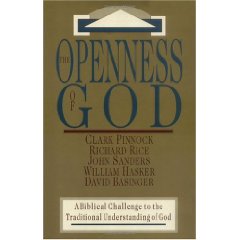
Many Christians in the Arminian, Wesleyan, and Holiness traditions are attracted to Open theology. This attraction is due mainly to Open theology’s claims about divine love, creaturely freedom, and the God-creature covenant relationship.
A growing number of Church of the Nazarene members, including laity, pastors, and professional scholars explicitly identify themselves as advocates of Open theology or have strong sympathies with it.
In what follows, I introduce main concepts of Open theology. I address some biblical, historical, and theological issues. I want readers to become better acquainted with the answers Open theology gives important questions.
I also wrote this essay to help Church of the Nazarene leaders and laity avoid unnecessary conflicts. To that end, I conclude with recommendations for how the Church of the Nazarene might position itself and help its members respond to Open theology.
The Bible Supports Open Theology
The Church of the Nazarene takes the Bible as its primary source for issues pertaining to salvation. The denomination is part of a theological tradition that affirms central biblical affirmations about God as the almighty Lover who seeks, saves, and sanctifies. It emphasizes that God calls Christians to love God and others as themselves. The holiness message is rooted in love: God’s love for the world and God’s call for creatures to love.
The holiness message is rooted in love: God’s love for the world and God’s call for creatures to love. Click To TweetOn the question of God’s knowledge of the future, the Bible does not provide a clear-cut answer. A large number of biblical passages – Open theists claim the majority – state or imply that God does not know all the details of what will occur.[ii] Open theologians are deeply committed to the authority of the biblical witness, and they believe the Bible more strongly supports their view than alternatives.
Dozens o f biblical passages say that God repents, for instance. For God to repent means that God has a change of mind. God’s change mind implies that not all decisions about the future are already settled.
A classic example of an open future is the 2 Kings story of Hezekiah. We find these words: “Thus says the Lord: Set your house in order, for you shall die, you shall not recover” (20:1). This passage sounds like a straightforward decision on God’s part. Hezekiah’s future has been decided, and God knows it as settled.
But the Bible says Hezekiah prayed earnestly. He persuaded the Lord to add fifteen years to his life (v. 6). This suggests that the future was actually open – even for God. If God foreknew when Hezekiah would die, this biblical passage implies that God lied to Hezekiah.
Open theology provides a way to affirm that God did not lie to Hezekiah. Open theists say God changed his mind and answered Hezekiah’s prayer. Presumably, God changed plans out of love.
Numerous biblical passages state or imply that God does not know the future exhaustively. Passages stating that God has regrets – e.g., regret about creating or regret over Saul’s kingship (1 Sam. 15:11) – make little sense if God foreknows all things.
Passages saying that God’s will is not necessarily accomplished – e.g., that God is not willing that any perish (2 Pet. 3:9) – make little sense if God foreknows the future exhaustively.
God’s questions about the future – such as God’s question to Moses about how long the people will despise him (Num. 14:11) – make little sense if God foreknows all future things as settled.
Many biblical passages support Open theology. Click To TweetPassages stating that God confronts unexpected events (Is. 5:2), gets frustrated and angry (Ex. 4), or tests people to find out their character (Gen. 22) suggest that God does not fully know what will actually happen in the future.[iii] Many biblical passages support Open theology.
God Gives Choices with Consequences
Conditional statements in the Bible often imply that God does not know the future exhaustively. A classic conditional statement is the one God gives Solomon:
“If my people who are called by my name will humble themselves, pray, seek my face, and turn from their wicked ways, then … I will forgive their sins and heal their land…. But if you turn aside and forsake my statues and my commandments that I have set before you, and go and serve other gods and worship them, then I will pluck you up from the land that I have given you…”(2 Chron. 7:14, 19-20a).
God apparently does not know what Solomon and the people of Israel will do. This passage loses significance if God knows all future choices.
Admittedly, some biblical passages – and critics of Open theology claim a majority – state or imply that God does know what will occur in the future.[iv] A classic example is Isaiah 46:9-10: “I am God … declaring the end from the beginning and from ancient times things not yet done.” This verse sounds as if God sees all of time in an instant and therefore knows past and future events simultaneously. Jesus’ prediction that before the cock crows twice Peter will deny him three times suggests that Jesus knows the future.
Open theists offer explanations to these passages. They have ways of accounting for these verses. For one of the most accessible lists of how open theists respond, see Chris Fisher’s helpful resources. Both sides have arguments to support their view.
Conditional statements in the Bible often imply that God does not know the future exhaustively. Click To TweetGod Has Plans
Both advocates and critics of Open theology sometimes cite the same biblical passage to support their different views. For instance, both claim the passage, “’I know the plans I have for you,’ says the Lord, ‘plans to prosper you and not harm you, plans to give you hope and a future’” (Jer. 29:11), supports their view of God’s knowledge.
Critics of Open theology cite the passage to support their view that God knows in advance all of the details of what will happen in our future. For them, God talking about such plans implies the future is settled.
Advocates of Open theology, however, cite the same passage to support the idea that the future is not entirely settled. Some of God’s plans may be carried out by God alone. But other plans require free creaturely participation, and God does not yet know with certainty what free creatures will choose to do. For Open theists, God talking about plans for the future does not mean the entire future is already settled.
In the end, the persuasiveness of these explanations usually depends on the hearer’s theological, philosophical, or interpretive commitments.
When God talks about having plans, this implies the future is not settled. Click To TweetSome Historical Considerations
Prominent voices in the Christian tradition – e.g., Ireneus, Augustine of Hippo, John Calvin, Martin Luther – believed that God both foreknows and foreordains all that will occur. A sovereign God causes all events, say some theologians.
A particular view of predestination emerges from this set of beliefs. For these Christians, the idea that God alone determines all events complements the idea that God foreknows all that will happen. If God predestines all things, God knows exhaustively and inerrantly what will occur.
 Theologians such as James Arminius and John Wesley, however, differ in important ways. They reject the all-determining view of predestination and claim to have a stronger biblical basis for their perspective.
By championing divine love and emphasizing human freedom, Arminius, Wesley, and their heirs reject complete foreordination, predestination, and unconditional election. God’s prevenient grace, as Wesley understood it, grants freedom to others.
Wesleyans are fond of quoting the Apostle Paul, who told his readers to “work out your own salvation, with fear and trembling, for God works in you both to will and to work for his good pleasure” (Phil. 2:12). This verse suggests that we have a free response to God’s empowering action.
Although Arminius and Wesley were adamant that God did not exhaustively foreordain creaturely actions, most of their writings suggest God foreknows creaturely actions. One can find statements here and there implying God does not know the future exhaustively, but the majority of their writings suggest God foreknows.[v]
In the 19th and 20th centuries, a significant number of Wesleyan and Methodist theologians denied that God knew the future exhaustively. Drew Seminary theologian Lorenzo McCabe, for instance, wrote clearly and passionately advocating what we now call Open theology. Methodist circuit rider Billy Hibbard, Sr., became known for his denial of divine foreknowledge.[vi]
Most early Church of the Nazarene theologians, such as H. Orton Wiley, affirmed divine foreknowledge. For Wiley, God did not predestine. But God foreknew all future occurrences.
Many Nazarene theologians following Wiley, however, did not affirm that God has exhaustive foreknowledge. Mildred Wynkoop was ambivalent on the issue. H. Ray Dunning does not take a firm stance one way or another.[vii] Michael Lodahl raises serious questions about exhaustive foreknowledge.
A good number of 21st century Church of the Nazarene laity, pastors, and professional scholars explicitly deny exhaustive divine foreknowledge. They are Open theists. Their denial that God knows the future exhaustively fits the fundamental Wesleyan belief that humans – and perhaps all creatures – have a degree of freedom.[viii]
Many 21st century Church of the Nazarene leaders are Open theists. Click To TweetGod and Time
How we think about God and time is important for this discussion. Theologians such as Augustine, John Calvin, Karl Barth, and others thought that God was in all aspects nontemporal. God is outside time. God sees creation’s history in an eternal now, they argued, not as a sequential chain of events.
Calvin illustrated this view well. He says God is like an observer atop a church steeple. From that high perspective, the observer can see, all at once, the beginning and end of a parade below. God sees time like the observer atop the steeple sees the whole parade.
The idea that God is nontemporal, however, does not square well with the broad biblical witness. Biblical authors often suggest or assume that God is living, experiencing time moment by moment. To be living implies that God experiences time in sequential events. We might say that a living God is in all times – pantemporal – or everlasting.
H. Ray Dunning says that “the biblical of God seems rather clearly to suggest that time is indeed real to God.”[x] Instead observing the parade from afar, God is present at all times in the parade. Instead of watching from a distance, God is with us.
Instead of watching from a distance, God is with us in time. Click To TweetGod is Omniscient
Both Open theologians and those who think God knows the future exhaustively affirm that God knows everything. Both affirm divine omniscience. Both believe that God knows everything that can be known. They differ on what is knowable.
Open theists believe that God knows the completed past, the ongoing present, and all possible future possibilities. They believe God can know that some future events will occur, because personally God plans to do these things at some future time. And God can make uncanny predictions about the future based on exhaustive knowledge of past and present.
What makes Open theologians different from others is that they believe no actual future yet exists. No one can know what isn’t, in principle, knowable. God not knowing something that can’t be known doesn’t mean God lacks knowledge.
The actual future does not yet exist, so it is not yet knowable to anyone, including God. Click To TweetSome Implications of Open Theology
The question of God’s future knowledge affects some aspects of the Christian life. I will briefly mention several.
– Petionary Prayer
Open theists believe their view makes better sense of petitionary prayer. Most Christians truly believe their requests at least sometimes directly affect how God decides to act. Prayer for the sick, for instance, makes a difference in how God acts.
If God knows the future exhaustively because the future is settled, however, petitionary prayer seems pointless. God already knows the outcomes. Prayers to affect an already settled future are futile.
Open theology says that the future is genuinely open. So our prayers can make a difference in how God chooses to act.
Because the future is genuinely open, our prayer can make a difference in how God chooses to act. Click To Tweet– Predictive Prophecy
Open theology understands predictive prophecy differently than some theologies. Critics often ask, “How can open theology take prophecy seriously if God cannot know the actual future exhaustively?”
Open theists respond that a) the vast majority of prophetic statements in the Bible are not predictive, b) God can know with certainty what God plans to do without foreknowing all future events, and c) sometimes prophets were wrong in their predictions.
The issue of predictive prophecy does not undermine Open theology.
– Our Lives Matter
Open theists say that their view helps Christian believe their lives really matter. Our lives can really make a difference in a yet-to-be-settled history.
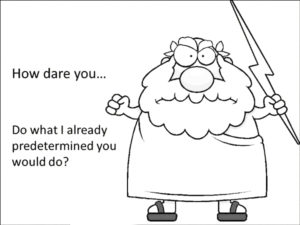 If God knows the future because it is already settled, what we decide and do today ultimately makes no difference. Things will be as they have already been determined to be. Fate rules.
An open future in which God calls us to cooperate freely, however, is a future in which our choices matter. What free creatures do really counts. Life choices have significance, because we can cooperate (or not) with God to influence what happens in the world.
What free creatures do really counts. Open theists believe life choices have eternal significance. Click To Tweet– We Are Genuinely Free
Open theologians argue that their view makes better sense of our deep intuition that we are at least partially free. This freedom is necessary for us to be morally accountable for our actions. We should not be held morally accountable if our future has already been settled.
If the future is settled and creatures are not genuinely free to do otherwise, we should not hold humans responsible for sin. According to Open theology, the future is open, and creatures possess genuine moral responsibility. Open theology makes better sense of the central biblical category of sin.
– God is Relational and Covenantal
Open theists believe that their view of God makes better sense of relational and covenantal passages of scripture. A God outside time does not respond to us.
We cannot fathom what a relationship would be like if one party was entirely unresponsive and unmoved. An unaffected being cannot engage in a give-and-receive relationship.
Open theology says God is responsive to us. God rejoices and mourns, praises and rebukes, offers and denies, at least partly because God enters into ongoing relationship with creatures. A relational God is affected by what creatures do.
Open theology says God is responsive to us and moved in relationship with us. Click To Tweet– God Is With Us
Open theism fits well with an incarnational understanding of God. The God who observes from afar is easily conceived as uninvolved. A distant God is not present with us to feel what we feel, walk alongside us, and be our Comforter.
Open theology emphasizes the immanence of God without neglecting God’s transcendence. It affirms God’s omnipresence without regarding the Creator a creature.
– God Doesn’t Foreordain or Foreknow All Evil
Open Theology affirms that God creates free creatures. The idea that creatures are free and the future at least partly open helps overcome many problems related to suffering and evil. Free creatures and a free creation are morally culpable for causing evil. God is not.
Open theologians differ on whether they think God can control creation. Some say God could control but usually doesn’t. Others say God can’t control, because God’s nature is uncontrolling love.
Free creatures and an uncoerced creation are morally culpable for causing evil. God is not. Click To TweetRecommendations for the Church of the Nazarene
Given the preceding, it seems wise for leaders of the Church of the Nazarene to allow discussion of diverse views pertaining to God’s knowledge of the future. The discussion is important on biblical and theological grounds.
The Church of the Nazarene’s Arminian/Wesleyan/Holiness history leads many of its members to be sympathetic to Open theology. At the same time, this history supports the view that God’s exhaustive foreknowledge is compatible with creaturely freedom.
I recommend that denominational leaders not shy away from discussing various aspects of Open theology. Having open discussions of Open theology is important. Decisions that leaders and parishioners make with regard to Open theology should be valued.
I recommend that denominational leaders neither require members to affirm Open theology nor require members to reject it. What one finally decides about God’s knowledge of the future is important but not essential for good standing in the Church of the Nazarene.
I also recommend that the denomination not take an official stand one way or the other on Open theology. Both proponents and opponents of Open Theology affirm God’s omniscience. At stake is what it means to say that God knows everything.
The Wesleyan tent is broad enough for both the idea that God doesn’t know the future exhaustively and the idea that God foreknows the future without foreordaining it. Denominational leaders should support laity, pastors, and professional scholars on both sides of this issue.
We should agree that the answer one gives the question, “Does God know the future?” is important. But one’s answer should not be considered essential for good standing in the Church of the Nazarene.
[i] In 1994, a quintet of evangelical scholars published, The Openness of God: A Biblical Challenge to the Traditional Understanding of God (Intervarsity). All were of Arminian theological persuasion. The label, “openness of God,” was first presented in the title of Richard Rice’s book: The Openness of God (Nashville, Tenn.: Review and Herald, 1980).
[ii] A number of books are available arguing that biblical passages most often support the view that God does not know the future exhaustively. One of the better ones – and one of the most accessible – is Gregory A. Boyd’s God of the Possible: A Biblical Introduction to the Open View of God (Grand Rapids: Baker, 2000). Other important books by Open theists include Clark H. Pinnock, Most Moved Mover: A Theology of God’s Openness (Grand Rapids, Mich.: Baker Academic, 2001), Richard Rice, God’s Foreknowledge and Man’s Free Will (Bethany, 1984), and John Sanders, The God Who Risks: A Theology of Providence (Downers Grove, Ill.: Intervarsity, 1998).
[iii] Some critics say that the passages speaking of God’s regret, unfulfilled expectations, frustration, or anger should not be taken as literally. These are anthropomorphisms, say these critics of Open Theology. This is an important criticism, because virtually every theologian admits that anthropomorphisms are present in scripture (e.g., God walking in the garden of Eden). Few Christians will want to take ALL statements about God literally (e.g., the biblical claim that God is a rock). But critics of Open Theology typically cite other biblical passages that more easily support their own view. When citing these other passages, they typically fail to regard these passages as also anthropomorphic. At stake, then, is which passages should be taken in their more literal senses and which are best understood as anthropomorphisms.
[iv] Among the books critical of Open Theology, see John M. Frame, No Other God: A Response to Open Theism (Phillipsburg, N.J.: P & R Publishing, 2001); Bruce A. Ware, God’s Lesser Glory: The Diminished God of Open Theism (Wheaton, Ill.: Crossway, 2000); Douglas Wilson, ed., Bound Only Once; The Failure of Open Theism (Moscow, ID: Canon, 2001); R. K. McGregor Wright, No Place for Sovereignty: What’s Wrong with Freewill Theism (Downers Grove, Ill.: Intervarsity, 1996). It should be noted that almost all of these books are written by those outside the Arminian/Wesleyan/Nazarene tradition, and many of their objections to Open theology are applicable to Wesleyan theology generally.
[v] Arminius was apparently influenced by the philosopher Luis de Molina, who is famous for advocating what is often today called “middle knowledge.” God’s middle knowledge includes counterfactuals, which are statements in the form of “if it were the case that A, it would be the case that C.” Molinists believe that God can foreknow all free creaturely decisions because of God’s knowledge of all initial conditions and possibilities. Open theists typically argue that Molinism requires metaphysical claims without sufficient grounding.
[vi] See Randy L. Maddox, “Seeking a Response-Able God: The Wesleyan Tradition and Process Theology: in Thy Nature and Thy Name is Love, Bryan P. Stone, and Thomas Jay Oord, eds. (Nashville: Kingswood, 2001), 111-142.
[vii] See Wiley, Christian Theology, vol 1 (Kansas City: Beacon Hill, 1940), 339, 354-360 and Dunning, Grace, Faith, and Holiness: A Wesleyan Systematic Theology (Kansas City: Beacon Hill, 1988), 202.
[viii] A common response to Open theology from those who affirm God’s foreknowledge is that knowing a future event is not the same as causing it. For instance, my knowing that the Seattle Mariners will play a baseball game next year does not mean that I caused the game to occur. Human freedom and divine exhaustive foreknowledge, so this argument goes, remain compatible.
This criticism of Open theology is misguided. Open theologians do not object to exhaustive divine foreknowledge because they think foreknowledge causes the future. Rather, Open theology says that God could only have exhaustive foreknowledge if the entire future were already settled or completed. Only a settled future could be known – by God or anyone – with absolute certainty.
If the entire future is already settled, it cannot be otherwise. Free decisions require an unsettled future with a choice between at least two options. If we are truly free, say Open theists, the entire future must not be entirely settled. The future must not be causally closed. God must know now only what may happen in some circumstances.
Most Open theists affirm that God can know some future events will occur. God can know some events, because they will occur because of God’s own actions. For instance, most Open theologians say God knows when the end of the age will be. But God can know the end without also knowing all the details that precede it.
[ix] Wiley, Christian Theology, I, 335.
[x] Dunning, Grace, Faith, and Holiness, 201.

Newsletter
For a 200-page book of Thomas Jay Oord's best-selling writings and to receive his newsletter, add your email address...
Comments
Tom,
I really like the brief introduction to open theology. Hopefully uninformed critics will gain from this.
I agree that the Church of the Nazarene should not take an official stand either way. Yes, our tent is large enough for those in both camps of this issue. I for one find open theology the more Biblical. But as you said others do not. While we may think the other wrong in their opinion, the holding of either opinion does not preclude salvation. Open Theism does nothing to alter the essentials of the faith, neither does the opinion that God exhaustively know every detail of the future.
Recently I have come to think that maybe there are the various theological traditions, as well as developing theologies, as an effort by God to reach a wider audience, for God wishes none to perish (2 Pete 3:9). None of the theological traditions that are accepted deny the essentials, none are rightly heresy. One can be an adherent to Calvinism, Wesleyanism, Arminianism, Open, Closed, etc and still be a Christian and have salvation. If I had had only the Reformed/Calvinist theology to adhere to, I may never have accepted Christ because as I read the Bible I found that position wrong, yet others find it correct.
While differences are important, for we all have come to our opinions and to say they are not important is demeaning, our commonalities are so much more important. We can respect the differences while finding unity in what we have in common.
Paul DeBaufer
In addition to what Tom has posted, perhaps it would be helpful to discuss the meaning of “knowledge.” As Tom indicates, “… the answer one gives the question, “Does God know the future?” is important.” Yet, how can we come to a thoughtful conclusion on the matter without a robust understanding of knowledge, or what it means “to know”. Does “knowledge” connote certainty? If so, then it seems that for God to “know” or “be certain” of future events is contrary to human freedom. If knowledge does not suggest certainty, then what makes knowledge different from belief? But can God’s knowledge be fallible? If not, then for God, all knowledge (perfect knowledge) requires absolute certainty. That is, everything that God “knows” about the future is necessarily true. Therefore, the future is fixed and freedom is lost. While these questions and scenarios are far from exhaustive, they suggest that a deeper investigation of epistemology is required for a better understanding of the foreknowledge debate.
Tom, I so appreciate this balanced, thoughtful outline of Open Theology and its opposing views. I agree with your recommendations to the denomination that we welcome the discussion without making up a litmus test yet. As always, in all ages, our concern should be to seek the truth. what if we were to discern that Wesleyan-Arminian understandings were seriously flawed? Could we be honest enough to embrace the truth or do we have to stay in one particular theological camp forever? I personally think that Wesleyan understandings are very helpful as the world shifts away from modernity to whatever shall evolve next.I just want to make sure that we don’t hang our hat too quickly on Open Theology without giving lots of thought over a period of years to see if it best fits the biblical record.
You mention in your post that not all predictive prophecy came to pass. An example of that in the New Testament is found in Acts 21:11 where Agabus prophesied that the Jews would hand Paul over to the Gentiles. In actuality, if the Gentiles hadn’t arrested Paul in Acts 21:33 the Jews would have beaten Paul to death. They had no desire to hand him over to anyone.
Thanks so much for this. It’s a clear and concise summary. One thing I like about Open Theology is that its basic ideas can be so simply and clearly communicated.
The ideas of Openness played an important role in preserving my faith at a very difficult time in my life. I am grateful to everyone willing to explain and encourage these hope-filled and inspiring theological ideas.
Tom, a few comments:
You quoted:
“If my people who are called by my name will humble themselves, pray, seek my face, and turn from their wicked ways, then … I will forgive their sins and heal their land…. But if you turn aside and forsake my statues and my commandments that I have set before you, and go and serve other gods and worship them, then I will pluck you up from the land that I have given you…”(2 Chron. 7:14, 19-20a).
For this purpose, I think Jeremiah 18 is stronger and even more outspoken as to God’s knowledge and the purpose of prophecy:
“7 If at any time I announce that a nation or kingdom is to be uprooted, torn down and destroyed, 8 and if that nation I warned repents of its evil, then I will relent and not inflict on it the disaster I had planned. 9 And if at another time I announce that a nation or kingdom is to be built up and planted, 10 and if it does evil in my sight and does not obey me, then I will reconsider the good I had intended to do for it.”
You wrote:
“Both Open theologians and those who think God knows the future exhaustively affirm the idea that God knows everything. Both affirm divine omniscience. Both believe that God knows everything that can be known. They differ on what is knowable.”
I think this is the key. Here is what it comes down to. I would stress that even more forcefully.
You wrote:
“We should not be held morally accountable if our future has already been settled prior to any choice we might make. This “choice” does not seem genuinely open.”
But also:
“At the same time, this history supports the view that God’s exhaustive foreknowledge is compatible with creaturely freedom.”
I feel a tension here that might require more explanation than you provide.
Other then these minor comments, I think you wrote a very good article and I totally agree with your recommendations.
Blessings,
Hans
Tom,
What is at stake as I hear the critics of Open Theology is a diminishing of God and how God is understood. Your brief introduction of this essay is helpful to this point. You wrote, “Open theology affirms that God knows everything that may happen in the future. God knows all possibilities.” It might be wise for the discussion to talk a great deal about these things with opponents of Open Theology.
One critic wrote that God has a plan b, c, d…etc. But that isn’t the case. Open theology, as I see it, says that there is no plan b, everything is plan a.
Something else that Open Theology would advocate is earnest obedience to God’s will and desires. We are co-creators with God of the future. This makes prayer and drawing close to God insanely important.
Finally, there needs to be a way to help address fears of those that see Open Theology differently than what it is. Your call to start a conversation is a good start. It is up to all of us to help people see that some of the things they fear are merely shadows and nothing of substance.
Tom,
Thanks for this straightforward depiction of Open Theology. I know that you have listed many of these statements in various other ways over time. However, having this all in one place and the arguments for the Church of the Nazarene to consider not rushing to judgment against Open Theology are extremely beneficial.
As a local pastor I often find that many parishioners are the proving grounds for these concepts. We need to articulate the theology as accurately as possible, however, it is the average person in the pew or on the street that has to live out his or her understanding of God. The average person will not be involved in these theological discussions but they are the ones to whom all this applies.
I am grateful for the possibility that many of those average persons can connect with such a God as One who will partner with them to make the “future” a better one. Each average worshiper possesses such a hope. Being a pastor to those people, it makes a difference what we say about God relating to us all.
Nice job. I hope your recommendations received due consideration, but I have my doubts. The fear that is deep in the hearts of our folks is profound and will make this conversation difficult (as it already has).
Chuck
Re-reading Hans’ comments about 2 Chron. 7- the remainder of that chapter outlines the actions God will take if the people fail to cooperate with God in the work of redemption. The future there was not decided until the people acted. The chronicler showed two potential actions and the consequences anticipated by following either course of action. Both the positive and the negative are delineated from verses 14-22. Neither one is locked in until the people act (or fail to act).
Tom,
Nicely done, though I would prefer a very different approach than you have suggested via ‘Open’ constructs. Perhaps this single comment gives us cause for pause:
“Prominent voices in the Christian tradition – e.g., Ireneus, Augustine of Hippo, Thomas Aquinas, John Calvin, Martin Luther – believed that God both foreknows all that will occur and foreordains all that will occur. A sovereign God causes all events, say these theologians.”
What if there were other options here… What if knowing did not imply utter causation? What if God can see the unfolding without being a ‘first line causal agent’? What if knowing has two dimensions, a ‘seeing’ and an ‘experiencing’? And what if the latter allows for an all knowing God to ‘learn’ as God experiences what had only been seen…? What if the challenge to ‘pray’ and ‘repent’ is part of the freely unfolding process that is unfolding just as God saw it freely would?
Perhaps more importantly, are we really to feel better about this God who chooses to let evil wreak havoc, pain and chaos, into our lives, all for the sake of allowing sin infected beings to move about ‘freely’? Does that not contradict the biblical idea that we are ‘slaves’ to sin…? What kind of freedom is this? Was not Arminius after something much more profound than this…?
Are we really comforted by this God who has not infused every micro moment with purpose and meaning, and instead, is letting the ‘creation’ freely spew forth chaos and pain…?
Looking forward to our time in March… Me thinks there are much better solutions in the micro…
As already expressed, thanks for the thoughts on this topic. It certainly seems to be one that has many flash points. The thing that gets me is that even those who oppose the idea of the future being open function as if it is. It seems one of the appeals to Openness theology is that it is honest (if that makes sense).
John
I feel very blessed to be taking senior seminar in philosophy with a topic of free will right now at it is amazing how often we talk of time related matters. I think that I have come to believe that we are free, God knows what will happen, and that we can’t “change” the past, even with time travel, in the same way we cannot change the future. This works intellectually for me without limiting freedom. I think of God as outside of time, looking down on (a western) straight line of time from it’s beginning on infinitely. I think this is a very interesting topic however, and further dialog by learned minds is always positive. My views on many things change and it was fun to hear this theory presented in this way.
Thanks, Tom.
As you know I’m no longer a Wesleyan and since I’m not I keep asking myself, “Why should I care how this all plays out?”
As I’ve thought about it I’ve identified three reasons.
First, I have extended family in the Church of the Nazarene. Second, I think there is a story here that is interesting and I think there is a certain inner logic of inevitablity to how it is working out. And third, since I think the Reformed view is a better view than Open Theism, I’d like to bring people in that direction.
To the second point. Wesley was influenced by Reformed thought. His circle of friends, particularly early on, was made up of several Reformed believers. Wesley’s experience at Aldersgate came during the reading of Luther’s Commentary on Romans. Perhaps the best verse in all Reformed hymnody was written by Charles, “Thine eye diffused a quickening ray…” (If that’s not the Reformed doctrine of regeneration, what is it?)
But Wesley recoiled from the inner logic of Reformed teaching because of predestination. When he did that Open Theism was the inevitiable result. Jonathan Edwards predicted it in, The Freedom of the Will.
As I’ve told you before, I think Open Theism has an inner consistency lacking in traditional Wesleyan theology. To foreknow is to defacto foreordain.
Nevertheless, most Nazarenes believe it is possible to have the first without the second. These folks they feel like the Open Theists are changing the rules on them. And they’re right.
Wesley wasn’t a consistent thinker, he pragmatically sought to fuse together a Reformed approach to justification and a Catholic understanding of sanctification. Modifications had to be made to both—but for folks of a pragmatic bent, the troublesome stuff could be glossed over without discomfort. Early Nazarenes spoke of two works of grace to keep things neat and tidy. The only problem with that was the shaky biblical proof-texting. With the passing of that school of interpretation the door was opened to jetison the last vestiges of the Reformation from Wesleyan theology. When I picked up on that in the early 90s I knew my days were numbered and I began my to develop my exit strategy.
Finally, I think what gives plausibility to the Open view for average folks are advances in mathematics and computer modeling. God is like a vast calculating machine, something like Big Blue—who (it?) can defeat world class chess players, not by creativity and panache, but by brute numbers crunching. There’s a down side to that though—waste. I’m not sure how you can reconcile the transparently loving God of Open Theism with the body count. With Reformed thought there is a God who remains in part opaque. There is mystery there. As the original Harvard shield displayed, Veritas leaves one book is face down. Somethings we simply can’t know. I’ll take the awesome, fearsome God who foreordains any day over the wasteful calculating machine of Open Theism. (I’ve much more to say, but its not my blog.)
Hi Tom:
I’m trying really hard to find something I disagree with here! But there isn’t much. I like the way you present the topics and the biblical sources for their plausibility. I can only offer a few ideas here:
1. I like to talk about “Open Theologies” rather than “Open Thelogy.” People often ask me, “What do you think about Open Theism?” And I respond with “Which Open Theism do you mean?”
2. I think the genius of the Wesleyan Theological tradition is its inclusive nature- so your appeal to the “big tent” is both historically and practically helpful. I tremble when I think of so many people who presume to be “speaking for the tradition” but don’t understand the ways in which the tradition can be understood. And that it is why your suggestion that not taking a stand one way or the other is probably most consistent with the predominant understanding of the tradition (especially in Wesley’s sermon “On Catholic Spirit.”).
Thanks again for posting this.
Craig
Tom, thank you for your helpful post. You have clarified what the issues are in the discussion. I found your suggestions for how the Church of the Nazarene can proceed helpful, and most of all charitable. It calls people from both sides to unity; it calls both sides first and foremost to maintain its witness to the truth of God in Christ by remaining united in love. We have all lost if we lose sight of loving God and neighbor.
You have done a superb job at introducing this issue and calling us to keep our bonds of Christian fellowship—our right to bear the title “Christian” not being compromised by where we stand on this issue. For the purpose for which this post was written you have said enough and said it well.
At another time, in another context we could parse out all the differing forms these respective positions take. One example, even though I see myself as an Open Theist, in my own work I would quibble with the statement that God knows all possible outcomes. I like to say that God makes possible that an other might speak its own ‘word’—a word that God is hearing and experiencing as it is being spoken. Because creation speaks its own word (not God’s), it cannot be foreknown by God. Only when that which is other to God expresses itself is there something to be known by God. And, yes, God knows everyhing there is to be known.
Hello Tom:
As usual, a brilliant job. You continue to present the case in thoughtful, eloquent style. This does not diminish my strong disagreement with Open Theology. While I appreciate your erudite expression of these issues, I continue to be challenged by the underlying assumption that God cannot know the future with any final degree of certainty. I remember Dr. Greathouse reminding me that God can only know what can be known. The puzzle continues for those of us who are not determinists, but continue to believe in the omniscient God who “appears” to change in response to our prayers, petitions, etc.
Well done, friend!
David, we must keep in mind that our ideas about God don’t change Him. He is who He is, our ideas can get closer to that reality or not, that’s all.
To me, in many ways, Open Theism is helpful, but it does not solve every theological problem. One day we may find a better theology. That’s ok. As to God’s knowledge, I’m sure everyone agrees that God does not know what cannot be known. Omniscience simply means He knows all there is to know. So the issue is epistemological more than anything else. Now that’s the theory of course. What makes it so difficult is our ideas of what kind of God we NEED. And I understand that problem very well.
Hans, thoughtfully put! We have common ground.
Thanks for the kindness and generosity you have embedded in your clear and helpful explanation. I am thankful to be part of a church with a Big Tent and a Catholic Spirit. May it ever be so!
thom,
thanks so much for this. I must admit that i am still new to the idea of open theology, but your article is very easy to read and straight to the point. while i still do not know if i fully agree with the idea, it baffles me that so many people who contend for free will cannot even accept the possibility of it. thanks again for your words.
cam
p.s. i just finished that book you sent and will have a review up soon.
Tom, I thought you did a magnificent job in presenting Open Theology and questions relating to God’s foreknowledge. The whole question of the problem of evil is best resolved by coming at it from an Open Theology position—I think!!
As I was reading this article I kept wandering why some people are so against this idea. Open Theology makes sense for prayer, otherwise our prayers are just meaningless because God already knows everything that is going to happen. The scriptural evidence is pretty strong, and like Cam said above, if we really do believe in free will why would this idea be so frightening? I, myself think its kind of exciting.
I think we like the idea that everything happens for a reason, because it allows us to just sit back and not actively participate and seek out the will of God knowing that whatever happens is supposedly God’s will. We like to think that we have free will, yet we like to think that God is in control. I think this is because we dont like to put that much responsibility on ourselves. Open theology encourages Christians to seek out God and His will for their life instead of passively waiting for it to happen. We were created to be in loving relationship with God, which means freedom. We should not be afraid of this freedom and responsibility, we should embrace it because God is waiting for our active participation in the Kingdom!
Tom,
Thanks again for another well crafted article and conversation starter. I appreciate your explanation, but most of all I appreciate your tone in writing it. I agree with the recommendations for the denomination. Thanks again!
Peace,
Paul
I agree with some of Open Theology, I just think it becomes too narrow. I understand that it’s an attempt to define something infinite and that’s the fun with theology. But one thing I think we miss is, what about the mystery of God? Sure, I think that Open Theology demonstrates that God is not trapped in a box and is “experiencing” life along side us, but I think that takes away from the mystery of who He is. What I mean by that is; Does God not have the capability to do what He wills? Is everything there is to know about God and his attributes in scripture?
Also, there are many attributes of God that I don’t always understand, and can be defined a hundred different ways. To me some things aren’t meant to be known. So why not live in the midst of His mystery. He gives and takes away. The rain falls on the just and unjust. But through it all, as you’ve stated (one thing I totally cling to) He is with us.
Tom, I’m working my way through Gregory Boyd’s GOD OF THE POSSIBLE. There’s the assumption that divine foreknowledge and foreordination are inextricably linked, i.e. that God knows what will happen because God has so determined it. (This is the assumption of my good friend Chris Wiley’s note above). I like what the Five Articles of the Remonstrants (1610) does on this point. It says exactly the opposite, i.e. that God’s predetermination in election is based upon his foreknowledge. In this little bit of theological jujitsu, we have an Arminian doctrine of election. Interestingly, John Wesley adopts the same position in his 1752 treatise, PREDESTINATION CALMLY CONSIDERED. What I don’t care for in Boyd’s treatment is that he espouses the Calvinistic assumption, i.e. that God’s foreknowledge is dependent upon God foreordination. And this same presupposition is apparent in Open Theology generally. But I don’t grant this presupposition, and so much of what Boyd write (for me) seems to be trying to solve a problem that – at least in the realm of election – the Remonstrants already solved. Open Theology by its premise has the (unintended?) consequence of denying the possibility of an Arminian doctrine of election, and that’s a doctrine I’m not willing to let go, nor (in my opinion) would John Wesley.
Thanks for saying that god can know everything and that god does not have to influence reality. That is a important distinction to make
Dear Tom,
A comment about anthropomorphisms in the Bible. People usually point them out to minimize their impact—“just an a…” However, the use of God’s nose or arm or hand to show God’s anger or passion or might does not imply less but more—God’s nose grew hot means God is very very angry. In addition, to use a physical part of God or God walking is very different from saying God regretted. Regret is not anthropomorphic like a nose is. Those who take the Bible literally are often the same one who claim God knows the future so God cannot regret. But this is NOT taking the Bible for what it is plainly saying, and thus not taking the Bible seriously.
Your final point is your most important. The Wesleyan tent is wide enough for a myriad of beliefs. One critique of open theism is the exegetical (or lack thereof) use of the old testament. There are many things that the Hebrew writers claim that we would never want to affirm today (i.e. Evil spirits from the LORD in 1 Samuel 16:14-15). We get so hung up on (or latch onto) issues that were the least of Israel’s issues. I think a more careful exegetical approach, using the whole of the canon, can lead to a more full picture of God. Picking and choosing particular attributes of God is the beginning of the end of any theology. Truthfully, the same could be said for just about any theology, not just the Open view. So my critique also entails an affirmation. I am excited about Open Theology and its ability to break helpful theological ground as we continue to discover who God is, and who we are in God.
I am confident in an open theology. The concept itself supports a relational God, which I know to be true. When things of the future are set in stone, there is no leeway for our input; similarly to a relationship. If we were robots, there would be no real love. In this situation, if there is a set future, then nothing we ever did would matter, because the future would already be set. God allows our input and our choices because He desires a real relationship. A relationship where each side gives and takes and each side reacts to the other. An open theology allows for real relationships and unsettled futures in the fact that we are all dynamic, moving, and changing.
Open theology. The concept of open theology leaves me with many questions and brings a great deal of discomfort. I was raised to believe that God knows all things because he is God. To propose anything different would mean that he wasn’t “God”. The arguments proposed by open theists makes sense, in terms of prayer and free will etc, but I just cannot bring myself to fully accept this position. Open theists argue that God is in time, because of this he experiences moments with us as they occur; this makes him a relational God. My question would be, can’t God be both in time and outside of it? Does his foreknowledge have to affect our relationship (free will) with him? I am not opposed to the things proposed by open theism, in fact I appreciate having discussions like this, but I cannot accept such a theory. It contradicts much of what I believe to be true about God.
An important point that you make is that passages can tremendously lose their significance if God knows exactly what is going to happen. The character of God is hopeful in the plans God has for creation and experiences emotions as we would when things do not go according to plan or when they do. In Jeremiah 29:11, God describes hope, which would not make sense if God knew exactly what would take place. Another important point that you make is that of petitionary prayer. Prayer in this manner would be meaningless if the future was already determined whether or not someone was to prayer in petition to God. Great thoughts and discussion of questions that arise from the Open Theology perspective.
This was a great read. I would definitely agree that this is an important conversation to start. Awareness and a clearer understanding of Open Theism may dispense some of the fear and disagreement. I think you are right to suggest the Church of the Nazarene leaders should consider this view. In my opinion, Open Theism does not directly oppose Nazarene doctrine. This should definitely be something that is up to each individual to decide. Also, perhaps leaders and pastors should refrain from denouncing Open Theism unless they clarify it is a personal, rather than corporate, opinion.
Dr. Oord,
My theology has shifted quite a bit since spending time thinking and processing theology in your class. Upon entering NNU I was completely sure that God knows the future completely. But, after hearing lectures and reading things on this topic I can say my thinking has changed. Now, as I ponder open theism, I have more and more of a peace about it. There is something comforting for me about a God who is relational and who is effected by my life and the things I say and do. I realize open theism provides an opportunity for us to be in relationship with God that is authentic. Prayer of petition does not make much sense in a view where God knows the future. In order for something to be known, it must be set and complete. I now affirm open theism, I recognize that God is loving and exists in this life with us. We can pray for things that will happen in the future and it gives God options to make changes to our future.
I believe that the Church of the Nazarene should too be in open conversation with Open Theology. There is not one perfect, logical group of theology about God. Not one person or group has everything perfect. I believe that the Church of the Nazarene can benefit from having conversation about God’s foreknowledge. We are able to practice a community that is in constant conversation with each other, encouraging people to always seek the truth through prayer.
I agree that open theism has some very attractive viewpoints. I like the idea that God knows all of the possible outcomes, but does not know which outcome we will pick. He probably knows what outcome we are more likely to pick, but we are still free to make our own chose. The most attractive piece of this view for me is the fact that God is viewed as a relation being, which I believe God is. Due to God being in relationship with us we can make choices that draw us closer to God, or make choices that draw us farther away from God. Overall, this is a helpful article in getting the conversation started.
While you have some interesting points, I am still not entirely convinced of Open theism. Mainly the thing is that I can think of several different alternate ideas to explain God’s knowledge other than the open or closed views. But this is not exactly what I want to talk about. You say that both proponents and opponents claim Jeremiah 29:11 as support for their idea. Well when you come to the text in context you realize that God isn’t talking about the plans that he has for every individual, but for the whole of Israel. With this in perspective I would guess that the open has the upper hand on claiming this text as authoritative as the closed view has to take the text out of context in order to make it work for them. I say this because in order for this to become a personal explanation of God knowing the plans that he has for each and every individual you have to remove the passage from its context which is talking about Israel as a whole.
Open theology provides a view of God very often neglected by other lines of thought. I am attracted to this view of God because in many ways this view is more consistent with not only the way I have experienced God in my own life but also the way I choose to live out my life. I am however, also suspicious of open theologies distrust of tradition. It is hard for me to wrap my mind around why open theology tends to pick and choose from the Christian tradition. This perspective could simply be based on my current understanding of open theology. I would certainly agree that open and free discussion of this topic would not only be helpful in the Church of the Nazarene but healthy as well.
Open theology is clearly not what the church of the Nazarene believes. If there is influence, I would think there is influence on the people in the Nazarene community and not the doctrine itself. I am curious to know more on scriptural foundations to open theology, not just the ones given as examples here. I have a hard time believing that God only knows what I know. That would limit God to our limitations. It would also eliminate a lot of scripture. If God knows only what we know, then how can we trust in him fully? If God knows just as much as I know, why can’t I be God? If God doesn’t know everything then where is hope? Also I have a hard time with God changing. God set principles down, and he made them known. I think God’s grace may look like God changes, but he doesn’t change. God knew the whole time what was going to happen. Does that mean God lies? No. That means we weren’t meant to know yet or God’s instruction for us is something different at a different given time given different circumstances or measures. I think God is Love, but God is also Just, Mercy, Eternal, Holy, etc. To emphasis one more than the others (love), demean the others. I think we should understand God as who he is (in his entirety) through the Wesleyan quadrilateral and not understand him as what we want to see him as. I would also like to ask open theists to define “creatures.” And toward your last statements on your blog, my belief is that Open theology ought to be its separate denomination. They are a lot different than Nazarenes. Overall, there is a lot to say, and I haven’t even begun to say all, but I just wanted to voice a few (not all) thoughts that came to mind while reading this blog.
I do like alot of things that open theology talks about, and accept alot of the theology that it has. One thing that you touched on here that I am still pretty questionable on is this idea of God in relation to time. I like the analogy of God being on the steeple and seeing the parade take place, to where he can see everything from start to finish, but I also like the idea of God being here on earth with us as we go through life. Being present, and changing as we change. This, to me, makes him a more relatable God. In terms of God being able to see everything, though, why can’t he? I don’t see much context of God and how he sees time in biblical text, but it’s something that i’ll look into more.
I appreciate this post about open theology because I think you do well in addressing the beliefs of open theology and explaining the practical ways that it is lived out. Open theology is a new concept for me. As I learn about it, a lot of it makes sense to me and I see how it stays consistent, but I still have a hard time agreeing with God’s knowledge of the future. The part about open theology that resonates with me the most is how our prayers have great influence since the future is not completely settled. Why do we pray if God already knows what will happen? Even though the idea that God’s foreknowledge of the future can be influenced makes me feel uneasy, it makes sense to believe that our prayers matter since the future isn’t entirely settled.
I am a young theologian so I am hesitant to take a true stance yet anywhere on the spectrum of Christian belief. I just don’t feel educated enough yet to stand somewhere and speak for or against it with complete certainty (or as much is possible for one to take a confident stance). I will say that I am sympathetic towards an Open View of God like many Wesleyan’s are. Honestly, part of my hesitation to endorse Open Theology is a fear of being called a “heretic”. Which brings me again to the season of reflection that I am in as I take this class: the issue for me is not what we believe so much as how we are interacting with each other and treating each other as fellow brothers and sisters in Christ who see and believe in things differently for a number of reasons. Obviously I am generalizing, but there is a reason why I am hesitant to come out and be a Open Theist, although I am very tempted to. My second thought as I reflect is: “Can I like some of the things Open Theism says, some of the traditional Wesleyan views, and maybe a little pinch of Calvinism?” Is it possible that we all have some things more right than others?
This was a very informative and interesting overview of Open Theology. I appreciate the explanations of what makes it different from the traditional Nazarene theology. I think that it is important to have these conversations and begin to think about how our tradition may line up with Open Theism. I personally believe that this take on God is Scripturally sound, and I resonate with a lot of it. I especially appreciate the idea that God does not foreknow for certain, so that our prayers make a difference. I do not want to pray to a God that is not listening. This concept makes the idea of prayer much more relevant, because it actually affects God. I do not believe that by saying that God does not foreknow everything for certain takes away from his God-ness. I think it simply adds to his loving character. Knowing that my prayers can actually affect God makes me appreciate his love even more. I am excited to learn more about open theism and explore its implications for the Nazarene church.
Good stuff here Tom,
I just have one critique if I may. I find it interesting that those passages of scripture that God “Repents” you take literally yet other even in the same book you dont like the creation accounts. I am not saying the position is faulty because of this but it seems to be a serious contradiction to me. Why do we take some passages in Genesis for instance literal while others not (anybook for that matter not just Genesis)? Other than that good stuff.
I found the portion of the last section concerning open theology and the Church of the Nazarene to be very helpful. I think it is vital to allow and encourage open discussions among both the clergy and the laity. It is helpful to discuss ideas and theologies openly, as we do in so many of our classes. When we do this, or encourage more opportunities for it, we are encouraging healthy human living. God’s omniscience and un-timely-ness are things that need to be discussed openly in a church community, like most other theological aspects. But I believe if such discussion becomes too consuming and exhaustive it can draw away from the christian experience.
Tom,
I think the concept of open theology might be helpful when thinking about the ongoing argument regarding Judas Iscariot’s actions that led to the arrest crucifixion of Christ. There are some who believe that Judas was “set up,” by God in order to complete God’s plan of salvation. I do not agree with this line of thought. I think our previous behaviors are a predictor for God. Judas did not have to sell Christ out for silver. He chose to do it. Judas had the opportunity to repent. Judas did not have to resort to suicide. Instead of repenting, he allowed his guilt to ultimately destroy his soul. Not sure if my comments are a good fit for this dialogue, but wanted to share. Thanks for the great insights.
My first reaction to much that has been happening in Open Theology and the examination of foreknowledge was rejection. There is no way all that I have learned thus far in my walk with God (regarding foreknowledge) could be wrong, but as I read more and understand the true evaluation of scripture and theology regarding this topic, I am beginning to alter my prior knowledge. Learning is an interesting tool and when you truly get into what is said within this post you begin to find ways to start conversations and examine these topics with your congregation. This is not easy at first because some will reject the notions, but starting small and allowing these ideas to be discussed in healthy environments will allow laity to become more in tune with God. We cannot deny these suggestions in a way that we continue to walk down traditional roads, just because they are the tradition, but we need to open up to God and allow Him to pour into us His way of thinking, rather than teaching they way we were taught.
I think that you have done an excellent job on explaining open theology. I feel that if we believe that God’s predominant characteristic is love, then we almost must believe in this theology. If God did not lead with love, it would be easy to say that “This is the way it is.” There is no other option available because God already knows what will happen. God provides freedom because of His love. I grew up with a Calvinistic understanding of Scripture, but now as an adult, I go back and read and so many times there is just no way that God knows what will happen. God is moved by the people that He has relationship with. I also have thought about in the past year the very issue that you bring up. There would be no point in petitionary prayer if the future was all mapped out. I thought this was a very good essay and provided a good explanation of open theology.
I think it’s a good thing that you have defined Open Theism here. That being said it’s good to also be in dialogue with this text. And that provides a great platform to do just that. I’m not sure I like the concept of a God who knows everyone’s motives and actions and prayers but remains to intervene in certain circumstances. It makes me think about why should I pray at all? What’s that value? It’s connection to the future and the reality of Gods knowledge and when he will intervene is something that needs to be understood.
It is comforting to think that God has my future planned out. That is easy to that say today, anyway. Assured in my salvation, I can find solace in an idea that puts God in full control of my life. After all, who could know what I need better than God, right? Well, that might be true, but God has no desire to be the dictator of my (or anyone else’s) life. Lord, Creator, Sustainer, Savior? Definitely. God certainly is and desires to be all of these. But God will only take on these roles in our lives if we allow God to do so. God gives us freedom, which inherently means God also gives us an opportunity to impact a future that cannot logically exist yet. Certainly, to know the future would not necessarily require God to be the cause of the future. But it would bring into question the culpability of God with regard to evil’s oppressive existence in the lives of God’s people.
I do not say all these things to say that Open Theism is the answer to all these questions, but I am a proponent, like Oord, of keeping the dialogue open within our churches. Perhaps there is not a “right” answer, but there certainly are some plausible responses that can from such a dialogue.
My first thought is if God does not know the future is it limited to humans or for everything? If the future of humanity is not known with certainty by God does that mean the earth’s future or other non-human existences are not known as well? Do we as a free will creature hold some sort of authority over God by the choices we make? God knows the possible outcomes and the most likely path for us but with our free will does our options of change somehow hold God to a certain knowing limit?
With the example of the parade watcher and the parade participant, why could not be in both places? God is someone we cannot fully understand and are using scripture and other material to try and wrap our heads around the topic of future knowledge. God is acting with us in the parade but why could he not also be looking down on the whole parade?
Yes, this topic should be discussed but I think a danger is focusing on something we cannot grasp. We can look to scripture and interpret it how we do but we must not forget God’s interaction with us. I do not think we can fully grasp God’s knowledge pertaining to what He knows and does not know. However, the conversation about our free will and God’s knowledge and interaction should be talked about.
I have previously identified with open theism. I believe that it is the best explanation for how God can be a loving God and allow complete free will and not hinder the idea of omniscience. What I appreciate most about this blog post is its admonition to the church. While it is addressed specifically to the denomination Church of the Nazarene, I think that it should be taken up by all churches and all denominations.
There should be open discussions about such important issues. Church leaders and parishioners should be encouraged to examine multiple views regarding things like Open Theism, considering what best fits with the Biblical narrative and experience; and what might improve or take away from Christian history. And likewise, I don’t think there should be an “official” stand one way or another on these kinds of issues. I think that official stances like this cause much more division than they do unity.
This was an informative blog on Open Theology. I personally have not come to a place where I am comfortable with this idea. Based on the article, one thing that seems to come to a head is our understanding of God, and what he “knows” as the future. My issue comes from the idea that maybe we are not supposed to understand God the way we think we do. This can be seen in the eternal vs. everlasting discussion. I see no reason that a God cannot be eternal, existence outside of time, not confined by it and still have the power to insert himself into time to connect with his creation. The idea that it has to be an either or diminishes the view of God that he can only be something that we understand, and if that is the case than He isn’t much of a God.
As for the recommendation to the Church of the Nazarene, I am not against a healthy discussion of theology, etc. but I am somewhat against the idea of trying to change the doctrine of the Church to fit Open Theology. If your beliefs on the future and God’s knowledge of it does not line up with that of the Church of the Nazarene, that is okay. Yet, just as you might not be willing to accept anything counter to Open Theism, it should not be assumed that the Church of the Nazarene should or needs to change or accept other views just because they differ from others. That is what makes it the Church of the Nazarene and not anything other than the Church of the Nazarene.
Tom makes a strong case for open theology, and it seems clear to me that this set of ideas about God is not contradictory to Scripture. I have come to agree with open theology, but to be honest, it is not as much about the logic as the application.
Open theology has an unflinching view of the world and it does not shy away from difficult questions by appealing to the mystery of God. It makes a case for a God who loves and seeks genuine relationship with us, which is Biblically sound, but it also builds an argument that can deal with the darkness and pain that so many face. When it comes to my own struggles over the years and the troubles I have seen others face, I can find a way to make peace with them through these ideas.
Open theology is definitely a very strong view and is becoming more and more of an accepted view in theology. However I don’t think I am ready to accept the view point. I feel that if God is not totally aware of the future, this is placing limits on God. God has no limits. God is all knowing and He does know what our future holds-however I do believe that we are presented with several choices at any given point in our life. I do believe that God already know what choice we are going to make and He knows the chain of events that are going to follow that decision. I don’t think that because He knows diminishes our free-will in any way and I don’t think because He does know what our lives are means that they are predestined.
In it’s very premise, I disagree that God does not know the future. Alpha and Omega, beginning and the end. God exists outside time. The fallacy is, in my opinion, that foreknowledge is unfair and necessarily determining the choices of free people. God created a structure and a way for humans to come to him within the constraints of his character, and therefore in the ultimate goal of being in a loving relationship with God. God does not change. Consequently, the way he provides will not, and the criteria for salvation is inherently just, merciful and full of grace. God does not deviate, and therefore hell is a reality, along with God’s loving name. Humans, the chaotic deciders, do not know the future. We are wide open because of our place within time. God knows every choice we will make and every deed. Every sin will be judged according to his justice, mercy and grace, and He will determine the relationship between us and Him. In fact, it in a sense, it has already been decided. Yet, it hasn’t from our perspective. We still have freedom enough to choose God and a place in a loving relationship with Him, yet before creation, He already chose us. Yet, a relationship will not be formed if humans do not choose God, in faith, and obey. God already knows what we will choose and who will be obedient, yet determines only so much as the type of relationship available to humans, and the miniscule requirement to enter into it- perhaps no bigger than a mustard seed. I’ve been a Nazarene all my life, and this thinking is somewhat well meaning, but false. God knows everything, including the future, and who will choose what. It is up to God to decide which saturation of sin and repentance is fair as time unfolds, and who will receive eternal salvation through Christ. All of this is knowable. This desire to lessen the blow of a God who perhaps failed to save enough people is not prudent, as more than likely God will be proven holy and righteous in all His ways, up to and including foreknowledge of all decisions, and all inaction and lack of intervention in the lives of those who will be damned. Love can still exist in pure states with this scenario. God bless our hearts and minds.
I was only made aware today of this belief in the Nazarene church of open theology. At a bible discussion/ Study at my church I stated that I believed GOD is omniscient. I was told that is a Calvinist view and not of the Nazarene church. I am not yet sure that open theology is a doctrine held by the Nazarene church but I googled it and here I am. The use of scripture to prove open theology is weak and this belief is an effort to undermine the WORD OF GOD and is bordering on a form of agnosticism. Especially amusing is the use of verse in Number 14:11 where GOD questions Moses. I don’t think THE CREATOR OF THE UNIVERSE phrased that as a legitimate question and was expecting Moses to enlighten HIM. Have you ever used a rhetorical question? What does GOD know and not know? Was all the prophecy of the coming of our MESSIAH on a chance that it might work? Did GOD not know? All the prophecy told of Israel’s unfaithfulness to GOD and the outcome. Were all of the prophet given an educated guess? But it all came to pass. We have a WONDERFUL, MERCIFUL , LOVING GOD AND FATHER WHO will tell us the the consequence of our sins so that we can repent if we choose to. The bible gives us a glimpse of GODS KINGDOM and it is enough. We don’t know everything but ALMIGHTY GOD does.
You seem to have presented this “Open Theology” well. However that kills it for me. As plausible as it may sound, it doesn’t square with certain ideas we are given in Scripture about God’s nature, man’s nature and God’s creation. It also assumes everything there is to know about God comes is present in the Scripture. Scripture presents us with what we need to reconnect with God and as Jesus said “the bulk of the book is about me”. I don’t believe it is profitable to engage in theorizing more about God’s nature than what Scripture presents to us. I am not saying we shouldn’t dig into scripture searching for the hidden seeds(SOD) that are placed there for the diligent disciple to find., we certainly should, but I have yet to find anything in Scripture that was hidden, that disagreed with the basic descriptions of God’s nature.
Modern science theorizes there are 10 dimensions and Nachmonides in circa1250AD derived the same from reading Scripture. Even though there is symbolism in Scripture, most of Scripture is literal (a.k.a. it means exactly what it says) I have often speculated on the nature of God and what might there be we are NOT told about in Scripture, but I always bear in mind, I am speculating and I have no proof that I am correct in my assumptions. So those things I glean from such meditation on Scripture and God’s nature, I clearly define as my own thoughts when sharing them with others. I think this theory of Open theology that speculates on God’s nature involving time is an assumption which does not make sense when considering God as creator of all 10 dimensions and mastery over them including the 4th dimension we humans commonly ascribe to Time. It goes against every other facet we ascribe to God’s nature such as omnipotence, omnipresence, eternality etc. It brings up more questions about the verity of such verses as “I am the beginning and the end. “”I know the beginning from the end” If we are going to search for answers about our universe and it’s construction, then let us ask questions such as:
Where do the angels live?
They come and go to Earth as God pleases, but do they translate in from another of the 10 dimensions, or do they come in UFOs or what?
Where does Lucifer and his third of the angels live? Do they inhabit the same dimension as heavenly servants or yet another dimension?
Where is the Abyss? Is it inside the Earth? Or is it in yet another dimension? The Fallen angels are said to be imprisoned there, but the Nephilim who became demons interact with our world and humankind. Are they here with us and out of phase or do they come and go from some dimension?
So what is the point of these seemingly silly questions? I am trying to illustrate there are many things we don’t know about our own universe much less about God’s nature and we should endeavor to take all Scripture literally first, until we see otherwise. I see no reason to think God cannot know the future just because we have free will and can indeed change certain outcomes through prayer and repentance. These small choices we make in our lives have no influence on the outcome of the larger events to ahead. Even as God allowed Nineveh to repent and change, their end was still to come. I know it is hard for us to imagine God as being in the past, present, and future simultaneously, but I choose to believe it even though I cannot mentally grasp the physics of it. I choose to believe the prophesies of the future of mankind and the second coming of Messiah Jesus are all true even though they too are difficult to grasp. So far Scripture’s prophecy record is 100% so I have no incentive to reject the rest of them. It is difficult for the mind to grasp, that God is at the end of time seeing past history, and then influencing through the Holy Spirit the prophets to write their prophecies, but there is no other way to explain it. The only thing that helps me to think about is is to IMAGINE God not actually being in body like Jesus, but as being some layer in the fabric of the universe as though the universe is an extension of God’s true body. It is mind reeling, but it is as good a speculation as any others I have heard. It would explain the ability to be omnipresent.
So then, is it good to search for answers and speculate on such things as God’s nature? I think it is as long as we do not let it create contradictions in Scripture. Let us theorize and speculate, but let us believe what we read in the scriptures first and let us place our need for full understanding second. Let us not question whether Scriptures are true, but let us question how can this be and allow God to reveal what He will, when He wills it. I believe everything we need to know about Good in this life, is in Scripture and those things that are not, are unimportant. Just think how difficult it was for people to believe in a young Earth and six day creation before mankind’s science and math discovered the stretching of time as a direct result of the stretching of space. These days our math and science have shown that space and time are interlocking elements. Christians before us had to take it on faith alone. That is my Motis Operandi, to believe first and search for how these things are true. I don’t want to change my belief or embrace another’s theories then see how I can make the Scriptures fit.
Tom,
I don’t know you but would love to sit down and chat sometime. 🙂 If I had been aware of this situation that was going to occur (unfortunately the future is VERY open to as I hardly know what’s going on right now) I would have made an effort to come by your office and meet in the spring of 2014 after my lunch with my dear friend and mentor Doc Laird.
I am realizing through all of this that I have been an Open Theist for most of my life but never knew it; even more, often felt very uncomfortable (even guilty) for the questions and doubts that would go through my mind as I contemplated other views that, for me, were presented and certain truth. So, the opportunity for discussion is something I cherish and something that has been such an encouragement to me.
My family and I serve overseas in one of the worlds most populous Muslim nations. Being here my faith and my theology is constantly challenged and I have unending opportunities to look at the world through (often) strangely colored glasses. I enjoy that. Someone above mentioned that perhaps this broadening of theological perspectives is creating a wider field for the church to reach people that might not otherwise be in reach. I hope this is the case.
Our entire ministry is centered on the very love that you talk about in this essay and a belief that God is working in ways sometimes don’t understand. We are optimistic that there many Cornelius’ in our community and that the opportunity for hope and new life is still a very real option for everyone we meet every day!
Some tell that the idea that God will judge people according to the light that they were given or, we might say, according the information, knowledge, and opportunities that were available to them makes the mission arm of the church completely unnecessary. I say that because there is hope available to every person that the mission endeavor is not only necessary but an absolute MUST for every follower of Christ; that every encounter and interaction with every person takes on a new meaning . I have, in a single moment the opportunity to infuse light, hope and grace in a situation….or not.
God loves these people that are so often misunderstood, even hated, by others. Love is the foundational motivation and responsibility of my life. God hears me as I cry out in prayer for this city and the people that I meet. And finally there is a great HOPE out in front of me (Thanks, Danny Gokey) but also out in front of each man, woman and I child that I meet. To me that’s powerful…and heavy…and good.
Doc Laird, among others, showed that to me when I was a confused young man. I’m finally starting to get it. 🙂
Steve
Dr. Oord,
I think it would be good for the denominational leaders to allow open dialogue on Open Theology. I can see your points on Wesleyanism being attracted to the points of Open Theology. I am also thankful for you taking the time to explain the concepts a little more for me. Your language is much easier to digest for me than some of the stuff we were digging into. The key phrase for me is that God knows everything that can be known. His omniscience is still in tact, while our free will is fully intact as well. You’ve really made me think a lot about it.
Thank you Tom for your thoughts here. I find that a God who responds to our decisions out of love, as in the cases of Hezekiah and other biblical instances you gave- to be more worthy of our adoration and worship than one who has predetermined the eternal destiny of all souls.
I couldn’t help but be reminded of the story of Job as I made my way through this blog post. The God of whom Jesus Christ is in all of His fullness is pursuing the lost with a love that can alter their future so long as they are willing to receive and repent. I know my life can testify as an extension of that story! For without it, I wouldn’t be where I am at today!
Thanks for the post. I think that it is the challenge of any church/denomination leaders to pinpoint those issues that must be non-negotiable and those that are open for discussion. One of the joys of the CON is that, in my opinion, they have done well in limiting the non-negotiable issues. However, there is an unwritten undercurrent that is still in many of our churches that tack on a few more to the list. It is my hope that the CON continues to cultivate a people that seek to know God more deeply, with will have to include discussions on topics such as open theism.
One of the things that drew me to the Church of the Nazarene was the Wesleyan Holiness theology, and as I have learned more and more about John Wesley, and his openness to see things from all perspectives has been an encouragement. So, as with this blog I am grateful to see that many from the denomination are open in looking closely at Open Theology as this article indicates it lines up in so many ways to our beliefs and theology.
When I think of God and His attribute and seeing LOVE as primary, this helps make more sense of our creaturely freedoms as it moves us to a place of responsibility for sin/evil, and removes this from God. This along with open theist’s view of God being relational, and that creator and creatures are in this life together, makes much more sense, just in thinking about the issue of petitionary prayer, if God was not present, if the future was set, then why would I pray? But, because I have witnessed answered prayer personally, and as this article shares biblically God is a God that cares and hears and answers prayer.
The movement about open theism is a movement that I am actually quite thankful for because it helps answer some important questions that I felt we haven’t really found a satisfactory answer to such as the problem of evil.
I appreciate the recommendations to invest in dialogue on these issues and not force members to take a stand for or against it. This make sense in two ways. First, we are an international church and if we like it or not the blog above is probably situated best between a certain cultural context. To force members to think about the issues mentioned above would probably also force them to deny their own cultural context and adopt another one. We would foster hypocrisy. Secondly, the issues open theology relates to such as free will and ‘God is with us’ play in certain cultures a much more important role than in others. Sometimes to such an extent that if denying certain theological aspects would mean denying certain cultural characteristics, who we are as an American, a German, fill in the blank.
So the dialogue suggested is important to also realize that certain issues are more culturally tinted than theologically and in order to remain an international church we need that dialogue to discover our own blind spots and be a mirror for each other.
Tom, I appreciate your post and the honest ideas and information presented. I believe it is important not only for the Church of the Nazarene but other denominations as well, to have an open and honest discussion of theology and beliefs. I believe there are some areas, which need to be non-negotiable so to speak. Among these would be the path to God through Christ alone, Scripture as our primary guide, etc., in my view. I believe these are areas where we can say are settled so to speak. I believe there are other areas where we should be open and willing to listen and learn from one another though.
The idea of open theology is one of these areas in my view. I have not studied or heard of this view prior to our current semester together. Although I have struggled with understanding it and just receiving it, I have found it to be rooted in Scripture and in love. I believe it is important to realize that none of us has a monopoly on knowledge of God or have “fully arrived” so to speak. This is an important part of this discussion. Open theology states that clearly. It says to me, let us continue this discussion and conversation about God and the unanswered areas of our faith. I believe this is an important conversation that needs to occur and does not need to be “directed” by a denomination in either direction.
This verse was put on my heart as I read your post, James 5:16- “For this reason, confess your sins to each other and pray for each other so that you may be healed. The prayer of the righteous person is powerful in what it can achieve.” (Common English Bible). It is so important for us to pray for one another. If the future is already fully settled, then how can the prayer of a righteous person change anything? I have struggled some this semester and been stretched beyond my comfort zone several times. This is sometimes necessary to increase our faith. Thank you again.
Ric Smith
Detractors of Open Theology might argue that God not knowing the future weakens God. However, isn’t it more powerful of God to know all possible outcomes than to know one concrete outcome? I appreciate the logic of “God cannot know a future that doesn’t exist yet,” but my whole life read the bible with the assumption that, as Calvinists teach, God is outside of time. Funny, I don’t think I was ever explicitly taught that, but the assumption was made and never corrected/challenged. I still get stuck between passages that show God changing God’s mind versus a passage like Jesus predicting that Peter will deny him three times.
One of the most intriguing points is God’s relationship to time. Open theologians say God is in time with us. For me, this says our lives and choices matter because the future isn’t set yet. This gives greater credence to our decisions, but also to God’s covenantal relationship with us. God not knowing the future (because it doesn’t exist yet) takes God off the hook for evil acts perpetrated by humans at their free will. For me, as a Christ-follower and minister, this matter most in the way that I pray. I hope to be praying to a God that hears me and has the ability to respond/act/move/change plans in accordance to the current state of our relationship. Out of that responsive love I have the freedom to love others as I have first been loved. That love has the ability to change the future.
Tom,
I believe in almost everything you articulate in Open Theology. The only exception is where you speak of how God can have exhaustive foreknowledge. In your words, “open theology says that God could only have exhaustive foreknowledge if the entire future were already settled or completed.” I may be the exception to the rule here, but I have never believed that God’s foreknowledge is what “causes” the future to happen as you indicate is the misguided perception just ahead of this quote. I have always believed that the future is open, and humankind’s choices are what dictates the outcome.
I believe your quote is based more on philosophical argument than biblical necessity (on this exact point), and that is why I have strong misgivings about it. I just read last night where 2 philosophers have put together an argument proving philosophy doesn’t exist. It seems to me (at least at times) that logic can be twisted to prove whatever point one desires, and in playing language games one can also come to whatever conclusion one desires. I like the appeal to scripture that says it fits best with Open Theology because I agree that the future is open. I see God changing his mind, but why does he change it? It is because of the actions of people. Could God foreknow what would happen if they didn’t change course, yes he could have, but he allowed the future to change so it wasn’t a settled matter.
The point of the matter is a very fine one, but God having exhaustive foreknowledge about all the potential possibilities inherent in any given situation hardly seems different to me than being able to know what choices I will ultimately make on my own. Then if there are any biblical examples of God having foreknowledge, and we rightly understand the future is open, it seems plausible we might believe God isn’t limited to a philosophical argument that says if he knew something it is settled in God’s past. The example of Hezekiah was used several times in this discussion. Yet God knew the future there. He knew that Hezekiah was going to die, and if nothing had changed he would have. Yet it was not a fatalistic, predetermination that was forever fixed in heaven. God allows Hezekiah to live (And I have always wondered after using it as a “proof” text, how do those that don’t really believe in miracles explain the sundial proof God gives Hezekiah afterwards), but it isn’t because God didn’t really know what was going to happen. In fact God doesn’t relinquish his foreknowledge in the least because he gives Hezekiah 15 more years.
I think there are too many places in scripture where God knows things that would be impossible to know, except for the fact that he is God, and as God he is not limited in his knowledge. For example, how else would he know that 1.) Peter would catch a fish 2.) In its mouth would be coin 3.) The coin would cover the taxes for both himself and Peter. If he is that powerful I believe that he can know without controlling (or it being fixed – regardless of philosophical reasoning), and as he does not control the outcome he would not be at fault for it either.
As I consider open theology and find myself asking questions I had not asked before, I become more and more aware of my need for my questions to be acceptable to my denomination without threat of retribution. I think that the church’s response to this and any questions we may have regarding our theology or polity, should be taken seriously and we should not be in a position where we are worried that this may threaten our standing as members or pastors. We already have areas where the church has allowed for more than one opinion, like Baptism for example, so why would this be any different? It is my opinion that denominational leadership should encourage discussion regarding our beliefs. As a pastor I think we should also encourage our congregations to consider what their personal theology might be. This is not to say that I believe that leadership, pastors or congregations all need to be come open theists. What I would like to see is an environment where difficult questions are tackled within our denominational walls in a safe manner. This is but one area where people may feel themselves asking questions and seeking out various ideas, there are many others to come. As the next generation moves into leadership we need to consider that they have been raised in a very different world where everything is questioned on social media where people can openly attack each other from behind a screen. We need to model conversations that happen in person, where people are sharing, open and even open to disagreement without being offended, threatening to leave the church or accusing others in some way.
On another note I am happy to be getting an idea of how some of our earlier church leaders may have felt about the idea of God not having the foreknowledge that we have assumed upon Him for many years within the church, great food for thought.
Thank you for summarizing and defining what has proven to be an enlightening subject for me.
This essay is a great introduction to open theology and the idea that God is a loving God who wants our heart and wants a relationship with creation, while allowing freedom of choice in nature and in humanity to run its course. There is something truly beautiful about God, who loves so deeply, is willing to allow humans to have free course of action. Take for instance a dog, it will always love its master, food, water, and shelter is all a dog really needs to be happy. For human beings we have a choice to love our Creator, making this love real. When it comes to the ability for God to watch our lives, and to give us the choice to sin or to act in obedience, there can only then be a real genuine free love. God seeks and knows our heart, and we have the ability to respond freely. I would suggest that God wants the best for all of creation, while allowing choices to be free, and set into motion the reaction good or bad in those choices.
This essay was a well stated overview of the basic beliefs of Open Theology, and the reasons why the Church of the Nazarene should neither require nor reject this teaching. I agree that these opinions should find a welcome place inside the “big tent” as, in my opinion, this is not an essential issue in relation to salvation. With that being said the basic belief’s of Open Theology concerning the foreknowledge of God. It seems to me like the Open theology view that God does not know the future, because it cannot be know, is very much compatible with the Wesleyan view of free-will. It is completely plausible to me that God may not know the future because of the freedom of creation. But, all though God may not know for certain the future, God knows the possibilities. Because God knows the possibilities, and knows the nature of each us of the choices we make are likely obvious to God, though not a certainity.
The article Open Theology and the Church of the Nazarene was both informative and interesting. The concepts are relatively new and I truly appreciated that this forum was able to make me an informed person in light of this reality. It was stated that Open Theology “affirms that God know everything that may happen in the future. God knows all possibilities. But God does not know with absolute certainty what every free creature will someday actually do.” This is certainly a contrast to my traditional belief since according to tradition we believed that God knows the future absolutely. It was surprising to hear that many in the Arminian Wesleyan Traditions are attracted to open Theology. Interestingly, I have been a part of the Church of the Nazarene for over twenty years and have not heard about Open Theology through our General Assembly or the Caribbean Nazarene College. There are some important ideas being considered however it would be interesting to find out what makes this theory so attractive even though it was stated that there are no clear cut answers and the fact that the passages used though seemingly alluding to Open Theology are still clouded with assumptions. All in all I found the article quite meaningful and I look forward to exploring this subject even more. So even as we seek Biblically plausible conclusions we are aware that “In the end, the persuasiveness of these explanations usually depend on the hearer’ theological, philosophical or interpretive commitments.”
I really like the end in how we should respond to the idea of God’s knowledge of the future. By maintaining an overall neutral stance, the Church of the Nazarene is not condoning something that cannot be proven one way or another. Part of this understanding is recognizing the limits of the choice we make. Whether it is a God within or outside of time, or a God that doesn’t fully know or has foreknowledge of the future. This is not a case where one is right and one is wrong, but how a person views the relationship with God and how God interacts with creation. It is a very real possibility to have to agree to disagree. The difference in opinion on this matter does not have greater implications upon ones faith. I agree with the idea of encouraging dialogue because this can foster greater understanding of one’s faith and belief structure.
I think the point that catches my attention most is the place of petitionary prayer. Trusting on one’s prayer life to build relationship with God points to God’s ability to answer such prayers, to truly interact with the world around us. Some may have experienced the joy of working alongside God’s plan to see a prayer answered, understanding that being in the right place at the right time may have to do with God’s plan. Ultimately, the ‘meaning of life’ that is mentioned can be attached to seeing God’s Kingdom being built in the midst of pain and doubt and disputes over how God takes care of us.
This was an insightful post that allowed one to explore through some of the different viewpoints. After, reading through some of these thoughts I am of the opinion that God does know the ultimate future plan that He has in store. I don’t see that the ability for God to see the future as a factor that would limit our own freedom. It could be that God is able to see the different opportunities that are available to us and know every destination of every possible opportunity. This to me makes more sense to explain whether God can see the future. There may also be a mystery element involved in this discussion that we may not be aware of that God further explain how God can see the future.
The idea of Open Theology is very intriguing but the area that has bothered me the most is time. Whether God is outside time and sees creation’s history in an eternal now or if God is pantemporal meaning everlasting and with us, I don’t know. I do think that God does not know how we are going to respond, because of our free will, and He’s OK with that. He may have an idea but the action chosen by us is not predetermined. Why is a God who is outside time and who sees all history not be considered responsive to creatures? Overall, the information was helpful. Especially important was the ending which calls for communication, conversation, and open to the ideas on both sides of the argument.
Tom,
When talking about God knows our future, Jeremiah passage and how it can go both ways. Couldn’t we argue that yes God knows us, our lives and wants us to prosper but because of our Free Will that is what changes? I don’t know if I would say that God changes His mind…free will allows us too and after God says something to us we are allowed to make the next choice. If God stayed with everything He said and we didn’t change then would we still have a world?
It would be like a composer….working on his music, hears something, he likes the sound of it, adds to what he had already said was his composition. God is a loving God, we get to decide if His love is lavished on us or if we turn away.
I think there is a lot to think about….I do believe God knows, but wants to see what we choose.
As I’ve read about open theology through our course, I feel like I’ve been given language to the inclinations I’ve had for the past ten years or so. However, I feared to bring up some of my questions about creaturely free-will and God’s foreknowledge because I was unsure how my pastors, mentors, and family would respond. It is encouraging to hear that open theology still fits under the Wesleyan tent. It’s also encouraging to hear that some scholars, pastors, and laity in our denomination are affirming of this view of God.
More recently, I’ve struggled with petitionary prayer. I kept thinking, why would God answer some prayers and not others? Why would God heal my dad, but not my friend’s dad? How does this work? If the future is set, then what’s the point? I think open theology, as you state, helps us see a God who can be affected by creation. Yet, creation must still respond to God. This was immensely helpful and encouraging to understand prayer in light of open theology.
Dr. Oord, I thank you for leading us through the understanding of open theism and the Nazarene understanding of its place in our life. All the aspects that you have brought up, from pre destination to foreknowledge has played a huge role in my understanding in how God operates and presides over us. The most useful thing was a understanding of how John Wesley and Arminius perceived God’s foreknowledge. Drawing from (Phil. 2:12) I was able to see not only how Paul thought, but how Wesley understood the future and God. Divine love will be the guiding force in so many lives, and will take a bigger role in mine as well. Thank you!
I know that it doesn’t appear so, but I like the idea of God not knowing the future, in that, it resolves that sense of derision between God not predestinating, and God knowing which way we will choose.
But then there are issues, for example, when Jesus told Peter that his arms will be stretched out when he is old and he will be led where he does not want to go (John 21:18). And in the Old Testament when God gives prophecies concerning using other nations to punish Israel and Judah; the Assyrians and the Babylonians, for example.
Some prophecies relating to captivity, famine, and judgments are 1 Kings 14:15,16; 17:1; 20:13-28; 2 Kings 7:1,2,17 ; 8:1; Isaiah 7:8; 8:4-7; 9:8-21; 17:3-11; 28:1-8; Hosea 1:1-9; 2:1-13; 4 ; 8; 9; 10; 11:5,6; 12:7-14; 13; Amos 2:6-16; 3; 4; 5; 6; 7; 8; 9.
The scripture of 2 Chronicles 7:19-20a appears to contradict the concept of free will. God says, “I will pluck you up from the land that I have given you.”
Later you state, “Although Arminius and Wesley were adamant that God foreknows creaturely actions.” Since the Church of the Nazarene considers itself Wesleyan, would it not follow that divine foreknowledge would be a part of our theology?
I do agree with the logic laid out concerning petitionary prayer, but if God lacks the power to change things without the cooperation of creatures, would it be futile to petition him?
I am absolutely convinced on the predictive prophecy issue. To see that our choices matter is a big mark in the pro category (pros vs. cons) of believing in this theory.
Finally, I know it’s wrong of me, but when I read “open theists believe,” for some reason I hear in my mind, “ancient astronaut theorists believe.” (!)
In the few years after I graduated from college, I really struggled with the idea of free will and God knowing the future. At that time, I read something by C.S. Lewis in Miracles and later Mere Christianity, which helped me see God outside of time, basically watching us in all moments as God watches us in the present moment. And that helped.
I wonder if, at that time, I had been presented with the idea of open theology, how I would have responded. Being younger and without already having made up my mind, it would have been easier to believe these ideas. However, even now at my old age of 38, I find myself leaning toward open theology—the true freedom it grants in God not knowing with certainty what we will do.
Strangely, I find my ideas of God expanding, rather than shrinking into a smaller God. If we are truly free, our life choices truly matter, and we can be in a true relationship with the creator of the universe! I am still struggling with many ideas connecting with open theology, but I think that God flowing through time with us actually makes the most sense.
Thank you for your thoughts on this subject, Tom. It is always helpful to point out congruities and similarities instead of drawing battle lines when encouraging dialogue, and I appreciate how you have done that here. Your reference to the Wesleyan tent reminds me of the old joke about the new arrival to heaven who notices the small group sitting in a room by themselves and thinking they are the solitary heavenly inhabitants. A recognition of the tent’s broadness can be both shocking and enlightening, but is necessary in pursuing real dialogue and fellowship.
Your emphasis upon a Biblical defense of an open view of God was important to hear. I think many times we don’t stop to think if deeply held convictions are truly Biblical or if they are rooted more in tradition. It was also good to be reminded of the freedom inherent in prevenient grace, and that holiness is rooted in love. Something that also stood out to me personally was your point about prayer – a relational and open concept of God seems to really ring true for me in that respect.
Dr. Oord, your post has brought much important information to light in regards to open theology within the Church of the Nazarene. Your writings reinforce how people in the denomination should be more understanding of each other and I agree with that to an extent. I think there are some aspects that we should not stray from in our theology.
I do support the church being more open to open theology. I think I am in favor of open theism because as you said, ” the holiness message is rooted in love: God’s love for the world and God’s call for creatures to love.” ( page 2) A loving God provides for opportunities to grow spiritually and emotionally. I love how you find the words, “but” , “if” and “then” in the passage from 2 Choranicles. It goes to show that God grants us opportunities to choose to be in relationship with Him because He loves us so firecly and desires to be loved by us as well. We can spread His love to those around us because of our ability to choose.
This article was informative and it shared a wealth of information concerning “Open Theology”. Dr. Oord shares the position of The Church of The Nazarene concerning Open Theology. Open Theology shares that God’s love is exemplified, that God’s creation enjoy free relations, and the future is open and not settled. What I found compelling was the statement in the article “God may know what may happen in the future”. So what I gather is that God randomly knows what is going to happen in the future. This would be due to the future being open and not set in stone.
The article states that the Bible supports Open Theism, and within the article scripture passages are given to support Open Theism. The pastors and laity of The Church of The Nazarene, are becoming more in tune with this new theological perspective. Dr. Oord shares the article was written to clear any confusion, members of the church may have concerning this relatively new theological position.
I found this blog post to be an easy and interesting read. I agree with the majority of the positions presented in defense of Open Theology. The Bible is not imminently clear on the topic. The Church of the Nazarene should not take an official position, but should provide an “open” and safe environment to wrestle with the Biblical witness and arising questions about God’s knowledge of the future. This is not an area that requires common agreement, nor should it result in division. There is common ground and people come to the conversation from different perspective. With that said, there is strong support for the belief that the future is not fully set
.
God is love. God is omniscience in that God knows all that can be known. Our lives matter and what we do really does count. We are called to cooperate freely with God. God is responsive to us and lives in relationship with us. As Scripture tells us, the Kingdom is near. We are morally accountable for our actions and those actions have consequences both good and bad. God does not foreordain evil. Moral culpability for evil sits with creation, not God.
Time is an interesting topic. In our desire to understand time, we may be limited in our understanding of God’s ability to be inside and outside of time at the same time. God, through Christ and the Holy Spirit are inside time. In the example of the parade, God the Father is on the church steeple at the same time that the Holy Spirit is active in the lives of the participants.
I do not take the position that some biblical prophecies in Scripture might be in error. There is no proof of that. Scripture is not explicit as to how some of these prophecies will come to fruition. We co-labor with God (1 Cor. 3-9). We can do all things through Christ who strengthens us. In the end, what is most important is that we respect the differences in our views and find unity in what we have in common. God is love and we live in God, when we live in love (1 John 4:16). Let us love one another when we open our hearts to important matters of faith and understanding.
Dr. Oord,
I appreciate the approach where both sides are shared so that one is not pushed into embracing a side but is given the knowledge of both views. The Scripture referring to God’s plans was an interesting insight, but I saw the passage of 2 Chronicles 7, I see has more of a warning to what is to come for those who choose to not follow God’s lead. It was good to be exposed to how others see this portion of Scripture to better understand their approach that God does not know the future.
My biggest take away is the comment, “In the end, the persuasiveness of these explanations usually depends on the hearer’s theological, philosophical, or interpretive commitments.” In the end this is what it comes down even ass I go through this class I am still re-evaluating where I am at, a work in progress.
Towards the beginning of this blog entry, you say, “The Church of the Nazarene takes the Bible as its primary source for issues relating to salvation.” Yet biblical prophecies about salvation and the coming of a Messiah who we know as Jesus are not taken in the same light and context as those as you say in the realm of open theology. You say, “Open theists respond that a) the vast majority of prophetic statements in the Bible are not predictive, b) God can know with certainty what God plans to do without foreknowing all future events, and c) sometimes prophets were wrong in their predictions.”
The Old Testament contains over 300 prophecies about Jesus’ life, death, and resurrection. Are you really saying that these prophecies are wrong? There are also prophecies about the future to come in the New Testament. These prophecies give me hope for a better life to come. Without these prophecies and without at least myself putting my trust in them as true, I feel as if myself and lot of other people in this world would be in despair. Where is your hope in the future? What do you look expectantly towards? What gives you a reason for living each day? Why are you here?
Dr. Oord,
The idea that God only knows what can be known seems to be an unsatisfactory position because it essentially denies God’s knowledge of the future of human history. I also think that it is inconsistent with numerous passages in the Bible that refer to God’s knowledge of the future. Open theism also seems to deny Old Testament prophetic passages where God predicts the future far in advance and in great detail.
I do not agree that, “numerous biblical passages state or imply that God does not know the future. You mentioned how God had regret over Saul’s kingship and that it would make little sense if God foreknows all things. I think that God has short-term sorrow, but nonetheless in the long-term the short-term sorrow would achieve his long-term plan.
I think that both Calvinists and Arminians would agree that our actions have real results and that they are eternally significant. Both camps also agree that we are responsible for our actions and that we make voluntary willing choices. Both sides agree that God answers prayer, that the Gospel message saves, and living in obedience to God results in blessings in life, while sin separates us from God.
I think the crux of the problem for open theists centers around the idea that if God has foreknowledge then all of our decisions are predetermined and that our future is set in stone… which doesn’t seem fair, sound reasonable, or something that a loving God should do.
I have enjoyed spending time reading about open theologies and seeing how God is love and how we interact with God as we continue creating alongside God. One of the ideas that I have been hung up on is that God can still make plans. After reading about the future being unsettled, I thought it to mean that God doesn’t make plans for the future, which could go against several Scriptures. However, it has been eye opening to see that open theists do believe that God can make plans for the future that are not dependent on creaturely freedom meaning that God’s plans will happen as God planned. I am learning to enjoy the kind of God that open theology talks about.
Your support for “open theology” is extremely well supported by Scripture and reason. I appreciated your willingness to challenge a dialogue within the Church of the Nazarene and your desire to keep the “big tent” open for all differing and opposing views. One of the reasons “open theology “appeals to me is it supports a God’s who creates with purpose. It also emphasis that “creatures” also have value and purpose in God’s overall plans. I do not see God’s nature as being one of doing things without real purpose. If we see God as a “missional God” then we see a God who is in action with a purpose and a plan. Then for Him to call us into that mission to renew and restore His world begs the question as to what end or purpose. If God has already preordained all events without us then why “call” us to do something He has already done? This reeks of creatures that are robots or machines just following an order or preprogramed instructions. Open theology offers us a God’s whose nature is one of relational love who creates out of a purpose of communal love and offers genuine freedom where our decisions and choices matter and impact the future. There is value, purpose and genuine impact of our choices and decisions that impact God, us and our relationship with each other in the present and the future.
Thank you so much for your clarification in regards to prophesy. I have a much clearer understanding of what this means. I have always understood that prophets could get it wrong. It’s like a game of telephone going from one person to the next and at times the end story doesn’t match the beginning conversation. Where I was confused is in regards to the promises that God makes. God does not have to know the future entirely in order to make plans and keep promises. If God says He will do something He can and will carry out. The unknown future and possibility of change comes into play when creation is involved. Our choices are free for us to make. This blog really clears a lot up for me.
Tom, you provide some excellent insights into the nuances of Open Theism. I can see how it would be accepted by many within the Church of the Nazarene. I myself have enjoyed these discussions and can see the draw to accept the ideas that Open Theism presents.
I think that the biggest problem with something like Open Theism is the lack of dialogue available within our churches. Both within our congregations and within the relationships between pastors and laity. Too many people allow themselves to get so impassioned by their own beliefs that they aggressively fight for their beliefs with no regard for openness. Alongside that, I know of many pastors who would affirm some of these beliefs as well as would desire some of those open discussions but are unable to for fear of being run out of their churches. I think we need to reclaim the art of discussion within our churches.
SPACE/TIME: God is Spirit. As such ‘he’ neither occupies space, nor experiences time. Therefore, all uses of space/time terms are concessions to our space/time bound nature. God knows, what to us is our future. But note, even the phrase “God knows” is time bound. Perhaps it would be best to stop debating things we have absolutely no knowledge or experience of, and start focusing, in our space/time bound way, on existing in and experiencing the presence of God in our now. It does not matter if God knew, or was ignorant of my actions before I acted. What is of immense importance, is whether or not I was living in God’s presence when I acted. (Sorry, still can’t escape space/time terms – to whit ‘Living’.)
Thanks for chiming in, Michael. I don’t share your assumption that God neither experiences time nor space.