The Nature of Love – Excerpt
I sent the final proofs for one of my new books, The Nature of Love: A Theology, to Chalice Press. I’m very excited for this to come out in June!
I thought I’d post an excerpt from the book. The following from the opening pages gives an idea of the direction I take in this tome:
“And the greatest of these is love” (1 Cor. 13:13b).
The Apostle Paul’s final words in what Christians sometimes call the “love chapter” describe the supremacy of love. Love is greater than faith and hope. Love is the one thing that never ends. And without love, says Paul, we are nothing.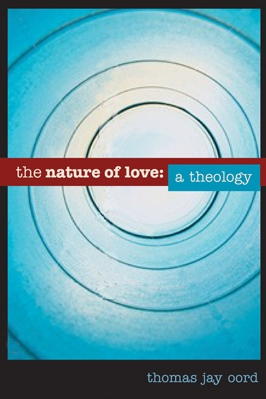
Despite these words from the Bible, theologians often neglect love when writing their theologies. Love is present in Christian devotional literature, worship lyrics, testimonials, and other forms of Christian experience. But most theologians write their formal theologies with love as an afterthought. The logic of love – God’s love for us and the love creatures are called to express in response – is largely absent and rarely followed consistently.
Given that themes of love are central in the Bible, one would think love would be central in formal theology. Most Christians know “God is love,” as 1 John says (4:8, 16). Many memorize Jesus’ words: “For God so loved the world that he gave his only Son, so that everyone who believes in him may not perish but have eternal life” (Jn. 3:16). These verses suggest the primacy of love for theology, and they suggest love is a central feature of God’s nature.
Most Christians know Jesus placed love as the pinnacle of ethics. Jesus called his followers to love. The greatest commandment, said Jesus, is this: “You shall love the Lord your God with all your heart, and with all your soul, and with all your mind, and with all your strength” (Mk. 12:30). The second is like the first: “You shall love your neighbor as yourself” (Mk. 12:31). The law and the prophets rest on these two commandments.
“By this will all know that you are my disciples,” Jesus tells his followers: “if you love one another” (Jn. 13:35). The apostle Paul tells Christians to “imitate God, and live in love, as Christ loves us…” (Gal 5:1). An adequate theology of love seems to require an account of love that makes sense both of God’s call to love and God’s own love as a model creatures should emulate.
Even before Jesus Christ revealed God’s nature most clearly, biblical authors considered love a, if not the, primary attribute of God. The phrase “steadfast love” is the most common Old Testament description of God’s nature. God’s love is everlastingly loyal. Divine love is relentless. The Psalmist speaks often of God’s steadfast love for creation, making statements such as “the earth is full of the steadfast love of God” (Ps. 33:5). Jeremiah records God declaring, “I loved you with an everlasting love.” The Chronicler says God loves the chosen people (2 Chr. 2:11) and the book of Deuteronomy states God loves alien peoples (Deut. 10:18). Old Testament writers witness powerfully to the love of God.
Although we find other themes in the Bible, love is central. From Genesis to Revelation and from the early Church through today, the Christian story revolves around love. Mildred Bangs Wynkoop says it well: “love as the central truth makes better sense out of the gospel than do other aspects of theology. Love is the gospel message.”
Because love sits at the center of the biblical witness, Christians throughout history have proclaimed God’s love for them and their obligation to love God and others as themselves. In fact, some scholars say the centrality of love differentiates Christianity from other religions. In his multi-volume and influential work on love, philosopher Irving Singer says, “What distinguishes Christianity, what gives it a unique place in man’s intellectual life, is the fact it alone has made love the dominant principle in all areas of dogma. Whatever Christians may have done to others or themselves, theirs is the only faith in which God and love are the same.”
Singer’s words confirm the call to consider love central in Christian theology. If love is the center of the biblical witness and the core of Christian experience, it should be the primary criterion for theology. Love should be the orienting concern and continual focus for speaking systematically about theology. We should discard ideas or theories that obviously undermine love.
Christian experience speaks in multiple ways to the primacy of love. Believers in the past and present draw from a rich tradition of Christian experiences and practices. Christian hymns, devotional readings, liturgies, prayers, sermons, websites and videos, Rock-n-Roll, and more testify to love’s primacy. The relationship between Christian experience and the biblical witness is a mutually enriching one. Christians attempt to respond lovingly to the God whom the Bible describes as acting in love to make human love possible. God also responds in love to decisions creatures make.
Christian saints speak eloquently of the centrality of love. Their testimonies are worth hearing and incorporating in theology. We must hear the witness of some of the great women and men of the Church.
Only when placed at the center can the logic of love explicitly extend to all aspects of Christian theology. Love – God’s love for us, revealed in Christ, in the Church, and in creation, and our love for God and others as ourselves – must be afforded its rightful place as the center of Christian theology.
Love matters are central, because love truly matters.
Mildred Bangs Wynkoop, A Theology of Love: The Dynamic of Wesleyanism (Kansas City: Beacon Hill, 1972), 18.
[ii] Irving Singer, The Nature of Love: Plato to Luther, vol. 1, 2nd ed. (Chicago: University of Chicago Press, 1984), 159.

Newsletter
For a 200-page book of Thomas Jay Oord's best-selling writings and to receive his newsletter, add your email address...
Comments
Well done, Dr. Oord. I do think that there needs to be some discussion on the centrality of love in Christan mediums and media and the level of comfort we get from proposing, listening, and watching our own ideas.
The statment ” Believers in the past and present draw from a rich tradition of Christian experiences and practices. Christian hymns, devotional readings, liturgies, prayers, sermons, websites and videos” should show” does not take that into account.
Thanks for that! Really looking forward to reading the book to see how you develop your ideas.
I have not read very many theological books so I was surprised to hear that theologians often leave love as an afterthought or leave it out entirely. I have always believed that love is central to the Story that God has written. Love is interwoven in every aspect of life. If a theologian leaves out love in his or her theology then there is no point to that theology. Love, I think, is so central that to leave it out is to miss something huge! Without, it I cannot see how that theology can hold together very well.
You are making my “must read list” longer and longer with almost every blog entry!
Looking forward to the book. Congrats Tom.
I agree wholeheartedly. Love is the differentiating factor between Christianity and other world religions. When Jesus commanded the ‘golden rule’ He changed it from a restriction of not doing bad to others and made it a do good to others. This is not merely getting along with others by not harming them but actively loving them as he commanded. Christians today are too often known for what we do not do; drugs, premarital sex or watch certain movies, ect. I think instead Christians should be known for what we do; love the outcast, sinner and enemies.
It is surprising to me also that Theologians don’t emphasize the Love that is central to the very way Christians behave.
Without Love we would not even been saved. Love was central to what Jesus and God felt for us, it was what spurred them into the plan for Jesus to come down to earth and save us.
For Love not to be central is baffling to me.
Love is central, and is the way we all need to live our lives! Loving one another is the way to be, treating one another as the way we want to be treated. Loving thy god with all our power, through all the troubles in the world is what he wants us to do. By doing this we provide a solid friendship with a lot of people and we are able to enjoy one another more the way we are able to look out for one another. I do not feel obligated to love God, I feel that loving one another and doing the right thing all will work out in the best for one another, and if I don’t love someone one or something God does not punish me for that.
I tend to agree with you. It has been my experience, as limited as it may be, that Christian theologians leave out the importance of love. It’s nice to see that that fact is starting to change.
This is a very relevant point. It amazes me that any theological approach to subjects can leave this vital part out. I can’t think of a subject where love can be left out of the equation. I’d like to see if anyone come up with a subject that does not include love. For example, you cannot argue the Eucharist-because even though it is tradition its underlying symbol professes the ultimate sacrifice and love of Jesus so that we can have a relationship with God. From an idealist perspective I might go far enough to say that love is the answer to all of our debates in theology-but of course that would be a Christian’s blanket answer so I’d have to take that statement back until I’ve done thorough research on it.
You are asserting in this excerpt that love is largely underestimated by theologians as a central pillar of Christianity. But you also say that “[m]ost Christians” understand that love is at the center of ethics.
Is this a book for the theologians? Perhaps to reawaken those who have become so engaged in analysis that they forgot what most Christians seem to understand instinctively? Or does the average Christian understand the centrality of love, but not the implications on how it should affect their lives?
I understand why so many individuals and theologians do not focus on Love. I see more examples of hate emanating from the “followers” of God than love. To some extent I think it is because that more typically makes the news however, I see a lot of scared Christians on a day to day bases who convert that fear into hate. No wonder people have a sued image of God.
There are also a lot of questions that arise which seem to question Love as the central part of God, the problem of evil, why we are here in the first place, why we are sinning by taking ourselves out…
Love is a defining quality of Gods perfection and often times theologians only touch on love as this (one of Gods qualities) and not the application we should use to apply love in our lives as christians. The bible speaks of how “God so loved the world He gave his one and only Son, so that whoever believes in him shall have eternal life.” In my eyes God puts more emphasis on how we should love than worry about how God is going to love. Proof of my statement comes in the form of the 1st and 2nd commandment.
I agree with you that love is the central quality of God and the message that Jesus brought to us. However, I do have some question on what role the other qualities or characteristics should take? God is love so obviously His love affects all parts of His character and attribute, but does that make those other characteristics less significant?
I wonder if the tendency of modern period theologians to under-emphasize love as central is connected to the tendency of the same to over-emphasize the sovereignty of God. Taking the sovereignty of God to its extreme expression leads to a notion of divine coercion: If God is in control of absolutely everything that happens, God is in control of individual “choices” of humans’ day-to-day lives. Thus the human has no real freedom, but is predetermined and cannot truly make his or her own choices.
Divine coercion makes it difficult to speak of a relationship of love between the human and God. Given Dr. Oord’s definition of love, one who is coerced cannot act intentionally to respond to another as the one has no true will by which to act. These two concepts, divine sovereignty and mutual love, create difficulties when one tries to claim full expressions of each.
I agree that love is definitely central to the Christian faith. I have heard this taught over and over, and it is written many times in the Bible. I truly believe that love is the most important thing. However, I still find myself unsure about how to “express” this love, especially when it comes to “loving ones enemy.” Does this mean that we always choose the more peaceful route and turn the other cheek? If so, does this really do any good, and is it really possible? I really wish there were absolute answers to these questions.
One of the most obvious and the most striking ideas presented in this section was the outright absence of love within published Christian theologies. Although there can be many reasons for this, the one that stands out for me (from experience in either environments influenced or founded in Christian teachings) has been the necessity of omitting terms that hold some kind of relative or individual interpretations. Because the goal is to avoid criticisms, misinterpretations, misunderstandings, or the negation of one’s argument, interpretations necessary to fully understanding broader terms are avoided. I struggle, however, because “love” is broad, open-ended, and subjective. How then are we (as Christians) supposed to more adequately represent a key element of our theology? How do we offer an interpretation when so many misrepresent “Christian love” to non-Christians? Can we unpack this idea into a more manageable entity when each of us experiences love in different ways?
I agree with Kara on the fact that it seems strange that many authors have seen love as an after thought. Love is the one thing that every human seems to be in agreement about. Not necessarily types of love, or how to love, but that we all need love and should share it. Not only can we enjoy sharing love with one another, but the love that we receive from God is unfathomable.
Paul says that without love, we are nothing. This little passage for me is amazing i look ath those five words that Paul says and began to think about those and i believe that he is so right. I am going to talk about sports with this passage, football is a sport that most people when they talk about it they say be mean, kill the opponent hurt them. But it reminded me about what Bobby Bowden once said “I taught my players to love one and other. If there was love on a team it created a brother hood. If you have brothers they will fight each other like crazy, but you have someone else that once to fight those brother and your going to have to beat up all the brothers.” I believe that this can be used with christians if we all love we can create a “brotherhood” a unity among us that we can bring others into that unity and make us all stronger for loving one and other. As non christians begin to watch they will see how we all love one and other and want to love and have what we want.
Dr. Oord. I’ve had a small epiphany reading this excerpt: When Jesus condenses the purpose of into two commandments, the only verb He uses is LOVE! How powerful. I feel blind having never seen that before. Thank you for asserting the primacy of love in contemporary Christian thought.
I am not one to really read many theology books, so I myself was surprised to hear that theologians leave out love in a lot of their theology. Love is very central to Christianity and to leave it out seems wrong. God talks most about love, like you said “The greatest of this is love” and the many other verses centered around love from the Bible. I do not see how someone could leave the most important part out. Its like forgetting the peanut butter in a peanut butter sandwich… just doesn’t work.
This is so true! Many times the center of Christian theology is so focused on using the correct and latest theological lingo, that the simple greatest commandment from God is overlooked. The centrality of love is something every human being is capable of achieving, and that’s the genius of God at work.
Dr. Oord makes a great observation about theologians, or anyone for that matter, leaving the virtue or quality of love out of their personal theologies. How is it that especially people who spend their lives studying scriptures and God are so quick to over look the most important one them all?
I think that we may sing Christian hymns, read our devotional readings, liturgies, prayers, sermons, websites and videos, but all of those things are abstract to a certain degree. There still isn’t a cut and dry definition of love that comes from those things. So I would say that the average person hasn’t even thought about what the word love really means. I’ll be the first to say that I never really thought about it until this class. The only thing I thought about love was from DC Talk… “Love is a Verb.” That was my definition of love that came from a song.
I am going to comment on this again after reading it the first time i truly to believe the word love is the central theme for the Bible. I also believe the central theme for our life and for Christians is the word love. The word love will always be the most challenging word to figure out and we will maybe never fully understand it but we will always strive to figure it out. One thing that i love with this is its such a challenge for all of us to figure out our own love in our lives.
I happen to agree with this post. Love is a central theme in our lives daily. All throughout life we are told that we are loved, but what does that really mean? We can say that we love something or someone how much truth is there? In a relationship sense, if people love each other enough to get married why do that cheat, lie and steal? Everyone will define love in a different way depending on their own lives and experiences. For some it seems impossible to love but for others it seems impossible to not.
I love this blog as it reveals the foundation of mission as God proves His love for humanity by showing how much he loves them to the point of giving His best in the form of His Son. This is an awesome demonstration of love. This is a lesson for us as we serve in mission.
Bev Mitchell writes…
Dear Dr. Oord,
I first want to say how much I am enjoying your book “The Nature of Love: a Theology”. On the second time through, your arguments are beginning to come together as a whole, I think. Having originally traveled in an Ol’ Ship of Zion with a definite tack away from Calvinism (Wesleyan) and spending lots of years in Pentecostal circles it was quite easy to make the jump from a more classical theology to a more open one. In fact, you are putting into concrete terms what generally has seemed to make sense to me for some time now. Having absorbed the basic foundation as a child, I wonder how much of what you present is essentially what the Holiness Movement believed, largely based on experience – without an adequate theological/philosophical structure. In another corner, do Christians, not burdened with power-laden theological preconceptions but with little exposure to experience-orientated churches, come easily to your arguments? I am also a professor of biology (retired from the U of Alberta) and have had to come to terms with understanding the Bible in the light of the marvels of a non-coercive creation (process?). And it seems more marvelous with each passing year. Your insistence that coercion be ruled out entirely (based on Scripture) is completely compatible with evolutionary biology, absent any God-of-the gaps action.
In appearances, you go quite far in your book toward process theology, and many traditionalists will just not understand, that in fact, your ‘essential kenosis’ affirms anything but a ‘crippled’ god. Since God’s Power derives from Love and since that Love is active and working in all of creation all of the time, the very existence of creation is constantly dependent on the power of Love. Would it then be pushing your thesis too far to say that, should God ever set Love aside in order to coerce, creation would instantly cease to exist? If this is a reasonable thought, I can see why you wouldn’t put it that way in the book!
You almost say (maybe you do say and I missed it) that God is not only necessarily Love but also necessarily all powerful and necessarily creative. Or is it better to say that Love yields Almighty Power from which flows Creative Power. I like the former. Related to this, it must also be true that when Christ utterly defeated sin and death on that blessed weekend, he did it entirely with/through Love – even when confronting Satan. It is hard (impossible?) to imagine Love having such Power and even harder to see what the mechanism might be that leads from such Love to such Power. As they say, “you can’t make this stuff up!” So, it seems to me that all three – Love, Power and Creativity are essential to God’s nature.
Finally, concerning the Garden and the Apple. When God began to create the world, whatever made up the tohu bohu along with evil/rebellion/or rebellious spirit were present (maybe tohu bohu and evil are the same thing?). Whatever it is, it may have been there for quite some time. The rebellion in spiritual reality took place before the creation of the world and, likely, God’s outpouring of Love/Power/Creation was in response to that rebellion. Clearly, the new creatures with libertarian freedom could have returned God’s Love without knowing evil, but what would one’s understanding of Good be like without knowledge of evil? It’s reminiscent of Paul’s argument about the Law being necessary for a proper understanding of sin. In any case, for whatever reason, we creatures with libertarian freedom and our similarities to God do not possess the love (power) needed to resist evil.
It does all have to fit, someday. Fortunately, we don’t depend on our theology for redemption – the god in our head can be small, even warped and always incomplete while the God in our heart is the real One. Thanks so much for your work, and for taking the risks you do to challenge us to move from some of the ruts into which we have fallen.
Blessings,
Bev Mitchell