
Open theology offers an impressive theological framework. But Open theology has a problem with the problem of evil.
In my newly published book, The Nature of Love: A Theology (Chalice), I argue that Open theology’s basic proposals work well for constructing a theology of love. Open theology offers biblically oriented ideas to overcome problems for love in conventional theologies. It helps make sense of love from biblical, rational, and experiential perspectives.
My own theology of love is a form of Open theology.
The Role of Freedom in Love
My theology of love draws some from Clark Pinnock’s theology. I am indebted to his wisdom and scholarship. But I disagree with him on an important issue: how we best understand God’s power.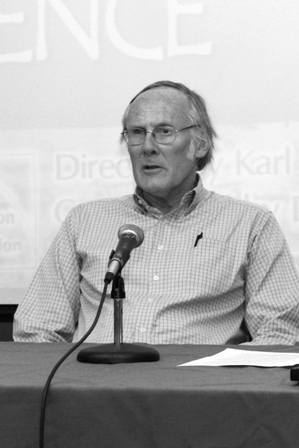
The issue of God’s power is important to solving the problem of evil. Pinnock offers what he calls a “logic of love theodicy” to answer that problem.
Central to his logic of love theodicy is his belief in genuine creaturely freedom—a theory sometimes called “libertarian freedom.” “The Bible itself assumes libertarian freedom when it posits personal give-and-take relationships and when it holds people responsible for their actions,” argues Pinnock. “On this matter I am moved by the Bible itself.”
“Forced love is a contradiction in terms,” Pinnock says, “and God does not force his love on us.” “Love woos, it does not compel.” “It is love’s way not to overpower but to be gentle and persuade,” asserts Pinnock. “Grace works mightily but does not override.”
Pinnock summarizes his theodicy with the following brief statements:
1. God created for the sake of loving relationships.
2. This required giving real freedom to the creature so that it not be a robot.
3. Freedom, however, entailed risk in the event that love was not reciprocated.
4. Herein lays the possibility of moral and certain natural evils—those which appear irredeemably malicious and demonic.
5. God does not abandon the world but pledges a victory over the powers of darkness. In such a theodicy, God does not will evil but wills love and, therefore, freedom that opens the door to things going right or wrong.
6. Though God does not protect us from ourselves, God is there redeeming every situation, though exactly how, we may not yet always know.
Pinnock’s Version of Open Theology is Inconsistent
To the question, “Why do genuine evils occur?” Pinnock offers a strong answer: free creatures, the natural constraints of creation, and/or demonic powers are to blame. God does not cause genuine evil. Because of love, God created others as free agents, and they (and other created agents and forces) are culpable for causing evil.
To the more difficult question, “Why doesn’t God prevent genuine evils from occurring?” – Pinnock’s theodicy breaks down.
Sometimes, Pinnock says God does not act coercively. God’s power is not “the power of a puppeteer, the power to make everything else surrender,” he says. Instead, God “makes free agents as creators and movers in their own right.” God “made a kind of covenant of noncoercion with creatures,” Pinnock decides. “Love and not sheer power overcomes evil,” he explains, and “God does not go in for power tactics.”
Other times, Pinnock believes God is coercive. “God is not bound to persuasion alone,” he claims. “Coercive power is available to God, even if he uses it sparingly.” God sometimes acts coercively, because “God has the power to intervene in the world, interrupting (if need be) the normal causal sequences.”
The typic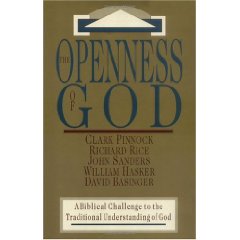 al version of Open theology is inconsistent on this crucial issue. If love acts persuasively by granting freedom and yet God sometimes coerces, God does not love consistently.
Pinnock says that love does not command, does not overpower, does not force, does not compel, and does not override. But this means God does not love when God does command, does overpower, does force, does compel, and does override. We cannot have it both ways.
To account for events in which God seems to express all-controlling power, Pinnock thinks God can coerce and occasionally does so. If God “controls nothing, little room is left for miracles and the final victory,” he says.
God “was uniquely active in that strand of history that culminated in the life, death, and resurrection of Jesus,” says Pinnock. And the resurrection of Jesus requires more than persuasion.
Accounting for these events is not only admirable. In my opinion, accounting for them is crucial to the Christian witness to the good news. But believing God must use coercive power to accomplish these things inhibits us from offering a good answer to why a God capable of coercion doesn’t also prevent genuine evil.
God’s Freedom Is Relatively Irrevocable?
Pinnock’s strongest—yet still unsatisfying—answer to why God could prevent genuine evil but doesn’t pertains to God’s freedom-giving activity.
A “relative irrevocability of freedom and the stable natural order God has set in motion,” says Pinnock, means God cannot simply terminate creatures and creation. “To prevent his creatures working evil would be to act against the liberty God gave them and removing the freedom would show God was not serious in giving it in the first place,” declares Pinnock.
This response initially sounds promising — until one realizes Pinnock believes God’s gift of freedom is relatively irrevocable. Relative irrevocability means God retains the ability to coerce.
Sometimes God exercises coercive power, says Pinnock. His version of Open theology “does not recognize inherent limitations in God.” God has become voluntarily self-limited when giving freedom to others. This self-limitation—because it is voluntary—is not absolute. Nothing could stop God from becoming un-self-limited to prevent any genuinely evil event.
Because Pinnock’s version of Open theology says God occasionally coerces, he cannot solve the most important obstacle to constructing an adequate theology of love: the problem of evil. A perfectly loving and voluntarily self-limited God should interrupt creation’s causal sequences to prevent genuine evil.
As Pinnock sees it, God is able to prevent evil but not always willing.
God’s Love Must be Steadfast
Part of what it means to love steadfastly, I argue, is to act continually to promote overall well-being. The God whom Pinnock describes possesses coercive power but sometimes fails to thwart genuinely evil tragedies, holocausts, catastrophes, and horrors. This is not steadfast love.
To his credit, Pinnock admits his proposal cannot solve the problem of evil. He “laments God’s inaction in respect to evil.” He believes “God could be doing more than he is doing and wonders why [God] isn’t doing it.”
Those who point out that his version of Open theology fails to solve the problem of evil, admits Pinnock, “make a good and, to me, painful point.”
We Need a Different Doctrine of God’s Power
When it comes to conceiving of God’s love and power, we should look for an Open theology option other than the one Pinnock proposes. We should agree with him “it is love’s way not to overpower but to … persuade.” To present God as consistently loving, however, we must deny God can totally control others.
The doctrine of divine power we affirm should support Christian doctrines of miracles. It should support the resurrection of Jesus and a victory at the end of history. It should support a biblically oriented doctrine of creation.
But a more adequate view of God’s love and power should account for these important Christian events while denying God ever coerces.
My Own Proposal
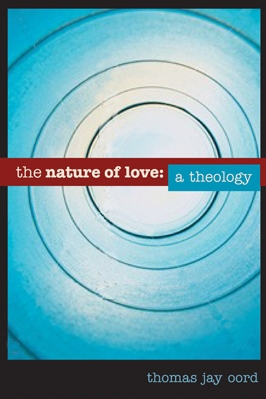
One of the main reasons I wrote The Nature of Love: A Theology was to offer a theology of love that combines God’s power and love adequately. I call my proposal “Essential Kenosis.” My proposal overcomes the problem of evil and presents God as steadfastly loving.
Essential Kenosis offers a way of understanding God’s power, while affirming the occurrence of miracles, the resurrection of Jesus, hope for a final victory at the end of history, and a biblically supported doctrine of creation.
I look forward to dialoguing with readers now that the book is finally published!