
I’ve been asked to write a chapter in a book exploring what it means to be made in God’s image. The invitation provided me the opportunity to think more deeply than I have about whether we should say nonhuman animals can express the image of God (imago dei).
I’m grateful to Michael Burdett, a postdoctoral fellow in Religion, Science and Technology at Wycliffe Hall, University of Oxford, for coordinating this project and inviting me to participate. As I understand it, the book will offer a variety of views. This seems very appropriate, because the range of ideas about the image of God is vast, both in the history of Christianity and today. There is no consensus among scholars about what it means for any creature to be made in God’s image.
I asked Michael if I could promote and defend what I call “the relational love” view of the imago dei in my essay. But I was also excited to explore recent scientific material that should rightly influence the issue of how humans and other animals are similar or different. In this blog essay, I want to explore the issue of animals being made in God’s image. Of course, humans are animals in the strict sense, but I’ll use “animals” in the more popular sense, which pertains to nonhuman creatures of various kinds.
Are Humans the Only Bearers of God’s Image?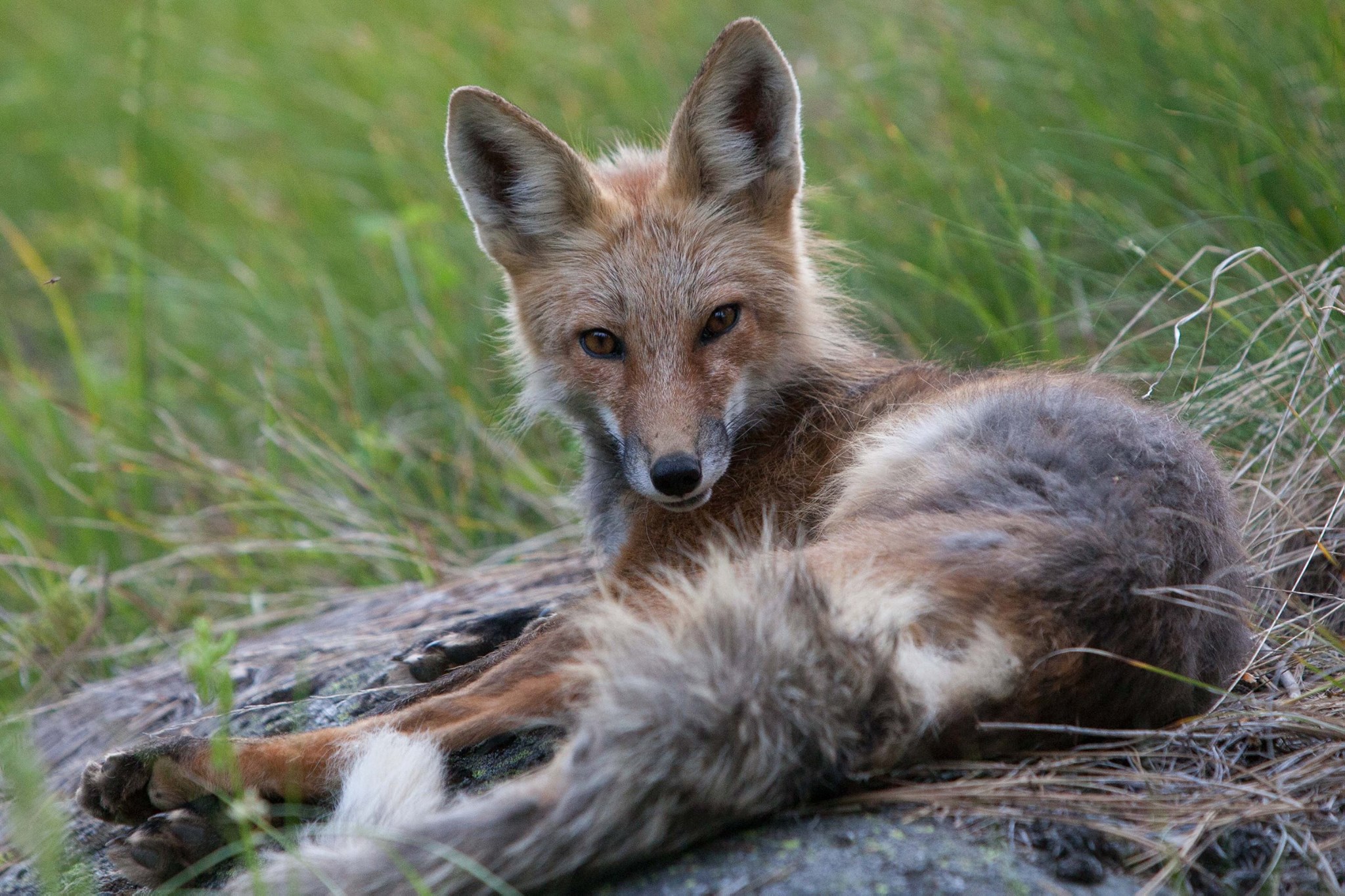
The majority of Christians throughout history have assumed the imago dei is unique to humans. The writers of Genesis only refer to humans as having been made in God’s image. Most Christians would agree with biblical scholar John Walton, for instance, when Walton says that “the image of God distinguishes us from all creatures” and the imago dei is “a direct, spiritually defined gift of God to humans.”[1] Many throughout the centuries used the imago dei to elevate humans above or distinguish humans from nonhuman creatures.
But there are good reasons to wonder if Christians are warranted in thinking only humans bear the imago dei. Genesis text doesn’t say humans are the exclusive bearers of God’s image. It is silent on whether animals also bear the image. The argument from silence does not make a strong case either for or against animals being made in God’s image.
Several aspects of the Genesis account suggest closer connections exist between humans and other creatures than what many are accustomed to thinking. For instance, the writers of Genesis say God created humans on the same day as other land animals. Human beings are not special, in other words, in the sense of having their own day of creation. In addition, the Genesis 2 creation story says God creates humans and every animal in the field and every bird of the air out of the dust of the earth. Humans are not made with some special materials. And later in Genesis we find God making a covenant not just with humans, as the earlier chapters might suggest, but with all creation. Humans are not God’s only covenant partners.
Continuity between Humans and Animals
Science has played a significant role in discovering similarities between humans and other creatures. Evolutionary theory, for instance, suggests that vast continuity exists between humans and other creatures. This continuity persists not only in the gradual evolutionary changes between species over long periods of time. It is not only in the evolutionary relationships and shared history between humans and other creatures. Scientific discoveries in recent decades also show that humans share vast genetic similarities with other animals.
Perhaps the strongest reason to wonder if nonhuman animals also bear the image of God comes from observing the capabilities of animals themselves. For instance, many animals – especially dogs, dolphins, bonobos, elephants, and many species of birds – are intelligent, far more intelligent than what was previously thought. Those who like me were raised on a farm, have had a close family pet, or have spent significant time hiking in the wilderness know first-hand how smart animals and birds can be. If being intelligent or using reason identifies one as bearing God’s image, many cre atures must be made in the image of God.
The similarities between humans and other creature go beyond intelligence. Many animals seem to make choices, for instance, as numerous laboratory experiments with animals show. Many are creative, building complex structures with inanimate objects and complex social systems. Many creatures express emotions, including empathy and fear. Some highly complex animals, such as wolves, possess a moral sense. Birds and animals communicate with one another in fairly sophisticated ways, which means communication is not a characteristic exclusive to humans. In sum, traits that at one time were thought uniquely human are now known to be present among other creatures, although often in a different or diminished form.[2]
Humans are Unique in Degree but Not Kind
In his massive multidisciplinary work on the imago dei and contemporary science, Wentzel Van Huyssteen explores how humans might be different from other creatures. With a special focus on evolution and paleoanthropology, Van Huyssteen concludes that “there is no single trait or characteristic that adequately captures the notion of human uniqueness.” However, humans are “clearly distinguished from other animals on this planet,” because they “share an identifiable and peculiar set of capacities and propensities.”[3] This set includes language, self-awareness, consciousness, and the capacity for symbolism, ritual and mythology.[4]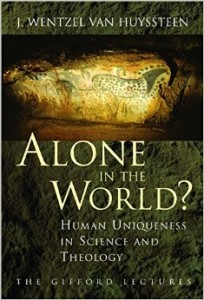
Notice that the capacities Van Huyssteen lists are complex expressions of more general capacities found among other creatures in less complex forms. For instance, humans may be the only creatures capable of speaking multiple languages. But many species possess the capacity for communication in general, the broader category in which language is a complex form. Or take self-reflection, which is a complex form of the more basic capacity of awareness through perception. Many creatures possess awareness of others and themselves in at least a minimal form. Even highly abstract capacities that seem distinct to humans, such as symbolic reasoning, seem only to be a difference in degree and not kind. Other animals may not be able to think symbolically, but some possess significant cognitive capacities.[5]
The capability differences between humans and other creatures seem finally to amount to differences of degree and not kind. The differences among creatures pertain to complexity. There are good reasons to believe humans share basic attributes with other creatures.
Does Human Uniqueness Pertain to God’s Call?
Upon realizing that humans share much in common with other creatures, Christians may decide the imago dei is mostly about the calling, function, or role humans have been given. After all, in the same passage of Genesis in which God says humans are made in the divine image, God asks humans to have dominion over or care for other creatures.
The calling to have dominion over or care for others, however, seems also shared by other creatures. God’s specific calls to humans are likely appropriate to their unique capacities and abilities. But most birds and animals care for and have dominion over their young. Loving care is not the domain of humans alone. A growing field of scientific research indicates that some creatures care for, nurture, or protect those outside their own species. Dogs sometimes care for deer; goats sometimes care for horses; cats sometimes care for ducklings.[6] Animals that tend to the well-being of others fulfill the same general function, role, or calling that humans fulfill when they tend to the well-being of creation and its creatures.[7]
Acknowledging that humans share much in common with other creatures – both capabilities and general callings – should prompt Christians to think anew about what it means to be made in God’s image. Perhaps other creatures also bear the image of God. Using Philip Hefner’s notion that creatures can be co-creators with God,[8] Jason Roberts argues this point: “the shared evolutionary history of all living species makes them all created co-creators to some extent and makes interspecies relationships constitutive of the image of God. While the divine image may be borne by human beings in distinct ways, it is shared with the rest of creation in at least this sense.”[9]
[bctt tweet=”A relational love view of the imago dei says many creatures may reflect the image of God.”]
The relationa l love view of the imago dei is open to the possibility that other creatures reflect the image of God.
Conclusion
In my book essay, I explore many other issues related to the image of God and my proposed relational love view. I focus, for instance, on what the New Testament writers say about the image of God, especially the special role Jesus Christ plays in expressing that image.
To conclude this blog essay, however, I’ll insert the final paragraph from my book chapter. It gives a very brief idea of my relational love view of the image of God.
“The relational love view of the imago dei says creatures can image God’s creative reign of love when they love in response to God’s leading. Rather than dominating and abusing others, the God of relational love tenderly cares for creation. Creatures can join in this shalom activity, because they are made in God’s image.”
Look for the imago dei book in 2016.
[Tweet theme=”basic-white”]Acknowledging that humans share commonalities with animals should prompt us to rethink the imago dei. Thomas Jay Oord[/Tweet]
Footnote References
[1] John Walton, The Lost World of Adam and Eve: Genesis 2-3 and the Human Origins Debate (Downers Grove, Ill.: Intervarsity Academic, 2015), 193, 194.
[2] For a helpful article on the subject, see Nancy R. Howell, “Relations between Homo sapiens and Other Animals: Scientific and Religious Arguments” in The Oxford Handbook of Religion and Science, Philip Clayton and Zachary Simpson, eds. (Oxford: Oxford University Press, 2006), 945-961.
[3] J. Wentzel Van Huyssteen, Alone in the World? Human Uniqueness in Science and Theology (Grand Rapids, Mich.: Eerdmans, 2006), 288.
[4] Ibid., 317.
[5] See, for instance, The Animal Mind: An Introduction to the Philosophy of Animal Cognition (New York: Routledge, 2015).
[6] The ways in which creatures in one species care for those of another species vary, and the examples are numerous. One of the best collections of video clips noting such cross-species care is Animal Odd Couples (Nature – PBS, November 7, 2012) http://www.pbs.org/wnet/nature/animal-odd-couples-full-episode/8009/. For a more scholarly presentation of this widespread phenomenon, see Lee Alan Dugatkin, Cooperation among Animals: An Evolutionary Perspective (Oxford: Oxford University Press, 1997).
[7] I explore the capacity for love and altruism in humans and other creatures in my book, Defining Love: A Philosophical, Scientific, and Theological Engagement (Grand Rapids, Mich.: Brazos, 2010). For a more accessible book on the subject, see my book, The Science of Love (Philadelphia: Templeton, 2005).
[8] Philip Hefner, The Human Factor: Evolution, Culture, and Religion (Minneapolis: Fortress, 1993), ch. 15.
[9] Jason Roberts, “’Fill and Subdue?’ Imaging God in New Social and Ecological Contexts,” Zygon, vol. 50, no. 1 (March 2015), 52.