
In Jacob Arminius: Theologian of Grace, Keith Stanglin and Thomas H. McCall elucidate Arminius’s theological perspectives. I commend them for this much-needed explanation of Arminius’s own theology. But the book left me unsatisfied.
DIVINE SIMPLICITY AT ODDS WITH RELATIONAL LOVE
I was especially struck by the authors’ emphasis early in the book upon Arminius’s view of divine simplicity. Stanglin and McCall say Arminius follows divine simplicity as understood by Thomas Aquinas, who argues that God’s essence and existence are identical. This identity of the two leads Arminius, say the authors, to embrace the traditional doctrines of divine immutability and impassibility.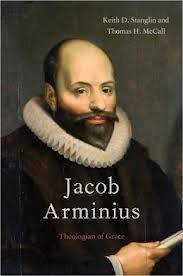
The authors say in this context that although Arminius emphasizes God’s love, he believes God’s love is only active. In my view, Arminius misses an important conviction shared by many contemporary theologians, which is that love involves both active and receptive elements. In other words, love both gives and receives, because love is relational. Perhaps had Arminius distinguished between God’s unchanging essence and God’s changing existence, which many open and relational theologians do, he would have rejected a Thomistic version of divine simplicity, with its entailments of particular concepts of divine immutability and impassibility.
FOREKNOWLEDGE ISSUES
In passages about God’s omniscience and foreknowledge, we find the greatest differences between Arminius and contemporary open theologians. To be clear, Arminius is not an open theist. Here, the authors are right to say that Arminius is “in step with the main lines of the Christian tradition in his simultaneous affirmation of foreknowledge and denial of determinism.” They add, however, that “although most theologians have recognized the tension in holding these two concepts together, many coherent solutions have been proposed over the centuries” (64).
As an open and relational theologian, of course, I disagree with this second sentence. I’ve never encountered any coherent solutions for how God possesses exhaustive foreknowledge and yet creatures be genuinely free.
But I do agree that exhaustive divine foreknowledge – if it were possible – does not logically necessitate divine determination. Instead of foreknowledge necessitating determination, what is at stake is the ontological status of the future. The idea God infallibly and exhaustively knows the future suggests that the future is fixed, settled, and complete, because one can only infallibly and exhaustively know a future that is fixed, settled, and complete. To my mind, however, a fixed future is incompatible with libertarian freedom, which requires a future not yet fixed but open and full of possibilities.
GOD PERMITS EVIL?
The question of whether God’s nature logically precedes God’s will seems to me the heart of the differences between most Reformed theologies in the Calvinist tradition and Arminius and the general Arminian tradition. Because Arminius believes God’s nature precedes God’s will, God’s actions cannot contradict God’s nature. Many Reformers reverse this and emphasize the sovereignty of the divine will as primary. The vast majority of open and relational theologians side with Arminius on this fundamental dividing line.
I was pleased the authors devote space to Arminius’s statements about what God cannot do. God can only will that which is not opposed to the divine essence. In statements about what God cannot do I believe we find the theological seeds for process theology’s notions about God’s inability to coerce.
Unfortunately, however, Arminius does not work out the implications of divine limitation in a way that allows him to solve the problem of evil. To absolve God, he tries to distinguish between God willing evil to occur and God merely permitting it. Arminius says he understands God’s providence as both willing and performing good acts, but God “freely permits actions that are evil.”
On this point, I’m with John Calvin who criticizes this so-called distinction between an omnipotent God permitting evil rather than willing it: “There can be no distinction between God’s will and God’s permission,” says Calvin “Why say ‘permission’ unless it is because God so wills?”
Distinguishing between God willing evil and God permitting it offers little consolation to victims of evil. When victims realize that God, as understood by Arminius, could have prevented their pain and suffering but voluntarily permitted it, they will likely find it difficult to retain trust in God’s love. After all, an omnipotent God who wills evil is only slightly more morally reprehensible than an omnipotent God who could unilaterally prevent evil but permits it nonetheless.
Arminius employs what I find to be an unsatisfactory greater goods theodicy, when he says, “God would never permit evil if he could not by his omnipotence produce good out of evil” (100). The implication here, of course, is that every rape, genocide, murder, etc. must have been permitted for some greater good. I find it difficult, if not impossible, to believe this is true for every instance of evil.
WHERE ARE THE BRIDGES TO OPEN THEOLOGY?
I was most surprised by comments the authors make about open and relational theologies. When describing the influence of Arminius, they write, “If the theology of Arminius himself has any real connection with the term, then it is highly doubtful that, say, open or process theism, or views that deny the “classical” doctrine of God… could rightly be considered ‘Arminian,’ despite the fact that, in popular understanding, such views may often be regarded as forms of Arminianism” (196).
In fact, the authors seem to go out of their way to build bridges to those who self-identify with the more Calvinist strand of the Reformed tradition. And yet I found little evidence they wanted to build bridges to open and process theologies.
I agree with the authors when they write that “when most modern readers encounter Arminius’ actual teachings and writings for the first time, they are generally astonished to find him more ‘Reformed’ than they have previously thought” (202). But my experience with this book and my earlier reading of the Declaration of Sentiments is that Arminius’s theology is largely congenial with key themes in open and relational theologies.
For instance, the authors summarize Arminius’s theology by saying, “God’s love is communicated not as an irresistible coercion, but as a tender persuasion that will not finally override human will” (200). This kind of statement is at the core of open and relational theology, and I do not find statements like this in the more Calvinist-leaning Reformed traditions. They also say, “the relationship between God and humans is one of mutuality. God takes the initiative, but salvation is a cooperative process” (188). Again, that sounds like the kind of soteriology championed by most open and relational theologies.
Although the authors note differences between Arminius’s views and Calvinism, they say these differences should not “obscure the similarities” (204). I wondered why Stanglin and McCall do not make similar statements about the even greater similarities between Arminianism and open theology. To say it another way, the authors seemed warmly inclined toward interpreting Arminius as part of the Reformed tradition but cold or silent to the idea that Arminianism shares strong family resemblances with open and relational theologies.
Upon hearing my complaint that the book was warm to Calvinism but cold to open theology, co-author Keith Stanglin argued he was only giving an historical description of Arminius’s theology. He said this is why the book fails to identify similarities between Arminius’s own theology and open and relational theologies. I agree that the work is primarily historical, and I have great appreciation for this work. But quotes like the ones I offer in previous paragraphs suggest that while the book is primarily historical, the authors occasionally make comparisons that go beyond mere historical description.
MAJOR INCONSISTENCY IN ARMINIUS
In Stanglin and McCall’s helpful discussion of Arminius’s opposition to supralapsarianism, I found a significant contradiction in Arminius’s own logic. Arminius rejects supralapsarian predestination, in part because he thinks God cannot demonstrate love and good pleasure to a nonentity (see explanation of supralapsarianism in note below). Neither can God provide salvation and blessing for a non-entity. Arminius makes these statements when he criticizes the supralapsarian idea that God elects some to salvation before God created them. In other words, Arminius says God must create actual creatures before God can elect, love, and bless them.
But here is the problem: if God cannot elect, love, and bless non-entities because they are not yet actual, I fail to see how – using Arminius’s own logic – God could foreknow what non-entities will do. If God cannot bless, love, and elect non-entities because they do not yet exist, why say God can foreknow the actions and decisions of non-entities? Middle knowledge does not help us get around the problem.
(NOTE: The primary difference between supralapsarianism and infralapsarianism is whether the decree of election is considered before or after the fall. If God decrees that it will be impossible to avoid sin and damnation, Arminius believes that sinners are not morally responsible for their sinful actions and God is responsible for sin. I agree. The Arminian position is neither supralapsarian nor infralapsarian. See the appendix on page 140 of the book, because it lays out nicely differences between supralapsarianism, infralapsarianism, and Arminius’s own view of predestination.)
ARMINIANS SHOULD CHOOSE OPEN THEOLOGY
All of this suggests that rational consistency – something Arminius values – requires us to choose between 1) supralapsarian predestination and 2) exhaustive foreknowledge. One could choose to say God can love and foreknow non-entities, which means affirming supralapsarian predestination. To do this, however, entails admitting Arminius was wrong to criticize Calvin’s followers. In other words, a person could simply accept the Calvinist version of predestination.
The other option is to think Arminius is right to oppose supralapsarian predestination and to claim God cannot love non-entities. Choosing this option should also involve, however, admitting God cannot foreknow with certainty the actions and decisions of future non-entities – who by definition do not yet exist – thereby denying exhaustive divine foreknowledge. In other words, one could choose to embrace something like open theism.
Of course, I find open theism more satisfactory overall. And I invite my Arminian friends to consider embracing open theism, because it includes Arminius’s basic soteriology without affirming exhaustive divine foreknowledge. In other words, I believe open theology is more theologically consistent overall than Arminius’s own position.