
I’ve been in conversation lately with people thinking through my theology of God’s uncontrolling love. Many like my view that God cannot control others. But they think the biblical writers say God sometimes controls.
Two examples of God’s alleged control often arise in our conversations. Both are claimed to be supported by the Bible. I want to explore both briefly and show that they don’t require us to think God controls creatures or creation.
Hardening Pharaoh’s Heart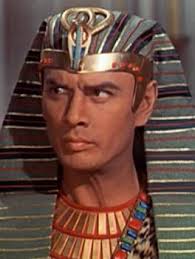
The first example of God’s alleged control is a well-known passage about God “hardening” Pharaoh’s heart. Some biblical scholars, including Terence Fretheim, have argued that “hardening” does not mean God controls Pharaoh. “An act of hardening does not make one totally or permanently impervious to outside influence,” says Fretheim, “it does not turn the heart off and on like a faucet.” And, says Fretheim, “divine hardening did not override Pharaoh’s decision-making powers.”
In the Exodus story of Pharaoh, we find both the J(Y)ahwist and Priestly strands. Both portray the hardness of Pharaoh’s heart as his own negative reaction to signs from God. Both emphasize God triumphing over Egyptian deities. Brevard Childs concludes that the hardness-of-heart motif in Exodus “has been consistently over-interpreted by supposing that it arose from a profoundly theological reflection and seeing it as a problem of free will and predestination.”
I find it intriguing that “hardening” is the word English translators have chosen for the Hebrew word. As Fretheim, Childs, and other scholars note, “hardening” doesn’t explicitly mean “control.” The context suggests that God is doing something to Pharaoh, although Pharaoh also does something to himself. My main point is that we need not think of God’s activity in this story as involving complete control.
Miracles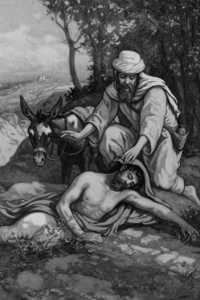
The second example I often hear to support the idea that God sometimes controls is really a set of examples. That set comprises the miracles mentioned in the Bible. Many people think miracles require divine control. (Here’s a link to one of my previous blogs that defines miracles.)
Biblical scholars often divide miracles into “person/organism” miracles and “nature” miracles. In most person/organism stories, biblical writers explicitly mention the activity of the person or organisms involved. For instance, many miracles stories identify the faith of those healed or lack of faith of those not healed.
Other types of creaturely cooperation are also often mentioned in such stories. In person/organism miracles, it’s easy to imagine creaturely cooperation with God, which means God does not control others entirely to do a miracle.
Nature miracles are more difficult to imagine how creatures contribute to the miracle. We don’t think wind, waves, and mountains, for instance, make intentional responses to God’s miraculous activity. Nature miracles typically involve inanimate objects.
Interestingly, however, biblical writers often use anthropomorphic language when talking about nature. Wind and waves are said to “obey,” rocks “cry out,” the trees of the field “clap their hands.” Biblical writers were not afraid to anthropomorphize the inanimate objects that we today don’t think have responsive capacities.
In my book, The Uncontrolling Love of God, I offer ways to account for nature miracles using well-established theories in physics. In my work, I talk about God working in relation to nature. I don’t claim that inanimate objects make decisions or intentionally respond. I argue instead that sometimes the conditions and animate objects of nature are correctly aligned for God’s miraculous workings.
Perhaps most importantly, however, none of the nature miracles in the Bible EXPLICITLY say God controlled. The biblical writers don’t explicitly say God acted as a sufficient cause, unilaterally determined, or completely controlled creatures or creation. In other words, the Bible does not explicitly say God controls creatures or creation when acting miraculously.
[Tweet “The Bible does not explicitly say God controls creatures or creation when doing miracles.”]
An Uncontrolling Love Hermeneutic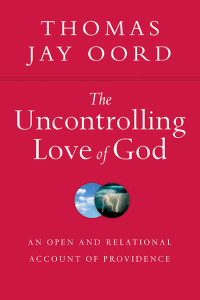
I began this essay saying I’m in conversations about God’s uncontrolling love. Some people in these conversations are leading theologians.
I’m finding that Christians of various backgrounds, training, and experiences come to the biblical text with the assumption that God can control. They think God can act as a sufficient cause, to use the philosophical language. These Christians read various biblical passages – especially miracles stories and Pharaoh’s heart hardening – and then assume God controlled creatures or creation. The biblical passages don’t explicitly say God is controlling, however. But the assumptions about God’s power these Christians bring to the text make it difficult for them to interpret the biblical passages in light of what the words actually say.
All of this makes me think Christians need to consider reading the biblical text with a hermeneutic of uncontrolling love. Instead of thinking God has controlling power (which the Bible never explicitly supports), Christians should think God expresses uncontrolling love. I’m finding that reading the Bible through the lens of love makes the Bible come alive in ways that make sense and promote abundant life.
I first proposed the idea that God is inherently uncontrolling as a way to account for evil. But recently I’ve realized that thinking God expresses uncontrolling love can help us read the Bible better too.
Interpretation matters. And a hermeneutic of love matters a lot!
[Tweet “Believing God expresses uncontrolling love can help us read the Bible better.”]
- Terence Fretheim, Exodus: Interpretation (Philadelphia: Westminster John Knox, 2004), 97.
- Ibid., 99.
- Brevard Childs, The Book of Exodus: A Critical, Theological Commentary [Louisville, KY: Westminster John Knox, 2004),