Most theologians would say “yes.” I say “no.”
If current reports are correct, ISIS planned various attacks in Paris that killed more than 100 people and injured about 500. An attack occurred in Beirut, and other acts of terror have been committed. The death, pain, and suffering are immense.
Those like me who believe in God are wondering how we ought to think theologically about this. We’re wondering what we should do. What does love ask of us now?
I join those believers who offer heartfelt condolences to the family and friends of victims. These are dark days. Our hearts rightly go out to those in pain and grief. And I’m pondering what more I can do to help.
But I’m also thinking about God.
Many believers will rightfully say God is present with all people in times of horror and tragedy. God suffers with victims and survivors. God consoles and suffers with those in pain.
I agree. But I don’t think that goes far enough.
Other believers will say God is angry when people choose violence in this way. They will say God opposes such terror-oriented activity. God hates injustice and evil.
I agree that God hates sin. But I don’t think that goes far enough.
Some believers will ask what proactive steps can be taken to prevent further attacks. A number of proposals will surface, I’m sure. Some may be wise; others not. God is calling us to act for the good.
I agree with those who say that we must find a way to respond in love to prevent more suffering. But I don’t think that goes far enough.
Too few believers will go so far as to ask this question: “Could God have stopped the Paris attacks?”
[bctt tweet=”Too few believers will go so far as to ask this question: “Could God have stopped the Paris attacks?” “]
Perhaps many believers will not ask this question, because the answer they have been told is not comforting. Most theologians in the past and present, after all, would say God allowed the Paris tragedies and other terrorist attacks. They believe God has the kind of power to prevent this unnecessary death and suffering. But according to most theologians, God permitted this pointless pain in Paris and elsewhere.
I disagree.
[bctt tweet=”According to most theologians, God permitted the attacks in Paris and elsewhere. I disagree.”]
A few theologians will say it is logically impossible for God to both give free will and not give free will. So in choosing to give free will to the ISIS terrorists, God was self-constrained.
But these same theologians will say that if God wanted to do so, God could interrupt the entities, agencies, molecules, and atoms involved in these events. These aspects of reality do not have full-blown freedom. So controlling them would not mean overriding freedom.
Many of these theologians would also say God could interrupt natural laws, if God saw fit. They believe God could intervene among entities and atoms and their law-like regularities in ways that would not involve taking away the free will of those who perpetrate evil.
For instance, this view says God could have jammed the rifles the terrorists used. It says God could have made the bombs fail to detonate. Or God could have controlled the weather or environment to thwart the attacks. In the minds of these theologians, God can control all parts of creation that don’t involve free will, if God so chose.
But if God can control non-free agents and entities, why didn’t God do so to prevent the Paris attacks?
The uncomfortable truth is that most theologians and Christians today and throughout history have said God permits genuine evil. God allows pointless suffering. And they appeal to mystery when asked questions like, “Did God allow the Paris attacks?” They say, “Don’t ask me, I’m not God!”
By contrast, I think theologians and Christians in general need to rethink God’s power. This means rethinking what it means to say God can control creatures and creation, whether these existing things have freedom or not.
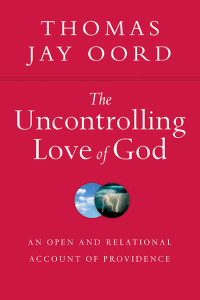
In my new book, I’ve carefully laid out an argument that says God’s uncontrolling love prevents God from being able to stop genuine evil unilaterally. God is still almighty, I argue. God is omnipresent and loving too. God knows everything that can be known. But the uncontrolling God I describe should not be blamed for tragedies like those in Paris, because God cannot stop them acting alone.
The key to my answer is my claim that God’s self-giving, others-empowering love comes first in God’s nature. This means God must give freedom, agency, self-organization, being, or law-like regularities to creation. God cannot control free will creatures or creation.
I find comfort in believing that God could not have stopped the terrorist attacks. If a loving God could have prevented them, I think this God should have done so. But if divine love is such that God is metaphysically unable to thwart such attacks, I can without scruples maintain my faith in the steadfast love of God. My hope is that this uncontrolling love will one day winsomely win all creation to right relationship.
The Uncontrolling Love of God: An Open and Relational Account of Providence is officially available at Amazon.com on December 6. I’m happy to say the book is selling phenomenally well already, sitting at # 1 on a couple Amazon lists already this month. Many early reviews are already available on the web. (Google my name and the book title to read some.) Of course, I encourage you to get a copy.
The Paris attacks were awful. While we ponder now how we ought to act, how to console those in grief, and how to affirm that God is with all who suffer, let us also take a moment to consider the possibility that God’s power is not controlling. Let us do some theology alongside our other God-inspired activities in response to tragedy.
A God who cannot control others entirely is not culpable for failing to prevent the Paris attacks. I believe in that God.
[bctt tweet=”A God who cannot control others entirely should not be blamed for the Paris attacks. I believe in that God.”]
(Click photo below to view video intro to The Uncontrolling Love of God)