
Charles Darwin wisely said, “the greatest amount of life can be supported by great diversification of structure.” I’ve been thinking lately about the potential helpfulness of diversity in the Church.
Darwin realized that wide varieties of plants, insects, and animals thrive if diverse conditions are present in an environment. Difference is good for growth.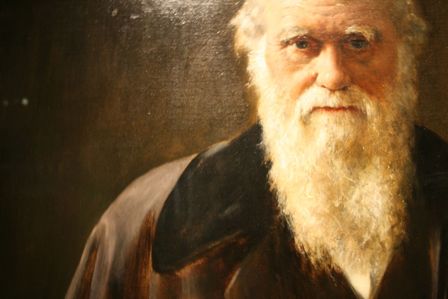
This general principle in biology – that increased growth requires diversity – emphasizes the importance of avoiding uniformity. Development needs diverse methods, organizations, and arrangements. Only a few organisms can live in a homogeneous environment.
The Body of Christ
The Apostle Paul must have had something like this in mind when he compared the Church to a living body. The body functions well when comprised of many parts, he said. Each diverse part must contribute to the whole body if the body is to thrive.
A body cannot function if comprised only of elbows and livers. It needs the many.
While the importance of diversity is difficult to overstate, we should not equate diversity with chaos. Life cannot thrive in utter chaos.
We can be tempted to confuse diversity with chaos when we’re overwhelmed with the novelty we encounter. But we must not stifle creative difference when diversity expands out of our control.
We who desire to see a strong and growing Church would be wise to heed these principles from the Bible and biology. Let me be specific:
Principle 1 — Growth is strongest when structures are diverse.
In a world of diverse people with diverse backgrounds and diverse dreams, the Church must risk diverse adventures in ministry.
The same old, same old, leads down a path of barrenness. If it is to thrive, the Church must be brave enough to venture in many directions simultaneously. Let a thousand flowers bloom.
Principle 2 — Diverse structures need a shared point of reference.
Just as a body needs a head, the Church needs unity. Just as an environment needs some stable conditions, so the Church requires overarching harmony. The Church needs a clear point of reference amidst a variety of voices beckoning for supremacy.
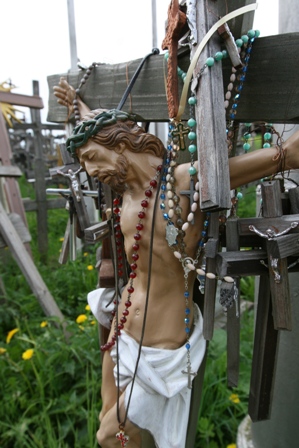 Of course, Christ is the head of the Church that is functioning well. At their best, Christians are what theologians call “Christocentric.” No book, no leader, no image, or location, no other things – no matter how holy these other things might seem – can rightly replace Christ as central to the Christian and the Christian community. Christ is Lord.
Principle 3 — The love revealed in Christ is the shared point of reference for the Church.
Love is what unifies the diverse expressions of a living and growing Church. Christ reveals this love in his life, message, actions, death, and resurrection. The God who is love is the same God who calls creatures to love. We are to “imitate God, as beloved children, and live a life of love, in the way that Christ loved us…”
Love comes in a million forms. It takes a thousand shapes. Love cannot be reduced to a one-size-fits-all formula. In fact, love requires diversity.
Love retains at its core the impulse to promote abundant life. It seeks to be a blessing, seeks genuine peace, and works for justice among those who need justice most. Our acts of love are proper responses to the God who is love.
Perhaps in addition to the truth that “the greatest amount of life can be supported by great diversification of structure,” we should also say that the greatest expressions of love are supported by the greatest diversification of love opportunities.
May the Church foster diverse opportunities to love!