
I sometimes hear the argument that we should not speculate about the attributes of God’s nature. Overall, I don’t find this argument convincing.
We Know in Part
A couple of the underlying assumptions of the argument seem on target, however. One assumption is that humans often overreach in their claims about who God is. Finite minds should not pretend to grasp entirely the essence of an infinite God. I agree with this. There is always a role for mystery in theology. Folks just don’t always agree about what that role is.
This assumption to the argument reminds us “we know in part” (1 Cor. 13:12). We should remain humble in our words about God. After all, we occasionally realize in hindsight that our previous claims are not as helpful or accurate as we once thought.
The second assumption against speculating about the attributes of God’s nature is justified by the inadequacies of the ancient Christian tradition. This assumption says that many Christians today identify ancient theological claims they no longer find plausible.
For instance, a good number of theologians today think the ancient Christian claim that God does not suffer (i.e., is not affected by creatures) is faulty. Although this claim was common among ancient theologians, the Bible suggests otherwise. Sometimes abstract speculation about God’s nature fueled ancient theological claims that most Christians now believe erroneous.
As another example, take the issue of God’s power and creaturely freedom. Many if not most ancient theologians implicitly or explicitly denied that creatures are free. Many if not most contemporary theologians argue otherwise.
Given these concerns, some Christians today say we should resist making any claims whatsoever about God’s nature. We should restrict ourselves instead, they say, to descriptive comments about the way God has acted in history.
Pondering God’s Nature
I disagree with the view that we should refrain from making claims about God’s nature. Instead, I think we ought to offer humble hypotheses about what we believe God’s nature is like. In humility, we ought always be ready to modify our views. “We know in part,” not in full.
 My primary argument for why we are justified in speculating about God’s nature comes from the Bible. Biblical authors OFTEN make statements about God’s nature or attributes. They don’t just describe God’s actions. Here are a few:
“God is love” (I Jn 4:16). “God is spirit…” (Jn. 4:24). “The Lord our God is holy” (Ps. 99:9).
“The Lord is one” (Deut. 6:4). “God … knows everything” (1 Jn. 3:20). “God is just” (2 Thess. 1:6). “God is not unjust” (Heb. 6:10).
In God’s nature “there is no change or shadow of alteration” (James 1:17). “God is not a God of disorder but of peace” (1 Cor. 14:33).
“Since the creation of the world, God’s invisible qualities—his eternal power and divine nature—have been clearly seen, being understood from what has been made, so that men are without excuse” (Rom. 1:20)
Jesus Reveals God
The last biblical passage I cite is especially powerful. Paul claims our observations of the world – not just the Bible – can tell us something about God’s invisible qualities and divine nature.
Most Christians also believe that Jesus Christ reveals important information about God’s nature. In part, this belief fuels Christians to claim that Jesus is fully human and fully divine. The Bible witnesses to the revelation of God’s nature through the life of Jesus.
Here are two passages from the many I could quote to support the idea that Jesus reveals God’s nature:
“In the beginning was the Word, and the Word was with God, and the Word was God” (Jn 1:1). The Word “became flesh and dwelt among us” (John 1:14).
“We know also that the Son of God has come and has given us understanding, so that we may know him who is true. And we are in him who is true—even in his Son Jesus Christ. He is the true God and eternal life” (1 Jn. 5:20).
Does God’s Nature Constrain God’s Actions?
I mention the issue of speculating about God’s nature to get to a question I’ve been asking for some time: Is there something about God’s nature that makes it impossible for God to act in certain ways?
To put it succinctly: Should we say God CAN’T do some things?
A number of theologians are comfortable saying God voluntarily chooses not to act in certain ways. God voluntarily self-limits, creates space for creation, and gives creatures freedom, say theologians as influential as Jurgen Moltmann and John Polkinghorne. This limitation is based on God’s free decision.
Can’t vs. Won’t
Instead of wondering whether God could or would do something, however, I’m wondering if God essentially CAN’T do some things. There’s a big difference between “can’t” and “won’t.” I’m asking the can’t question.
The distinction between “God can’t” and “God won’t” is especially important for accounting for God’s action or inaction to prevent genuine evil. I try to account for this in light of the genuine evil caused by pain and suffering in our world. The recent Haiti earthquake and the million or more people negatively affected brought the problem of evil to the fore of my mind again.
If God won’t prevent evil even though God could, we’re left with the same essential questions about evil. But if God can’t prevent the evil, a completely new way of thinking emerges.
The Bible Says God Can’t Do Some Things
For some people, of course, merely asking the question, “Should we say God CAN’T do some things,” is blasphemous. For them, the Bible clearly indicates that God can do all things.
A few passages – but not many – explicitly support the view that God can do anything. The most well known is probably when Jesus says, “with God all things are possible” (Mt. 19:26 and elsewhere). In this passage (and the other gospels reporting the same conversation), Jesus seems to be saying that offering salvation is always possible for God. That would be different that saying literally nothing is impossible for God to do.
There are passages in the Bible that specifically say God CAN’T do some things. Notice: these passages aren’t saying God voluntarily chooses not to do some things. They say God simply cannot do them. Here are four biblical verses as illustrations:
“It is impossible for God to lie” (Heb. 6:18). See also Titus 1:2.
“God cannot be tempted by evil” (Js. 1:12).
“If we are faithless, [God] remains faithful — for he cannot deny himself” (2 Tim. 2:13).
I personally think the statement in the last of these passages — God cannot deny himself — covers the others. Paul seems to be saying that God’s own nature places limits on what God can do. God must be God, and God cannot be otherwise.
We must come to terms with the fact that the Bible says God can’t do some things. Christians like me who privilege the Bible on theological matters can’t ignore statements that seem to tell us something about God’s nature and God’s inherent limitations.
Admitting that God is Limited
If we think about it a bit, however, these limitations based on God’s nature aren’t that big a deal. They shouldn’t shock us, even if we haven’t thought much about it previously.
Does it diminish our view of God, for instance, to admit that God can’t lie? I doubt it. And I doubt our view of God is diminished if we consider other attributes we typically think apply to God.
For instance, I doubt many of us worry that God can’t voluntarily decide to be 671 instead of triune. Most Christians assume that trinity is part of what it means to be God. (By the way, if to be three is to be triune, what’s the word for 671?!)
Or, for another instance, we probably don’t think it’s a significant limitation that God must be omnipresent rather than confined to one place or another. And we probably don’t worry about God being limited to leading an everlasting life instead of being able to choose to have a beginning or end.
Upon reflection, the fact that God can’t do or be some things doesn’t seem so bad after all.
God Must Love
One of the most important biblical statements about God’s nature is that God’s eternal and unchanging nature includes steadfast love. God cannot not love, to use the double negative.
Here’s where I wonder if thinking about God’s nature as love helps with the problem of evil. Here’s the love theo-logic I’m proposing: perhaps we are justified in speculating that part of what it means for God to love others is that God never controls others entirely. To put it positively, God’s love always involves giving freedom and/or agency to creatures. Because God’s nature is love, God cannot do otherwise.
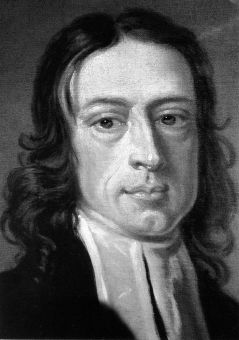 I was reading the works of John Wesley the other day. I came across a line of argumentation from him that supports my view of God’s nature making God incapable of controlling others entirely. Wesley writes, “were human liberty taken away, men would be as incapable of virtue as stones. Therefore (with reverence be it spoken) the Almighty himself cannot do this thing. He cannot thus contradict himself or undo what he has done.”
God is Powerful but Not Controlling
If God’s loving nature prevents God from controlling others entirely, we might have to rethink how we understand God’s mighty acts recorded in Scripture and evident in our contemporary lives. We don’t have to reject that God acts in mighty and miraculous ways. God still acts providentially and miraculously. But we might need to think of God’s acts as not involving the entire control of others.
Admittedly, looking at God’s power through the lens of God’s love and not total control is new to some people. But I know of nothing in the Bible to suggest that thinking in this way does injustice to the overall biblical witness. After all, most folk think God always acts lovingly – even when biblical writers report God being angry with sinners.
I don’t have it all figured out. I see through a glass darkly. And I admit there are a few biblical passages that aren’t easily explained by the idea that God always acts loving. They are the exceptions.
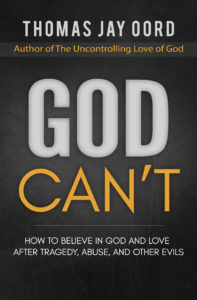
But I am trying to propose a biblically supported view of God’s nature that helps us make sense of why God doesn’t prevent genuine evil. God can’t prevent genuine evil, because God’s nature of love always gives freedom and/or agency to others.
My speculation is based upon the biblical witness that God can’t do some things. I have the Bible as my primary resource. I affirm with the Bible that God’s inabilities to do some things come from the truth that God “cannot deny himself” (2 Tim. 2:13).
If you’d like to read more, check out God Can’t: How to Believe in God and Love after Tragedy, Abuse, and Other Evils.
[Tweet theme=”basic-full”]My speculation that God cannot do some things is based upon the biblical witness.[/Tweet]
John Wesley, “On Divine Providence,” Sermon 67, The Works of John Wesley, vol. 2 (Nashville, Tenn.: Abingdon, 1985) paragraph 15.