
I’ve been thinking lately about the relationship between God’s love and creaturely freedom. Some people say we are free to do just about anything. Others don’t think we’re free in any genuine sense.
Those who emphasize our near total freedom rightly build upon our commonsense notion that we make choices that seem, at least to some degree, free. And they rightly argue that moral responsibility seems to make little sense if freedom is illusory.
But the kind of radical freedom some profess does not account for what it means to be embodied and relational beings. For good reason, scientists of various sorts point to constraints to our freedom. And those who explore human behavior point to predictable patterns that suggest our freedom is not as great as we might sometime think. Christians rightly point to the habits of sin as denying us the capacity to do some things.
Others read the scientific literature or have theological reasons for saying we have no freedom whatsoever. They believe we are entirely controlled by the atoms or genes below. Or a sovereign God entirely controls all creation and us.
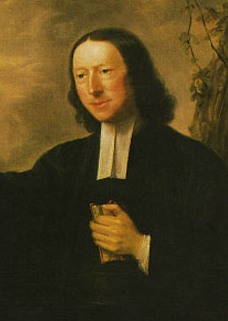
John Wesley
John Wesley offers a helpful middle ground between these two views. Wesley emphasizes creaturely freedom – what he typically called “liberty” – and its relation to love.
Wesley rejects views of divine sovereignty and doctrines of predestination that undermine the logic of give and recieve love. They imply that Christians cannot freely participate in the work of salvation. “The God of love is willing to save all the souls that he has made,” argues Wesley. “But he will not force them to accept of it; he leaves them in the hands of their own counsel.”
Wesley considered God persuasive not coercive. God “strongly and sweetly influences all,” says Wesley, “and yet without destroying the liberty of his rational creatures.” God empowers others rather than overpowering them.
Creaturely freedom is not entirely self-derived, however. God gives freedom to creatures. In one of his most important sermons, “On Working Out Our Own Salvation,” Wesley argues from a portion of an Apostle Paul’s letter (Phil. 2:12-13). In light of this passage, Wesley says, “the very first motion of good is from above, as well as the power which conducts it to the end.” In other words, we rely upon God.
Prevenient Grace
This initial work of divine love empowers free creaturely response. Wesley called this “preventing” grace; we now call it “prevenient grace.” This is God’s grace that precedes and empowers creaturely response. “Through the grace of God assisting me,” says Wesley, “I have a power to choose and do good as well as evil.”
Because God first acts on our behalf, says Wesley, we can and must respond to work out our salvation. God offers all people “some measure of that light, some faint glimmering ray, which sooner or later, more or less, enlightens every man that cometh into the world.” For this reason, “no man sins because he has not grace,” says Wesley. He sins, “because he does not use the grace which he hath.”
Many of the most perplexing questions Christians face are at least partially answered by affirming the idea that God empowers creatures by granting freedom to respond. If Christians follow Wesley’s lead on this issue, they will discover conceptual resources for making sense of God’s call in their lives.