
In a series of essays on this website and in books, I’ve argued that God requires creaturely cooperation for love finally to win. To put it another way, the ultimate victory of good over evil requires creatures to cooperate with God.
I’m not saying God alone will right all wrongs and bring about universal salvation. It’s not all up to God.
But I’m also not saying it entirely up to creation. I think God acts to empower and inspire creatures. But love wins when creatures cooperate with God.
How Hopeful is This View?
At times, creation’s complete cooperation with God seems inevitable. I see good winning, and I’m optimistic about the future. God’s reign of love is being established!
At other times, complete cooperation seems impossible. The world has so many problems, and some people rarely cooperate with God. Sometimes people and systems seem hopelessly evil!
My hopefulness waxes and wanes.
My trust in God does not vary. I trust God will act for good today and tomorrow. I believe it’s God’s nature to love all creation, so God never gives up.
But creatures don’t have a steadfast nature of love for others. They are not perfectly good. And for all to be set right, my relentless love view of the afterlife requires creatures to cooperate with God.
Is my hope for comprehensive creaturely redemption realistic? Is the idea all creation will be redeemed through cooperation with God a pipe dream, fantasy, or hopelessly naïve wish?
How hopeful is this view?
John Wesley Helps Me
Theologian John Wesley wrestled with these questions. In his essay, The General Spread of the Gospel, Wesley does a thought experiment about God and creation’s destiny.
“Suppose the Almighty to act irresistibly,” says Wesley. If God did, “all difficulty that the world would be saved vanishes away.” To put it in my language, a controlling God could guarantee universal salvation.
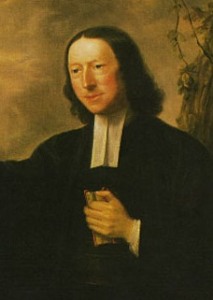
But this view of God’s power leads to insurmountable problems. If God were to control us, says Wesley, “man would be man no longer; his inmost nature would be changed. He would no longer be a moral agent, any more than the sun or the wind, as he would no longer be endued with liberty, a power of choosing or self-determination. Consequently, he would no longer be capable of virtue or vice, of reward or punishment.”i
Wesley rejects the idea God controls when saving. Such control would destroy God’s creation. Consequently, our hope for the ultimate victory of good is not in controlling sovereignty.
Wesley’s view of salvation is, as he put it, that “God will not save us without ourselves.” This means we play an essential role in our redemption and the redemption of all creation.ii What we do counts!
Although Wesley does not use my language of “relentless love” or “uncontrolling love,” his logic seems the same as mine.
Will All Creation Eventually Cooperate with God?
Our original question remains unanswered. Will all creation eventually cooperate with God’s work of love? And could John Wesley genuinely hope for the reconciliation of everyone and everything… despite his believing God would not save irresistibly?
Wesley was hopeful, and I find his logic helpful. “In the same manner as God has converted so many to himself without destroying their liberty,” he says, “God can undoubtedly convert whole nations or the whole world. It is as easy for him to convert a world as one individual soul.”iii
It as easy for God to convert a world as one individual soul. – John Wesley
When I’m pessimistic all creatures will cooperate, I ponder Wesley’s words. His optimism that all creation will be redeemed stems from God’s relentless love.
God’s love gives me hope.
Am I Better than Others?
When I think about God’s work to save all creation, I sometimes ask myself a series of questions:
1. “Has God persuaded me to cooperate with love?”
I answer, “Yes! I’m not always consistent, but I enjoy the salvation that comes when cooperating with God’s love.”
2. “If God can persuade me, can God persuade others? Or am I somehow better than other people?”
I quickly answer my question: “No! I’m no better than others. God works to save everyone.”
If God can persuade me, I have hope based on the evidence of my life (and the lives of others) God will eventually persuade all creation. It’s not a guarantee. But if God’s love persuades me, why can’t it persuade everyone?
In Sum…
My hope is based primarily on God’s relentless love. I beleive God’s love is uncontrolling, so God cannot guarantee that all will cooperate. But I’ve seen how God’s love is transforming me. That makes me optimistic it will eventually woo everyone and everything to ultimate salvation!
I explore these ideas in greater detail in a chapter of my book, Questions and Answers for God Can’t. To explore those details and dozens of other key questions, get a copy of the book.
NOTES
i John Wesley, ‘The General Spread of the Gospel’, The Works of John Wesley (Kansas City: Nazarene Publishing House, 1872 authorized editor of the Wesleyan Conference Office),6:280.
ii Ibid., 6:281.
iii Ibid.