
I’m writing a book on why we should reject the idea God is omnipotent.
In a previous blog, I said scripture does not support omnipotence. Hebrew and Greek words often translated as “almighty” in English have been mistranslated. And the meaning of omnipotence is not in the Bible.
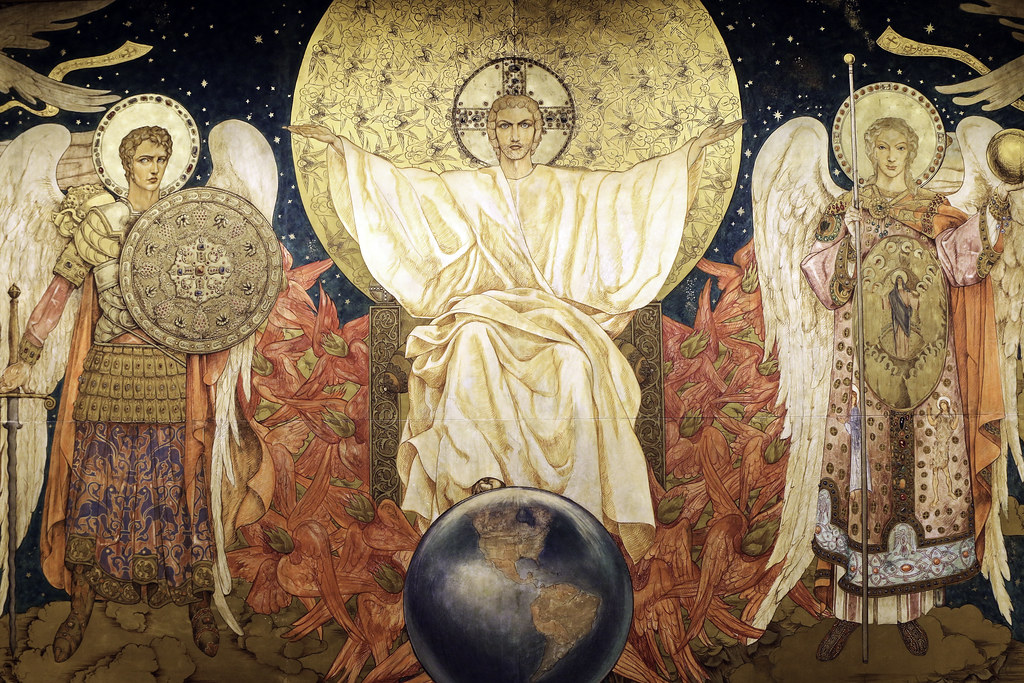
Greatest Conceivable Being?
Since the writings of St. Anselm (1033-1109), it has been common among philosophically-inclined theologians to say God is the greatest conceivable being. In Anselm’s words, God is “that than which nothing greater can be conceived.”
To many people, a God who exerts all power, can do anything, or can control must be greater than a God without all power, only does some things, or cannot control. That’s what it means to be omnipotent, according to them. A limited God is less than great.
One chapter in my new book explores the qualifications serious thinkers make to omnipotence. While many theologians have said “God can do anything,” nearly everyone qualifies this claim.
Provisos
I first pondered the possibility God could not do some activities in a philosophy class. Someone asked, “Can God make a rock so big even God can’t lift it?”[1]
This question sent me on an intellectual tailspin: What was the proper response? I had not considered the possibility God may be limited. I was flummoxed.
Over time, I discovered the rock question was one of many puzzles troubling people who take intellectual life seriously. Thomas Aquinas admits confusion, for instance, about “the precise meaning of the word ‘all’ when we say that God can do all things.” Consequently, he says, it’s “difficult to explain in what omnipotence precisely consists.”[2]
A look at how theologians throughout history recast and revise omnipotence reveals it was never fully alive, except as a woefully inadequate description of divine power. Omnipotence was never alive like married bachelors and unicorns were never alive. It doesn’t exist like fish who drive Corvettes don’t exist.
The number and types of provisos and qualifications make it unwise to say, “God is omnipotent.”
Dictiocide
To many people, omnipotence means “without qualification.” But ironically, the word that means “without qualification” requires countless qualifications!
To qualify a word that means “without qualification” is to commit dictiocide: to kill the word. Believers must qualify omnipotence in so many ways — despite the word signifying no qualification — that the word should be dead to us. That’s why I’m calling the book, The Death of Omnipotence.
Omnipotence dies the death of a thousand qualifications.
[1] For sophisticated presentations of this question and its implications, see George Mavrodes, “Necessity, Possibility, and the Stone which Cannot be Moved,” Faith and Philosophy 2 (1985), 265-71; Savage, C. Wade. “The Paradox of the Stone” Philosophical Review, Vol. 76, No. 1 (January 1967), 74–79.
[2] Thomas Aquinas, Summa Theologiae, 1a, Q. 25, A. 3,