
Open theology has gained wide attention since the 1990s. It enjoys growing influence in the Church of the Nazarene.
Reduced to its bare bones, Open theology affirms that 1) love is uniquely exemplified by God and is the human ethical imperative, 2) God and creatures enjoy free and mutually-influencing relations, 3) and the future is open and not settled.
Open theology says God knows everything that may happen in the future. God knows all possibilities. But God does not know with absolute certainty what free creatures will someday actually do.
[bctt tweet=”Open theology affirms that God knows everything that may happen in the future. “]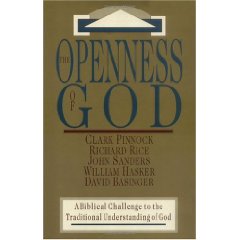
Many Christians in the Arminian, Wesleyan, and Holiness traditions are attracted to Open theology. This attraction is due mainly to Open theology’s claims about divine love, creaturely freedom, and the God-creature covenant relationship.
A growing number of Church of the Nazarene members, including laity, pastors, and professional scholars explicitly identify themselves as advocates of Open theology or have strong sympathies with it.
In what follows, I introduce main concepts of Open theology. I address some biblical, historical, and theological issues. I want readers to become better acquainted with the answers Open theology gives important questions.
I also wrote this essay to help Church of the Nazarene leaders and laity avoid unnecessary conflicts. To that end, I conclude with recommendations for how the Church of the Nazarene might position itself and help its members respond to Open theology.
The Bible Supports Open Theology
The Church of the Nazarene takes the Bible as its primary source for issues pertaining to salvation. The denomination is part of a theological tradition that affirms central biblical affirmations about God as the almighty Lover who seeks, saves, and sanctifies. It emphasizes that God calls Christians to love God and others as themselves. The holiness message is rooted in love: God’s love for the world and God’s call for creatures to love.
[bctt tweet=”The holiness message is rooted in love: God’s love for the world and God’s call for creatures to love.”]
On the question of God’s knowledge of the future, the Bible does not provide a clear-cut answer. A large number of biblical passages – Open theists claim the majority – state or imply that God does not know all the details of what will occur.[ii] Open theologians are deeply committed to the authority of the biblical witness, and they believe the Bible more strongly supports their view than alternatives.
Dozens o f biblical passages say that God repents, for instance. For God to repent means that God has a change of mind. God’s change mind implies that not all decisions about the future are already settled.
A classic example of an open future is the 2 Kings story of Hezekiah. We find these words: “Thus says the Lord: Set your house in order, for you shall die, you shall not recover” (20:1). This passage sounds like a straightforward decision on God’s part. Hezekiah’s future has been decided, and God knows it as settled.
But the Bible says Hezekiah prayed earnestly. He persuaded the Lord to add fifteen years to his life (v. 6). This suggests that the future was actually open – even for God. If God foreknew when Hezekiah would die, this biblical passage implies that God lied to Hezekiah.
Open theology provides a way to affirm that God did not lie to Hezekiah. Open theists say God changed his mind and answered Hezekiah’s prayer. Presumably, God changed plans out of love.
Numerous biblical passages state or imply that God does not know the future exhaustively. Passages stating that God has regrets – e.g., regret about creating or regret over Saul’s kingship (1 Sam. 15:11) – make little sense if God foreknows all things.
Passages saying that God’s will is not necessarily accomplished – e.g., that God is not willing that any perish (2 Pet. 3:9) – make little sense if God foreknows the future exhaustively.
God’s questions about the future – such as God’s question to Moses about how long the people will despise him (Num. 14:11) – make little sense if God foreknows all future things as settled.
[bctt tweet=”Many biblical passages support Open theology.”]
Passages stating that God confronts unexpected events (Is. 5:2), gets frustrated and angry (Ex. 4), or tests people to find out their character (Gen. 22) suggest that God does not fully know what will actually happen in the future.[iii] Many biblical passages support Open theology.
God Gives Choices with Consequences
Conditional statements in the Bible often imply that God does not know the future exhaustively. A classic conditional statement is the one God gives Solomon:
“If my people who are called by my name will humble themselves, pray, seek my face, and turn from their wicked ways, then … I will forgive their sins and heal their land…. But if you turn aside and forsake my statues and my commandments that I have set before you, and go and serve other gods and worship them, then I will pluck you up from the land that I have given you…”(2 Chron. 7:14, 19-20a).
God apparently does not know what Solomon and the people of Israel will do. This passage loses significance if God knows all future choices.
Admittedly, some biblical passages – and critics of Open theology claim a majority – state or imply that God does know what will occur in the future.[iv] A classic example is Isaiah 46:9-10: “I am God … declaring the end from the beginning and from ancient times things not yet done.” This verse sounds as if God sees all of time in an instant and therefore knows past and future events simultaneously. Jesus’ prediction that before the cock crows twice Peter will deny him three times suggests that Jesus knows the future.
Open theists offer explanations to these passages. They have ways of accounting for these verses. For one of the most accessible lists of how open theists respond, see Chris Fisher’s helpful resources. Both sides have arguments to support their view.
[bctt tweet=”Conditional statements in the Bible often imply that God does not know the future exhaustively. “]
God Has Plans
Both advocates and critics of Open theology sometimes cite the same biblical passage to support their different views. For instance, both claim the passage, “’I know the plans I have for you,’ says the Lord, ‘plans to prosper you and not harm you, plans to give you hope and a future’” (Jer. 29:11), supports their view of God’s knowledge.
Critics of Open theology cite the passage to support their view that God knows in advance all of the details of what will happen in our future. For them, God talking about such plans implies the future is settled.
Advocates of Open theology, however, cite the same passage to support the idea that the future is not entirely settled. Some of God’s plans may be carried out by God alone. But other plans require free creaturely participation, and God does not yet know with certainty what free creatures will choose to do. For Open theists, God talking about plans for the future does not mean the entire future is already settled.
In the end, the persuasiveness of these explanations usually depends on the hearer’s theological, philosophical, or interpretive commitments.
[bctt tweet=”When God talks about having plans, this implies the future is not settled.”]
Some Historical Considerations
Prominent voices in the Christian tradition – e.g., Ireneus, Augustine of Hippo, John Calvin, Martin Luther – believed that God both foreknows and foreordains all that will occur. A sovereign God causes all events, say some theologians.
A particular view of predestination emerges from this set of beliefs. For these Christians, the idea that God alone determines all events complements the idea that God foreknows all that will happen. If God predestines all things, God knows exhaustively and inerrantly what will occur.
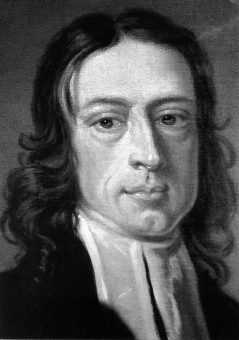 Theologians such as James Arminius and John Wesley, however, differ in important ways. They reject the all-determining view of predestination and claim to have a stronger biblical basis for their perspective.
By championing divine love and emphasizing human freedom, Arminius, Wesley, and their heirs reject complete foreordination, predestination, and unconditional election. God’s prevenient grace, as Wesley understood it, grants freedom to others.
Wesleyans are fond of quoting the Apostle Paul, who told his readers to “work out your own salvation, with fear and trembling, for God works in you both to will and to work for his good pleasure” (Phil. 2:12). This verse suggests that we have a free response to God’s empowering action.
Although Arminius and Wesley were adamant that God did not exhaustively foreordain creaturely actions, most of their writings suggest God foreknows creaturely actions. One can find statements here and there implying God does not know the future exhaustively, but the majority of their writings suggest God foreknows.[v]
In the 19th and 20th centuries, a significant number of Wesleyan and Methodist theologians denied that God knew the future exhaustively. Drew Seminary theologian Lorenzo McCabe, for instance, wrote clearly and passionately advocating what we now call Open theology. Methodist circuit rider Billy Hibbard, Sr., became known for his denial of divine foreknowledge.[vi]
Most early Church of the Nazarene theologians, such as H. Orton Wiley, affirmed divine foreknowledge. For Wiley, God did not predestine. But God foreknew all future occurrences.
Many Nazarene theologians following Wiley, however, did not affirm that God has exhaustive foreknowledge. Mildred Wynkoop was ambivalent on the issue. H. Ray Dunning does not take a firm stance one way or another.[vii] Michael Lodahl raises serious questions about exhaustive foreknowledge.
A good number of 21st century Church of the Nazarene laity, pastors, and professional scholars explicitly deny exhaustive divine foreknowledge. They are Open theists. Their denial that God knows the future exhaustively fits the fundamental Wesleyan belief that humans – and perhaps all creatures – have a degree of freedom.[viii]
[bctt tweet=”Many 21st century Church of the Nazarene leaders are Open theists.”]
God and Time
How we think about God and time is important for this discussion. Theologians such as Augustine, John Calvin, Karl Barth, and others thought that God was in all aspects nontemporal. God is outside time. God sees creation’s history in an eternal now, they argued, not as a sequential chain of events.
Calvin illustrated this view well. He says God is like an observer atop a church steeple. From that high perspective, the observer can see, all at once, the beginning and end of a parade below. God sees time like the observer atop the steeple sees the whole parade.
The idea that God is nontemporal, however, does not square well with the broad biblical witness. Biblical authors often suggest or assume that God is living, experiencing time moment by moment. To be living implies that God experiences time in sequential events. We might say that a living God is in all times – pantemporal – or everlasting.
H. Ray Dunning says that “the biblical of God seems rather clearly to suggest that time is indeed real to God.”[x] Instead observing the parade from afar, God is present at all times in the parade. Instead of watching from a distance, God is with us.
[bctt tweet=”Instead of watching from a distance, God is with us in time.”]
God is Omniscient
Both Open theologians and those who think God knows the future exhaustively affirm that God knows everything. Both affirm divine omniscience. Both believe that God knows everything that can be known. They differ on what is knowable.
Open theists believe that God knows the completed past, the ongoing present, and all possible future possibilities. They believe God can know that some future events will occur, because personally God plans to do these things at some future time. And God can make uncanny predictions about the future based on exhaustive knowledge of past and present.
What makes Open theologians different from others is that they believe no actual future yet exists. No one can know what isn’t, in principle, knowable. God not knowing something that can’t be known doesn’t mean God lacks knowledge.
[bctt tweet=”The actual future does not yet exist, so it is not yet knowable to anyone, including God.”]
Some Implications of Open Theology
The question of God’s future knowledge affects some aspects of the Christian life. I will briefly mention several.
– Petionary Prayer
Open theists believe their view makes better sense of petitionary prayer. Most Christians truly believe their requests at least sometimes directly affect how God decides to act. Prayer for the sick, for instance, makes a difference in how God acts.
If God knows the future exhaustively because the future is settled, however, petitionary prayer seems pointless. God already knows the outcomes. Prayers to affect an already settled future are futile.
Open theology says that the future is genuinely open. So our prayers can make a difference in how God chooses to act.
[bctt tweet=”Because the future is genuinely open, our prayer can make a difference in how God chooses to act.”]
– Predictive Prophecy
Open theology understands predictive prophecy differently than some theologies. Critics often ask, “How can open theology take prophecy seriously if God cannot know the actual future exhaustively?”
Open theists respond that a) the vast majority of prophetic statements in the Bible are not predictive, b) God can know with certainty what God plans to do without foreknowing all future events, and c) sometimes prophets were wrong in their predictions.
The issue of predictive prophecy does not undermine Open theology.
– Our Lives Matter
Open theists say that their view helps Christian believe their lives really matter. Our lives can really make a difference in a yet-to-be-settled history.
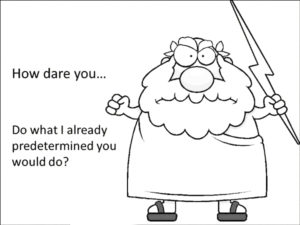 If God knows the future because it is already settled, what we decide and do today ultimately makes no difference. Things will be as they have already been determined to be. Fate rules.
An open future in which God calls us to cooperate freely, however, is a future in which our choices matter. What free creatures do really counts. Life choices have significance, because we can cooperate (or not) with God to influence what happens in the world.
[bctt tweet=”What free creatures do really counts. Open theists believe life choices have eternal significance.”]
– We Are Genuinely Free
Open theologians argue that their view makes better sense of our deep intuition that we are at least partially free. This freedom is necessary for us to be morally accountable for our actions. We should not be held morally accountable if our future has already been settled.
If the future is settled and creatures are not genuinely free to do otherwise, we should not hold humans responsible for sin. According to Open theology, the future is open, and creatures possess genuine moral responsibility. Open theology makes better sense of the central biblical category of sin.
– God is Relational and Covenantal
Open theists believe that their view of God makes better sense of relational and covenantal passages of scripture. A God outside time does not respond to us.
We cannot fathom what a relationship would be like if one party was entirely unresponsive and unmoved. An unaffected being cannot engage in a give-and-receive relationship.
Open theology says God is responsive to us. God rejoices and mourns, praises and rebukes, offers and denies, at least partly because God enters into ongoing relationship with creatures. A relational God is affected by what creatures do.
[bctt tweet=”Open theology says God is responsive to us and moved in relationship with us. “]
– God Is With Us
Open theism fits well with an incarnational understanding of God. The God who observes from afar is easily conceived as uninvolved. A distant God is not present with us to feel what we feel, walk alongside us, and be our Comforter.
Open theology emphasizes the immanence of God without neglecting God’s transcendence. It affirms God’s omnipresence without regarding the Creator a creature.
– God Doesn’t Foreordain or Foreknow All Evil
Open Theology affirms that God creates free creatures. The idea that creatures are free and the future at least partly open helps overcome many problems related to suffering and evil. Free creatures and a free creation are morally culpable for causing evil. God is not.
Open theologians differ on whether they think God can control creation. Some say God could control but usually doesn’t. Others say God can’t control, because God’s nature is uncontrolling love.
[bctt tweet=”Free creatures and an uncoerced creation are morally culpable for causing evil. God is not.”]
Recommendations for the Church of the Nazarene
Given the preceding, it seems wise for leaders of the Church of the Nazarene to allow discussion of diverse views pertaining to God’s knowledge of the future. The discussion is important on biblical and theological grounds.
The Church of the Nazarene’s Arminian/Wesleyan/Holiness history leads many of its members to be sympathetic to Open theology. At the same time, this history supports the view that God’s exhaustive foreknowledge is compatible with creaturely freedom.
I recommend that denominational leaders not shy away from discussing various aspects of Open theology. Having open discussions of Open theology is important. Decisions that leaders and parishioners make with regard to Open theology should be valued.
I recommend that denominational leaders neither require members to affirm Open theology nor require members to reject it. What one finally decides about God’s knowledge of the future is important but not essential for good standing in the Church of the Nazarene.
I also recommend that the denomination not take an official stand one way or the other on Open theology. Both proponents and opponents of Open Theology affirm God’s omniscience. At stake is what it means to say that God knows everything.
The Wesleyan tent is broad enough for both the idea that God doesn’t know the future exhaustively and the idea that God foreknows the future without foreordaining it. Denominational leaders should support laity, pastors, and professional scholars on both sides of this issue.
We should agree that the answer one gives the question, “Does God know the future?” is important. But one’s answer should not be considered essential for good standing in the Church of the Nazarene.
[i] In 1994, a quintet of evangelical scholars published, The Openness of God: A Biblical Challenge to the Traditional Understanding of God (Intervarsity). All were of Arminian theological persuasion. The label, “openness of God,” was first presented in the title of Richard Rice’s book: The Openness of God (Nashville, Tenn.: Review and Herald, 1980).
[ii] A number of books are available arguing that biblical passages most often support the view that God does not know the future exhaustively. One of the better ones – and one of the most accessible – is Gregory A. Boyd’s God of the Possible: A Biblical Introduction to the Open View of God (Grand Rapids: Baker, 2000). Other important books by Open theists include Clark H. Pinnock, Most Moved Mover: A Theology of God’s Openness (Grand Rapids, Mich.: Baker Academic, 2001), Richard Rice, God’s Foreknowledge and Man’s Free Will (Bethany, 1984), and John Sanders, The God Who Risks: A Theology of Providence (Downers Grove, Ill.: Intervarsity, 1998).
[iii] Some critics say that the passages speaking of God’s regret, unfulfilled expectations, frustration, or anger should not be taken as literally. These are anthropomorphisms, say these critics of Open Theology. This is an important criticism, because virtually every theologian admits that anthropomorphisms are present in scripture (e.g., God walking in the garden of Eden). Few Christians will want to take ALL statements about God literally (e.g., the biblical claim that God is a rock). But critics of Open Theology typically cite other biblical passages that more easily support their own view. When citing these other passages, they typically fail to regard these passages as also anthropomorphic. At stake, then, is which passages should be taken in their more literal senses and which are best understood as anthropomorphisms.
[iv] Among the books critical of Open Theology, see John M. Frame, No Other God: A Response to Open Theism (Phillipsburg, N.J.: P & R Publishing, 2001); Bruce A. Ware, God’s Lesser Glory: The Diminished God of Open Theism (Wheaton, Ill.: Crossway, 2000); Douglas Wilson, ed., Bound Only Once; The Failure of Open Theism (Moscow, ID: Canon, 2001); R. K. McGregor Wright, No Place for Sovereignty: What’s Wrong with Freewill Theism (Downers Grove, Ill.: Intervarsity, 1996). It should be noted that almost all of these books are written by those outside the Arminian/Wesleyan/Nazarene tradition, and many of their objections to Open theology are applicable to Wesleyan theology generally.
[v] Arminius was apparently influenced by the philosopher Luis de Molina, who is famous for advocating what is often today called “middle knowledge.” God’s middle knowledge includes counterfactuals, which are statements in the form of “if it were the case that A, it would be the case that C.” Molinists believe that God can foreknow all free creaturely decisions because of God’s knowledge of all initial conditions and possibilities. Open theists typically argue that Molinism requires metaphysical claims without sufficient grounding.
[vi] See Randy L. Maddox, “Seeking a Response-Able God: The Wesleyan Tradition and Process Theology: in Thy Nature and Thy Name is Love, Bryan P. Stone, and Thomas Jay Oord, eds. (Nashville: Kingswood, 2001), 111-142.
[vii] See Wiley, Christian Theology, vol 1 (Kansas City: Beacon Hill, 1940), 339, 354-360 and Dunning, Grace, Faith, and Holiness: A Wesleyan Systematic Theology (Kansas City: Beacon Hill, 1988), 202.
[viii] A common response to Open theology from those who affirm God’s foreknowledge is that knowing a future event is not the same as causing it. For instance, my knowing that the Seattle Mariners will play a baseball game next year does not mean that I caused the game to occur. Human freedom and divine exhaustive foreknowledge, so this argument goes, remain compatible.
This criticism of Open theology is misguided. Open theologians do not object to exhaustive divine foreknowledge because they think foreknowledge causes the future. Rather, Open theology says that God could only have exhaustive foreknowledge if the entire future were already settled or completed. Only a settled future could be known – by God or anyone – with absolute certainty.
If the entire future is already settled, it cannot be otherwise. Free decisions require an unsettled future with a choice between at least two options. If we are truly free, say Open theists, the entire future must not be entirely settled. The future must not be causally closed. God must know now only what may happen in some circumstances.
Most Open theists affirm that God can know some future events will occur. God can know some events, because they will occur because of God’s own actions. For instance, most Open theologians say God knows when the end of the age will be. But God can know the end without also knowing all the details that precede it.
[ix] Wiley, Christian Theology, I, 335.
[x] Dunning, Grace, Faith, and Holiness, 201.