
The final postmodern tradition of the four I identify among the four most prominent may prove most helpful for Christians in our emerging world. It revisions reality by drawing from a wide spectrum of resources.
Growing a beautiful garden is an art. Exceptional gardeners draw from a wealth of wisdom to nurture their plants. Some elements of garden growing are nonnegotiable: seeds, water, nutrients, sunlight. Other elements arise from tried and true methods that, while not necessary, have proven time and again to produce beautiful gardens. The best gardeners seek novel gardening insights to e nhance their horticultural husbandry. After all, even the art of gardening changes.
Similar to good gardeners, revisionary postmodernists identify the nonnegotiables of life, draw from past wisdom, and incorporate novel ideas to propose a credible postmodern worldview.
Like other postmodern traditions, revisionary postmodernism overcomes or transcends features of modernism. But revisionary postmodernism also criticizes other postmodern traditions. The remainder of this essay sketches out features of revisionary postmodernism.
Constructing a New Worldview —
Revisionary postmodernists accept the project of constructing a worldview adequate for our time. In this, they distinguish themselves from deconstructionists. Espousing some worldview or another is inescapable. Instead of fooling ourselves, say revisionists, we should propose a worldview that seems best to account for life in all its dimensions.
Revisionary postmodernists reject, however, the idea that we have a certain center or sure foundation upon which to build. Our worldviews are always “on the way,” partial, and in need of further revision. We must be prepared to recast, generalize, and adapt a postmodern worldview to new experiences and information. Revisionary postmodernists seek to do so with humility. Know-it-alls need not apply.
[bctt tweet=”Revisionary postmodernists accept the task of constructing a worldview adequate for our time.”]
Embracing those at the Margins –
Modernity failed to consider the experiences of those at the margins (e.g., women, ethnic minorities, LGBTQ). It failed to account for animal experiences in their vareity. And it failed to consider the essential role of divine action. These and other modern failures resulted in the loss of a holistic perspective on reality. 
The worldview revisionary postmodernists offer attempts to account for voices at the margins and the mainstream. Revisionists account for a variety of sensibilities, including religious, scientific, ecological, liberationist, economic, and aesthetic. They seek a story big and adequate enough to include everyone. This story appreciates diversity and difference. The “other” is not reduced to the self. Discerning tolerance is a moral imperative, and wisdom with regard to difference is crucial.
[bctt tweet=”Revisionary Postmodernism appreciates and promotes diversity and difference. “]
The Limits of Language –
Revisionary postmodernists share the deconstructionist’s suspicion of language. Language is slippery, even if sometimes helpful and necessary.
Revisionary postmodernists argue, however, that language is not the only or even the most important lens on reality. Rather, experience is prior to and more basic than language. In fact, most experience is nonlinguistic.
Experiential Nonnegotiables —
When constructing a worldview, revisionary postmodernists privilege beliefs we inevitably presuppose in our experience. These beliefs are the bottom layer of experience. They include the idea some things are better than others, the notion we are free to some degree, an external world exists beyond us, the idea some events are caused by others, and so on. We inevitably presuppose various beliefs in our day-to-day living. I call these beliefs “experiential nonnegotiables.”
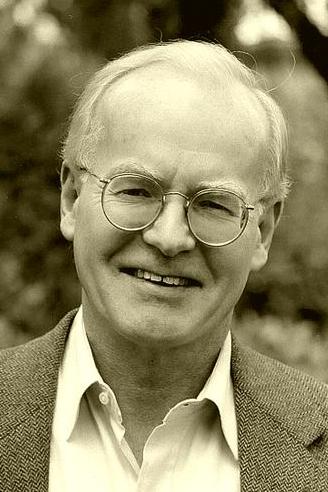 Revisionary postmodernist, David Ray Griffin, calls these inevitable beliefs, “hard-core commonsense notions.” We cannot help presupposing these notions in the way we live our lives, he says. We are guilty of self-contradiction if we adopt a theory or worldview that denies them. Any scientific, philosophical, or theological theory is irrational to the extent that it contradicts whatever notions we inevitably presuppose in practice.[1] Common sense counts.
[bctt tweet=”Any theory is irrational to the extent that it contradicts what we inevitably presuppose in practice.”]
Overcoming Relativism –
I noted in earlier blogs that some postmodern traditions result in radical relativism – either individual or communal. Deconstructive postmodernism is prone to extreme relativism. Some postmodern traditions reject any basis for believing that one worldview corresponds to reality better than others.
The experiential nonnegotiables of revisionary postmodernism allow one to overcome radical relativism. These notions are features of existence we all share. In affirming this, revisionary postmodernism continues the premodern and modern conviction that at least some universal standards exist. But it also affirms the diversity of experiences not universally shared.
Ways of Knowing –
Revisionary postmodernists join feminists in saying knowledge is not confined to logic or facts obtained through our five senses. It affirms the view of Michael Polanyi that personal knowledge must play a role in our attempts to make sense of the world.
Knowledge in revisionary postmodernism typically resides between certainty about absolutes and the disarray of relativism. Catherine Keller says the middle ground between absolute and relative is the postmodern virtue of being resolute.
[bctt tweet=”The middle ground between absolute and relative is the postmodern virtue of being resolute.”]
Ecology and Purpose-
Revisionary postmodernists agree with ecological postmodernists that living things are more than mindless machines. Creaturely freedom, purpose, and intentionality are real. All creatures possess intrinsic value.
Many revisionary postmodernists also adopt the theory of theistic evolution, because it affirms a necessary place both God and evolution in an adequate explanation of creation. One can affirm both the main contours of contemporary science and the belief that God originally and continually creates.
[bctt tweet=”Revisionary postmodernists believe that living things are more than mindless machines. “]
Community is Central –
Revisionary postmodernists agree with narrative postmodernists that creatures are not isolated individuals. Community is essential. An adequate postmodern worldview speculates that all creatures — both human and nonhuman — are interrelated. We live in a relational world, and who we are is largely determined by our relations with others. With the Apostle Paul, revisionists argue that we are members of one body.
We must affirm a necessary role both for the individual and community, argue revisionists. Humans might best be called “community-created-individuals” or “individuals-in-community.” Bono of U2 says it well: “We’re one, but we’re not the same.”
Revisionary postmodernists agree with the conclusion Bono draws from this insight: “We’ve got to carry each other.” We are designed for community, and our individual well-being is caught up in and largely dependent upon the well-being of the whole.
[bctt tweet=”Humans might best be called “community-created-individuals” or “individuals-in-community.” “]
Progress is Possible but not Inevitable –
Modernists celebrated what they thought would be the triumphant march of science to make the world a better place. They often equated advances in technology with overall progress in making the world better. Full-speed-ahead is always right, s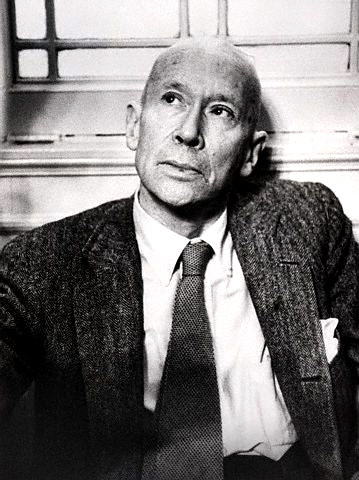 ay modernists.
Modern “progress” has caused so much unnecessary destruction, however. E. E. Cummings called progress a “comfortable disease.” It’s a disease wreaking havoc on humans, nonhumans, and all of planet earth. Like other postmodern traditions, revisionary postmodernism denies that progress is inevitable or that technology always results in good.
Revisionists believe that genuine progress is possible, however. We are not doomed to the same old self-destructive rut. Transformation can occur.
Revisionary postmodernists join narrative postmodernists by looking to ancient resources for wisdom about how best to proceed into the future. But they are also open to emergent insights that might help facilitate the experience of abundant life. John Wesley’s optimism of grace fits the revisionary mindset: “the best is yet to be.” Progress toward a better world is possible by divine grace and proper creaturely responses.
[bctt tweet=”Progress is possible but not inevitable.”]
God –
An important plank in revisionary postmodernism is its doctrine of God. Revisionary postmodernists reject the modern tendency to think God could be completely comprehended. We see through a glass darkly. But it also rejects absolute negative theology and the utter silence of apophatic theology. We know in part.
Revisionists are in many ways premodern in their beliefs, because they affirm that God is actual, active, and interacting in the world. God really lives and truly loves.
[bctt tweet=”God really lives and truly loves. “]
Revisionary postmodernists often call God “relational” to account for the give-and-receive relationships God enjoys with others. The invisible Spirit works in all creation, and we have direct access to this Spirit. Our nonsensory interaction with God and sensory inferences from nature provide awareness of right and wrong, true and false, beautiful and ugly. For in God we live and move and have our being.
Many revisionary postmodernists look to doctrines of the Trinity to ground their emphasis upon divine relatedness. Others focus upon the relational God who by nature relates with all creation. God is not unmoved.
Revisionary postmodernists argue that beliefs about God should not be relegated to their own domain while beliefs about the world function without reference to God. We cannot neatly separate the secular and the sacred. A revisionary postmodern worldview reserves an essential place for both creatures and the Creator. The interaction of God and creation is central to understanding reality. Some call this view “panentheism.” Others call it “participation” or “cooperation.” I like the word “theocosmocentrism.”
[bctt tweet=”Revisionary postmodernism reserves an essential place for both creatures and the Creator. “]
Conclusion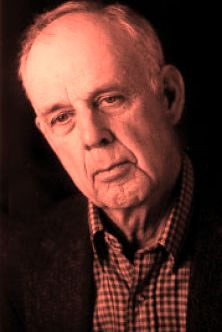
We live in a new world. Postmodernism reminds us of that. Revisionary postmodernism promotes the task of constructing a new worldview to account for truths in the widest range of experience. It places God and creation front and center.
The philosopher-poet-environmentalist, Wendell Berry, warns that in this new world “we have reached a point at which we must either consciously desire and choose and determine the future of the earth or submit to such an involvement in our destructiveness that the earth, and ourselves with it, must certainly be destroyed.”[2] Berry’s prophetic words beckon us to reckon with our past, our present, and our possible future.
Many revisionary postmodernists agree with Berry. Some dare to hope that a better way of thinking and acting is now possible. But this better way must involve being, acting, and thinking differently.
[bctt tweet=”Revisionary postmodernism accounts for truth in the widest range of experience.”]
[1] David Ray Griffin, Reenchantment Without Supernaturalism: A Process Philosophy of Religion (Ithaca, N.Y.: Cornell University Press, 2001).
[2] Wendell Berry, “The Loss of the Future,” in The Long-Legged House (New York: Harcourt, 1969), 46.