The Adventure of Relational Holiness
Christians embrace diverse descriptions of holiness. This diversity arises in part from diverse descriptions of holiness found in the Bible. In Relational Holiness: Responding to the Call of Love, my coauthor, Michael Lodahl, and I suggest that love is the core notion uniting these diverse understandings.
Perhaps the best historical link to relational holiness is the doctrine of prevenient grace found in the theological tradition that sustains holiness theology: Wesleyanism. This tradition arose in large part to the theology of John Wesley as he interpreted the Bible and engaged his world.
According to the doctrine of prevenient grace, God acts first or “walks ahead of us,” enabling us to choose salvation freely. God’s prevenient grace sets the context for and empowers our responses, because God acts first to offer abundant life.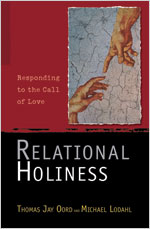
In terms of relational holiness, God relates to us by acting first in every moment to provide opportunities for action. Those opportunities arise out of God’s own actions, the actions of others, and our previous actions. The relations we have with God and others set the context for our lives.
God’s moment-by-moment empowering and inspiring calls require response. God calls us to love, and the particular forms of love emerge from the multi-layered relations in which we live. Among all possible actions, God encourages us to choose that which promotes well-being.
When we choose the best to which God calls in any particular moment, we act in holy way. We are holy. In that moment, we are “perfect as [our] Father in heaven is perfect.” In that moment, we love.
Relational holiness entails responding appropriately to God’s call to love in a particular way, at a particular time, and in a particular situation.
In most moments, the opportunities for love will be mundane. But in others, God offers the chance to love in ways that radically change our world. Whether acting in ordinary or extraordinary ways, God invites us to the abundant life of holiness.
We might think of the ongoing life of relational holiness as an adventure. Let’s call it the Adventure Model of holiness.
According to the Adventure Model, each traveler sets out with others on an open-ended and largely unplanned adventure. The journey will inevitably include challenges, but the traveler will also encounter opportunities for great joy.
An ever-present and constantly communicating Guide calls out to adventurers each step of the way. Prior to each step, the Guide presents adventurers with options that emerge in the context of the journey. Without the Guide’s initiating prompting, adventurers would be lost.
Some options the Guide presents, if chosen, produce happiness and wholeness. Other options, if chosen, lead to unjustified suffering and evil. Our own past negative actions and the negative acts of others produce negative options to our adventurer. The Guide can be trusted, however, to show adventurers how to avoid the negative and choose instead the best paths.
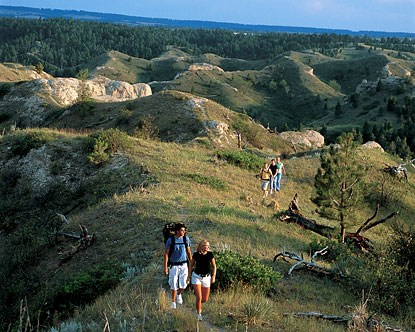 The Guide encourages adventurers to take the step that causes genuine happiness, healing, and wholeness. In other words, the Guide calls travelers to love.
The always-present Guide walks before, alongside, and ahead of adventurers. But the Guide waits upon adventurer’s free response to the options rather than forcing adventurers and thereby removing their God-given freedom. Like a Choose-Your-Own-Adventure book, every step provides new opportunities and opens new paths.
Occasionally, adventurers “hear” the Guide’s tutoring rather clearly. Most of the time, however, adventurers hear only a still small Voice. Whether the Guide’s instruction seems clear or faint, adventurers are responsible to respond appropriately.
Although adventurers have the help of a Guide, other help is available on this journey. No adventurer walks alone. Adventurers form a community of fellow travelers. In fact, we might call these travelers “adventurers-in-community.” Supportive adventurers help one another, while drawing upon the collected wisdom of those who have earlier walked similar paths. They encourage one another. This is social holiness.
Along the way, adventurers-in-community discover that habits, resources, and customs make the journey better for everyone. The Guide uses these habits, resources, and customs to encourage these wayfarers. In fact, adventurers typically come to rely upon these helpful means so much that they cannot imagine how to navigate successfully without them.
Someday, the adventure’s terrain will be different. Obstacles that lead the travelers astray will no longer exist. While the thought of that day brings comfort, the greatest comfort comes in knowing that the Guide walks alongside adventures, making the first move to empower and inspire each adventurer’s steps. Adventurers live with meaning and zest knowing that appropriate responses make the journey better for everyone.
The Adventure Model of holiness differs significantly from the Slide Scenario of holiness. The Slide Scenario involves a never-ending cycle of climbing only to slip back.
In the Slide Scenario, the climber slowly ascends the face of the slide rather than scaling the stairs. This rise up the slide’s face is possible only as the climber follows various rules, avoids wrongdoing, and remains obedient. The longer one avoids sin, the higher one climbs.
Almost inevitably, however, the climber loses footing. Temptation prevails and sin is committed. A misstep erases all progress. The climber slips and slides back to the bottom.
The fall plunges the climber to the playground sand. Like the mythical Sisyphus who is cursed to push a rock up a mountain only to have it roll back, the process of climbing and falling continues endlessly. The Slide Scenario is like a game of Chutes and Ladders that we can never win.
There are many differences between the Adventure Model and the Slide Scenario.
In the adventure model, adventurers have a Guide who empowers, calls, and to whom we give a response. The adventurer relies upon that Guide, because no adventurer is able to “pull himself up by his own bootstraps.”
The adventurer travels with fellow companions and uses habits, resources, and customs that help on the journey. A misstep does not return the adventurer back to the journey’s beginning. Rather, the Guide offers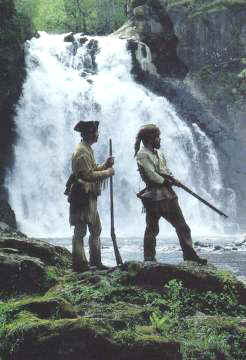 new options in each moment based upon the adventurer’s previous actions and varying relations.
When Lewis and Clark explored the “new” West, they sometimes chose a wrong path on their journey or floated a stream heading the wrong direction. When they realized their error, Lewis and Clark did not trek back to their starting point in St. Louis. Instead, they renewed their adventure from the point of their error.
Christians who misstep do not return to Christian infancy. What they have learned in their voyage of Christian formation does not disappear in an instant of sin. Instead, God calls them to repent and return to the journey of Christian growth. And that return begins from the point at which they find themselves. A life of love can begin from anywhere, because the God of steadfast love is everywhere.
The Adventure Model seems more faithful to the dominant love themes of the Bible. It emphasizes the all-important love of God our guide. If focuses upon our relations with God, while also stressing the importance of our relations with others.
The ongoing life of loving God, others, and God’s creation, including ourselves, is the life of holiness. Today we need this adventure in holiness – understood in terms of relational love – more than ever.

Newsletter
For a 200-page book of Thomas Jay Oord's best-selling writings and to receive his newsletter, add your email address...
Comments
nice work.
Greetings Tom,
So well done as usual… It crashes before it begins, but as you and I have discussed multiple times, you steal the game by defining the terms, what Wittgenstein argued was the role of ‘rule maker’ via language definition. You do so with the following comment:
“According to the Adventure Model, each traveler sets out with others on an open-ended and largely unplanned adventure. The journey will inevitably include challenges, but the traveler will also encounter opportunities for great joy. “
Unplanned? A huge assumption that seems to ignore the witness of scripture (Eph. 1ff and a multiplicity of other texts). As one who leads (guides) large groups of people across a very dangerous Grand Canyon trail each year, I can tell you that I would challenge anyone to abandon a guide who starts the hike with the following,
“This hike is largely open ended. We don’t know how we are going to get where we are going, or even where we are going for that matter, and once we start I can’t do anything but offer advice here and there, some of which you will hear clearly, other times, barely audible at all. I can’t empower you in any way other than cheering you on or giving advice, especially if my empowering you would impede the agency of another traveler pr change the trail in some way. It is just not my way. But have a great trip and make sure you keep an eye on your fellow travelers, because some of them are absolutely nuts and out of my control, and will push you over the edge to your death. The best I can do is ask them not to… Have a great adventure.!”
It’s just me, but as one who does lots of adventure trips where death is a very real possibility, I prefer a guide who says, “Be at rest, I am here, I know what I am doing, know just what you can handle and what you can’t, know exactly how thrilling this journey is going to be for you as I take you right the edge of your limits. And yes, you will fall over the edge one day, but I will catch and you take you home…”
As an adventurer who has been to the edge many times (too close on a couple of occasions) I never travel with a guide who doesn’t know what is coming next…
Later friend… Seriously, you need to do the canyon with us next year. And yeah, we are not like your guide, we actually carry you butt out if need be… :o)
Just finished re-reading Relational Holiness. I do have to say that you have a gift for putting difficult concepts that are quite accessible to everyone. I just used some of your wording to explain what we mean by holiness and the people I was talking to grasped it right away and are in full agreement. Too often people see holiness in terms of purity/rule following but those as core notions inevitably lead to the slide scenario, IMHO.
This is easily my new favorite way to explain holiness to people. Thanks for sharing this!
Before coming to NNU, I was not familiar with the concept of prevenient grace – or at least I was never given this term to attach to the concept it represents. I used to think about sin like it was a completely obliterating failure – that upon sinning, I would “fall down the mountain” and would have to start all over again. Through thinking relationally about God (which the Church needs to play a large role in, I believe), we can take the fear out of horrifically failing from moment to moment. With God as our guide, we do not have to have these worries – certainly sin is still significant and real, but God is not keeping a tally of when and how we fail. God wants us to commune with him – this is the beauty I find in relational holiness.
Don,
Uhhhh, I think you are extending the metaphor a bit far to somehow reveal weaknesses in Tom’s point. And you may have succeeded in doing that, but at the same time I think you missed the overall message that Tom is trying to convey. I think Tom intends to use imagery that empowers us to think about the dynamic adventure of relational holiness. It seems the contrast Tom draws between the slide scenario and the adventure model is needed and could be really helpful to folks.
I have often used the adventure model to explain the dynamic of following Christ. I call it taking the plunge. As someone who swims in natural bodies of water, I sometimes only have about 12” of visibility. Like Abraham leaving Haran to journey to an unknown country, I have to walk (swim) by faith and not by sight. No two swims are alike I zig zag all over the place, but somehow I always make it to the other side. Tom’s imagery is much better than mine if yo ask me. My point is this, I don’t have a problem with the words unknown or unplanned as you do. I think those words accurately reflect the journey of holiness as I have experienced it.
I think what happened here is that you tweaked the metaphors to make YOUR point. It almost comes across a little condescending don’t you think? Or maybe I missed the humor in it…if so forgive me.
Don, I guess “unplanned” needs qualification. It doesn’t mean that the Guide has no goal or doesn’t know where He is taking us. It does mean that the Guide will sometimes regret His decisions because we reacted poorly, as the Scriptures many times explain, and hence adjusts His guidance. Not the ultimate goal.
Sure, I’d want a Guide who has exhaustive knowledge of every step I’ll take from today through all eternity. But that might say more about my need for comfort than my skill in Biblical exegesis.
Also, I think the “Grand Canyon trail” is not the best comparison. “A loving response” allows for much more flexibility than walking along the edge of the GC does. So our Guide has many more options along which to lead us, than a GC guide has.
Tom, I like the metaphors you use; they have merit. At the same time I find myself considering the limitations of the Adventure Model.
When we start to think of the relationship of God and creation being side-by-side or face-to-face, it is comforting to think of that kind of companionship. However, envisioning ourselves as stand alone free subjects who respond to God’s external calling or guidance is problematic.
You mention the idea of the guide calling and empowering. It is this second part that I fear may get overshadowed in the metaphor. Without empowerment, any guidance, calling, or command would have to be worked out by the grit of our own flesh. This is where the imagery of side-by-side or face-to-face can misguide our thinking. We must live by the Spirit and not the flesh, as Paul taught. Holiness is a fruit of the Spirit’s activity; the Spirit is more internally enabling than an external guide whom we heed.
There is so much I like about the way you talk about the journey of holy living. Nevertheless, I am trying to think about how to keep the notion of empowerment closer to the surface in your metaphor.
Bob,
So well said. I agree that I have taken Tom’s metaphor to a point that would make some people uncomfortable. Your insight is right on spot! Like you, I am often in murky waters, as deep diving is my true joy in life. Nonetheless, let me suggest you missed the point with your well presented response. I was not addressing the ‘experience of the swimmer (adventurer)’, but rather the ‘Guide’. Tom’s analogy tells us not only that the adventurer sees as though in murky water, but that the ‘Guide’ is equally unsure of where the adventurer is headed, or even how to get there… I concur that the adventures are always a bit in the dark, but I have deep concerns when we suggest the Guide is equally wondering which way to go or how to get there, when the guide can’t see much further than the adventurer. Further, I want to believe that the ‘Guide’ has very strict guidelines as to when the Guide will allow the adventurer to wonder down a trail leading to death, or when the Guide will not. That the Guide is free to act upon the adventurer and his journey anytime the Guide thinks it best, thinks it mandated by love.
Forgive me, but I am no theologian, and sometimes have trouble tracking with great minds, but metaphors I sometimes get. So when I see one that I think I understand, I feel like I can engage. I want the guide to know where we are headed and to have the ability to get me there. To even altar my course when I am too deaf to hear the Guides promptings. I rely on the guide, trust the guide, precisely because the Guide has been here before, done this before. People take my advice when diving to depths of 200 ft because I have done it before. I go on ahead of those hikers who follow me across the canyon, because I have done this before, I know where the trail is going. I know what it takes to survive.
Now here is the tricky part. While I want my hikers and divers to be free to chase their dreams, sometimes I say ‘no’. Sometimes, I know their choices are pure folly, and I simply say no. I have even refused to allow some folks to go, violating their free will. Pharaoh was determined to kill the Israelites and God said ‘no’, drowning him in the sea, a pretty radical limitation of his free will. Paul was told by God what he ‘must’ do. Somewhere in this discussion is a middle ground. There is a Guide who lovingly closes and opens paths for the adventurer. A Guide who may even allow them to chose a path that leads to death, while at other times closing that path, for the timing is not right.
My challenge with the Guide metaphor is not about the experience of the adventurer, but rather the nature of the Guide and what the Guide does and does not do while guiding…
I am sure there is a philosophical way to address this, but that is the best I can do. Metaphors I get most of the time. Maybe that is why Jesus so often taught with them. He knew he was addressing folks like me, not the ‘brightest bulbs in the pack’… But I agree metaphors are always limited and tricky… As one of my favorite metaphors from Tolkien likes to say, “It’s tricksie…”
Don
Okay fellas,
I think we are all struggling with the limitations of a single analogy used to describe the adventure of holiness. At best it provides a rough sketch of what we know and experience. I think of Teresa of Avila’s Interior Castle as a description of the Soul’s journey toward God. It’s a huge metaphor sorta like Robert Mungor’s My heart Christ home. These images provide rough sketches. Of course we theologians come along and poke holes in them and then argue with each other over their meaning. In the book that Tom edited, Creation made Free, Alan Rhoda uses the game theory analogy to discuss divine providence, but he does so with caution and identifies the limitations right at the outset. All this to say, I think we have to cut each other some slack here and appreciate the intent.
Len Sweet get criticized for using metaphor and image all the time. In fact, he has written whole books that are built on a single metaphor. Quite often this kind of writing is not friendly to academic audiences. In fact, I almost see Tom’s entry as an attempt to draw in a wider audience. More of a popular audience and not just an academic one, which I think is needed at some level.
Anyway, thanks for a the good discussion.
I want to echo Bob’s affirmation for Dr. Oord’s willingness to take the risk of presenting very complicated theology in forms that the average pastor like myself can grasp and interact with. I find it even more valuable that he allows us to actually discuss the material in a serious way without treating us like we are in Sunday School, nor expecting us to simply jump on the ‘band wagon’ of public affirmation. And finally, that more than a few of my laypeople visit his blog weekly to see what we so called ‘thinkers’ are up to. I for one, concur with Bob, and appreciate Dr. Oord’s risk taking by presenting new ways of thinking to the less educated folks like myself. Oh that more lay people could be invited to this journey of theological discovery.
Don
I see this as a very helpful analogy for many today. Often Christians fall into the trap of a works based faith with Christianity merely a set of rules to follow. Many see the Christian walk towards holiness as the slide were the slightest mistake will cause everything to fall apart. Too many Christians tried to complete the trek up the slide but fall down too many times and give up on it all together. This analogy is useful in that it rejects this Pharisee type view of religion and seems to be more consistent with the teachings of Christ.
I love the Adventure Model of Holiness. One of the most important parts of it besides the Guide to me is having fellow Adventurers along for the journey. It is sad to see Christians traveling the journey without companions. As you wrote, the Guide’s voice can often be still and small which makes it hard to keep following at times. Fellow travelers are often used by God to help us know what God has in store for us on the journey. They can be used as the voice of the Guide for us at times.
I am so grateful for the adventurers who travel alongside of me for those times when I don’t hear the Guide as clearly as other times. Sometimes my spiritual life seems to cycle up and the down and back around. It’s not a dynamic I particularly like, but Tom’s reminder that I do not have these cycles in a vacuum, that there is this spiritual community all around me and I’m so grateful that the Guide manifests himself through them as I journey along the Way!
Hey Tom,
I enjoyed the use of an adventure model. It is interesting that you allowed for the adventurer who has an instance of sin. I think this is pretty important. There seems to be such a mis-conception that we believe that a person can reach a point of never sinning again.(definition of sin is critical I think) Instead you’re saying that it is all about the response to recognizing the sin. Getting back on the horse after being thrown off. I think.
I am so thankful that when i sin, I do not have to gain God’s love again. God is always loving me. It is my duty to answer God’s call and respond to God’s leading to accept love and to love others. God as guide leads to adventures of greatness!
It is very easy to wind up in a place where life becomes mundane and routine. In the Christian arena, I think this happening is a result of an impersonal relationship to God where rule following is salvation. When we understand life as an adventure, the day to day becomes much more meaningful. Every step along the way becomes formative for us and our community. Every menial task finds significance in the journey. The adventure mindset also changes our perspective of God. God is seen as a guide, on the journey along side of us, challenging us and showing us the beauty and wonder behind each turn.
Thanks for this!
Traveling with others is always more enjoyable. Another set of eyes can see things that I don’t necessarily see. It also interesting to hear how traveling partners interpret the things we are experiencing. The journey is always a richer experience when it is shared with someone else.
The adventure metaphor is encouraging for when we do make a wrong decision. It’s good to know that we don’t have to start all over again; we simply need to listen to the voice of the Guide to find our way back to the path, the best kind of path possible. I’m grateful for the love of the Guide, but I’m even more grateful for the fact that the Guide believes in me, that I can complete the adventure.
I appreciate the adventure metaphor and the inclusion of “adventurers-in-community.” I don’t like to travel alone. I love my Guide and I know I am well cared for, but sometimes I need others to help me hear where the Guide is calling me. Sometimes I need them to pick me up when I’ve fallen down the rocky slope of my own choices.
I think we can make any metaphor “fall apart” especially when we are trying to describe God or holiness which are so much bigger than one or two word pictures. Let’s keep using them anyway.
I love the gift of prevenient grace! When reciting the articles of faith with my children our mnemonic device is a big present for number 7! However, I have really never considered it as being present in every moment and we are always responding to what God has done. In a big picture kind of way, I can see this, but moment by moment, I have trouble seeing that every single action is always in response to what God has just done before me. Still processing this as it is stretching my thoughts. Interesting!
One of the key points in this post is “In most moments, the opportunities for love will be mundane.” If we are to live moment-by-moment in love – loving God, loving others, and loving creation, we need to come to grips with the fact that it is in the ordinary, everyday happenings where we can radically change our world. If we wait for that big opportunity to love, we will have missed the countless mundane opportunities that present themselves daily. When we string together the simple expressions of love – a smile, saying thank-you, opening a door for someone, we get to the point where they become who we are – not something we do. This is extraordinary love – a love that transforms us from the inside – out.
Dr. Oord,
I greatly appreciate the adventure model that you do such a wonderful job describing. This model opens the opportunity for freedom in the Christian journey that neither cripples one with the domineering control of God nor does it debilitate one with the fear of failure.
I appreciate the intricate relationship this image maintains between the guide and traveler. This sort of understanding helps me see God as my all-encompassing and loving guide… that works WITH me… not against me in this life.
The adventure model helps curb me from trying to “measure up” to God’s “standard.” Rather – as each new moment is birthed – so also is the opportunity to perfectly respond to God’s loving invitation to travel ever deeper into The Adventure.
And adventure is a good way to speak about our journey with God. I also agree with Donald Minter that the Guide should know where the group is going and how to get there. Perhaps there is a mixture of knowing and not-knowing in an adventure. If we knew everything that would happen around every corner, it wouldn’t be an adventure. And adventurous journey implies that there will unknowns AND that there will be an end. I believe God can know where He is leading us AND He doesn’t always know how we are going to get there.
I like that you emphasize that acts of love can be ordinary.
I think we often expect holiness to require herculean effort or to involve something dramatic. And in our quest to discover the “big” thing God wants us to do, we miss countless opportunities to love in the most ordinary of ways.
Having small children, it is easy for me to relate to the chutes and ladders example in your blog. For many people, life can be a series of climbs and slides, and this could be why some people think Christianity should be the same. I think the mind set of slipping is very destructive for the forward progress of Christians, and it doesn’t match well with the love of God. I also feel that you offer many good illustrations in your book, and I believe that this book has the potential to liberate many from that slippery slope perspective.
I really enjoyed reading this book because it simply and constructively offered some very positive explanations of the process of Holiness. I think it is a must read for any Christian that wants to gain a clear positive insight on Holiness. In fact, in the spiritual formation class I teach, we just finished one book and have been looking for a new book to read and discuss. I believe that this book would be a great next read.
This way of defining holiness is appealing. Reading some of the posts above about the reliance on metaphor to communicate a message, it brings to my mind the thought that one metaphor doesn’t necessarily intend to communicate a complete understanding. Instead, it serves as one key to open one door to the inside, where there might be multiple doors.
I think the adventure metaphor is a wonderful means to explore the concept of holiness through love. Once again, well done, Tom. I think you have hit a home run with this book.
Dr Oord and his co-author’s book is extremely compelling. I for one come from a long line of Nazarenes. I am the first to admit that our instruction of the doctrine of holiness performed in the Sunday Schools and Bible lectures are inadequate and usually result in a legalistic dogma. My church leaders never used the core notion of love as the central motivating factor behind holiness. I became a poster child for the Slide scenario. I built my holiness around my favorable actions and not around my relationship with God. The church presented holiness in terms of sexual purity and abstaining from alcohol. Although restraining fleshly desires is a good discipline to practice, it simply cannot defeat temptation. Love is the only motivator that can resist temptation. When I fell in love with Jesus and learned the difference between God the Monarch to God my friend, I truly became holy.
While I really find the relational model of holiness helpful, coherent and it is, I think necessary, the adventure analogy does not work so well for me. You wrote, According to the Adventure Model, each traveler sets out with others on an open-ended and largely unplanned adventure. The journey will inevitably include challenges, but the traveler will also encounter opportunities for great joy.” This unplanned aspect is more than I am willing to settle with at this point in time.
I really relate to the adventure analogy, and I admit the sliding analogy is depressing. I have really enjoyed learning more about love this week. I have great peace about life and about what needs to be done as a person who loves God. I have changed. This is good.
I appreciate the emphasis on relational holiness and I like the adventure model. It is comforting knowing that my God is so loving that no matter how much I may or may not mess up with sin He is there guiding and directing me back to Him. He is the wooer and I am the responder. Out of love I want to live in holiness in relation to Him and share that with others around me and beyond.
Your discription of God whispering in our ear and then allowing us to make the choice to listen or to ignore and then to either gain from doing right or suffer the consequences of not listening is the closest explaination of prevenient grace that I have ever heard.
Ii also like your comparrison to following an experienced hiking guide (God) who takes his followers (us)on a lifelong journey through life, over a large variety of terrain and yet is with us every step of the way. This very comforting and backs the passage in the Bible that says God will never leave us. It’s all very much a God thing and a very good thing. I will sleep wonderful tonight, with a smile on my face knowing God is here. PTL!!!!c
I believe that you are right in trying to put God as a relational God and not as a static and non relational. I agree that God wants to relate with his creation and share all the moments: Happiness, sorrow, fear, etc. The example of God as our leader through the journey, is very important, because leaders just show the way, but they do not walk for us. God is leading the way but we might choose not to follow him. He will try to convince us to return to the right track but we are the ones who will finally decide our future. It is so good to have a God that is our friend and walks with us.
The “Slide Scenario” reminds me of a story Madeline L’Engle tells about a legend about the fate of Judas. In the legend, Judas wepts and mourns for thousands of years because of his betrayal of Christ. He exists in this pit, but at the end of his mourning he looks up and sees a faint light at the top of the pit. He tries to climb out of the pit several thousand times, but because the walls are so slippery, he is unable to reach the top. The end of the legend comes when Judas finally reaches the top of the pit, climbs out, and discovers he is in the banquet hall of Christ. The disciples are gathered around Jesus, who turns to him and says, “There you are, Judas, I’ve been waiting for you. We couldn’t start the celebration without you.”
The legend is meant to emphasize the grace of God (though a portion of it sounds a lot like works righteousness). It is truly by the grace of God that we are able to move beyond the “Slippery Scenario” to take ground in our hearts. Praise be to God for that prevenient grace that goes before our every decision creating an opportunity for us to experience God’s love.
While it seems that God’s grace is sufficient for forgiveness and not making us restart back at infancy to try again, there also is a grace to help us find the path again.
Once forgiveness takes place, sometimes we are far from the intended path. I see this in marriages all the time. People go way off the path for years and years. But once they turn, there is what my friend calls the best way from here.
We need God’s grace to help us find that way too.
Of all the concepts written in this book, the most helpful was that love is the core of holiness. I have been a member of the Holiness Movement for nearly 33 years. I have worshipped in holiness churches around the world. I all my dealings with the holiness culture, this is the first teaching I’ve ever received that explains love as the core of holiness.
I’ve personally struggled and watched others struggle to understand what it means to “be holy as God is holy.” The authors have clearly identified the contributing elements to holiness as: rules & regulations, purity, separation, total commitment, and perfection. It now makes perfect sense why these elements cannot be the core. The true core of holy living is to love. That, I can do.
This book has empowered me. I can live a life of love through the power of the Holy Spirit. I can be holy.
The slide scenario should be rejected. I have often invited people to join me on a “journey with Christ” as they come into fellowship with our local church. I’m not sure there is another analogy that works as good as this one. The relationship that is formed with God that results in holiness truly is an adventure. The mistakes that humanity makes certainly makes the adventure uncertain but “the Guide can be trusted to show adventurers how to avoid the negative and choose instead the best paths.”I couldn’t agree more that “today we need this adventure in holiness – understood in terms of relational love – more than ever.”
Stephen Willis
Growing up in the reformed tradition, I often felt like I was starting over every time I sinned. Your model approaches this completely differently. Does guilt have a role in the Christian life or is it a ploy of the devil. Repentance inclines some sort of guilt be present. Do Christians give guilt to much power? The adventure model is a good model. I really like the action book series because it gives you the choice of which page to turn to. This gives me ownership in my decision. There is no coercion or predetermining of which page to turn to. Can your model limit self contemplation and awareness? I don’t know if this is the case, but a possibility.
I appreciate the analogy of the guide that goes ahead of us, yet still allows us (as adventurers) to choose to follow. The adventurer idea seems to be rather masculine in nature. We are adventurous in a lot of ways.
The idea of the prevenient grace of God going before us, ahead of us to lead the way into love and holiness is particularly wooing to me on a very personal level. This picture brings to mind an old hymn, “Called Unto Holiness” For in prevenient grace we are wooed and guided to Holiness in Love, yet free to choose how far we follow.
The adventure model is such a great way to explain this idea. I like it for its simplicity. We should be careful though to point out that while the Guide is there and wants to show us the path to blessing and happiness, depending on how deep into the muck we are it may take time and more pain before we find ourselves free of it. In fact, in some cases, you might find yourself in it the rest of your life on earth. Some steps may not lead to wholeness that we desire either, a lost child or an unexplained cancer will likely never fully heal in us, but the Guide will help to make the best of it.
The expression provided in the Adventure Model of holiness provides an accurate description of how the individual walks along the Christian journey. We benefit greatly from the “Comforter” that has been sent to guide and direct our paths. Freewill does at times lead us astray but the great and wonderful thing about God’s grace is that He is there to take us from wherever we may be found and lead us faithfully again toward our eternal destiny. I appreciated your comment “Instead, they renewed their adventure from the point of their error.” That is the best part of God’s love, you never have to be sent back to square one and start all over again. You can begin again exactly where you are when we repent and confess.
You stated, “And that return begins from the point at which they find themselves.” The adventure model removes the tension that the slide model creates. Within the slide model, there is always the knowledge that at some point, I will fail and have to start all over. I like the adventure models lay out because, from the beginning, there is an understanding that I will probably mess up eventually, but this does not destroy my progress. Instead it is used to further my progress. God helps me learn from my mistakes and move on. I am sure as Lewis and Clark explored further west, they became better at realizing what streams lead to no where. Likewise, I may mess up, but as I progress God will help me learn how to avoid the temptations I face and progress further in the adventure.
In the adventurer’s story the relational love of God is evident. This is of course the point of the adventurer’s life. However, there are interesting conditions or realities that the adventurer faces. The most positive of realities is the “always-present Guide.” How wonderful to know that the Guide, also known as God, is with us as we travel all of life’s paths. Only in knowing this does the adventurer have confidence to take another step in their great adventure story.
There is also powerful hope found in the adventurer’s life when they realize that there are missteps in life, and they are not the only one going through them. It is also very reassuring that the adventurer, also known as a Christian, does not return to the beginning of their walk with God after a misstep. These thoughts are ideal for where this adventurer is going and where this adventurer has been. Only in the Guide will this adventurer find peace, love, and forgiveness.
Tom,
You say that, “God’s moment-by-moment empowering and inspiring calls require response,” and I believe you are so right! The temporal manifestations that we entertain and interpret, regarding the play-by-play invitations from God, are instrumental as they develop and promote our spiritual augmentation. God, through the manifold blessings encompassing Prevenient Grace, desires collaborative relationships; liaisons that spiritually release contemporary society from 20th-century static thinking and discourse. Moment-by-moment interaction with God is invigorating and astonishing in that, we have the opportunity to spontaneously co-author with our Creator the unfolding destiny of civilization. For some individuals this paradigm of theology has become a hybrid morphing of contemporary heresy as it produces manifold anxiety and ecclesial upheaval. Scripture supports instantaneous interaction, not as a foundation or proof, but as a clarifying role in which believers can participate openly in love and relational holiness. Christ, by His atoning death, resurrection, and heavenly intercession, is the unique liberator of fear. As we acquire a personal awareness regarding Christ’s liberating Spirit and invitation to participate collectively, we have the opportunity to fully engage our theology exploring the immutable greatness of Yahweh as it relates to our moment-by-moment connection. Thanks for the great reflection, Tom.
I’m sitting at atlNta international trying to complete this in my celll phonetrying to get this done since thereis no wifi. Apologies for typos.
a life of love can begin anywhere because God is every where!!!
This is an essential truth in my ministry! Love is possible in the darkest of places, because God is in those places working his love out. Wooing, inviting people into his love story. Inviting us to participate in his kingdom through acts of love.
Theses acts of love change us for ever when we live into them and continue to seek them out. I fail sometimes at this call to love, but I pray daily that my heart would beat with his!!!l
The Adventure Model offers us a real place in creation. This model requires an active engagement with God, self and others as a contributor to the well-being and balance. Without its essential component, love, the model falls short of anything hopeful and finds itself somewhere in the mire of the “hell fire and brimstone” mentality of God. God’s love is manifested perfectly in the actions of the adventurer so long as God’s guidance and intimations are requested and received. The adventurer no longer operates in fear, somewhere on that slide, but instead, looks forward, focusing upon the outstretched arms of Jesus who welcomes the traveler, no matter how worn or how damaged he/she may be from the journey. Punishment for absolute frailty is replaced by loving acceptance by the God who created and loves His own. Our construct is not conditioned for coersion or puppeting, instead, like the character of God, is formulated to be in relationship with God, self and those with whom we intersect. Adventure is our call and love can be our plight when we embrace that we are called to Him for Him. Love is perfected in this union of holiness where human and creator are connected not by obligated judgement and condemnation but instead by invitation.
The Adventure Model is an appropriate one when considering spiritual formation. When we choose to follow Jesus on the adventure He has for us, we begin to piece together a life of love. This life is holy. Our Guide is the Good Shepherd, and He leads us into green pastures near the calm, cool stream. At times He takes us through the dark valley—beckoning for us to follow Him along the sure path.
I really appreciate the Adventure Model.
http://acheter-viara.webnode.fr
ACHAT VIAGRA – 0.55 euro Par Comprime SUR INTERNET ACHAT VIAGRA AUCUNE ORDONNANCE NECESSAIRE VIAGRA ACHETER INTERNET Viagra En Ligne En Montpellier<b>
<center><a ><img>http://acheter-viagra.freehostp.com/achatviagra.jpg</img></a></center>
<u><b>VIAGRA PHARMACIE EN FRANCE</u>
Viagra Pharmacie En Ligne
Acheter Viagra Tours
<a >ACHAT MEDICAMENT VIAGRA 100mg</a> – ACHAT VIAGRA 100mg EN LIGNE
PHARMACIE EN LIGNE VIAGRA
<a >VIAGRA ACHETER INTERNET</a> – ACHAT VIAGRA SILDENAFIL CITRATE
Acheter Du Viagra Pas Cher
PHARMACIE EN LIGNE VIAGRA
ACHETER VIAGRA – http://pharmacie-en-france.webnode.fr
Viagra 25mg En Rennes
Medicament Generique Viagra
Viagra Pharmacie Le Havre
Prix Viagra En Pharmacie
Viagra 50mg Ou 100mg
Acheter Viagra Reims
Vente Viagra En Ligne
Viagra 25mg En Nancy
Viagra En Ligne En Paris
Acheter Viagra En Ligne En France
Acheter Viagra Original
Acheter Du Viagra En Pharmacie Sans Ordonnance
Commande Viagra France
Viagra En Ligne En Nimes
Acheter Viagra Rouen
Viagra Prix En Dijon
Viagra 50mg En Amiens
Viagra Prix En Pharmacie
Achat De Viagra Sans Ordonnance
Viagra Pharmacie Villeurbanne
Achat De Viagra En Pharmacie
Prix Viagra 25
Viagra En Ligne En Tours
Achat Viagra En France
Comment Prendre Le Viagra
Viagra Prix En Rennes
Viagra Prix En Grenoble
Acheter Du Viagra Pas Cher