A Realistic Theory of Miracles
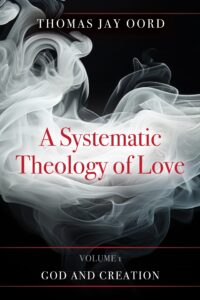
In my recently published Systematic Theology of Love (Vol. 1), I address the complex issue of miracles. This essay offers the heart of my argument, which is based upon amipotence, or what I call the uncontrolling love of God.
A number of problems arise when assessing the nature and occurrence of miracles. Some problems arise from views of divine action. There’s also the fact that people’s belief in miracles can be explained psychologically, belief in miracles seems influenced by culture, and some may simply reflect the trickery of religious hucksters. Other problems emerge when science offers convincing explanations that oppose miracles. These problems have led a fair number of theologians and everyday people of faith to reject the category of miracles altogether.
Is Belief in Miracles Culturally Conditioned?
People in some cultures—often non-Western—seem more apt to witness miracles. Advocates for believing in literal miracles and their allies sometimes complain that those who don’t witness miracles must be blinded by modern culture, science, and Western enlightenment.
To people skeptical of miracles, however, the fact that those in less scientifically developed cultures witness more miracles indicates that some people are less advanced. If they just understood the world better, goes the thinking, they’d witness fewer events they’d call miraculous. Ironically, both advocates for miracles and deniers point to the influence of science and culture when assessing whether miracles actually happen.
Personality and personal preference also influence belief. Theists attracted to the dramatic and sensational seem more likely to believe in miracles. By contrast, reserved and restrained theists in general prove less likely to believe.
As like-minded people congregate, confirmation bias grows. Those who believe in miracles form groups of individuals who—not surprisingly—witness numerous miracles. Those who don’t believe form groups who tend to conclude that miracles never or rarely occur. Many Pentecostal congregations would be examples of the first; many Presbyterian congregations give examples of the second. The Catholic church contains significant numbers of people huddled within their own groups.
Some people try to prove miracles exist. But some miracles turn out to be hoaxes, hysteria, or misunderstandings. Dishonest faith healers and shifty evangelists can trick the faithful, and this adds support to the view of some skeptics that all miracles must be fake. Suggestibility can incline some people to believe they, or others, have been healed when they haven’t been—especially when respected religious authorities do the suggesting.[1] In addition, many healing miracles just can’t be objectively verified by qualified experts such as medical doctors.[2]
Interpretation Matters
The above issues point to the role human interpretation plays in miracles. How we each understand reality depends on a host of factors, both within us and in our environments. Two people believing in God could stand side by side and witness an event, and one calls it miraculous, while the other doesn’t. One appeals to special divine action, the other points to natural causes. Diverse interpretative frameworks largely explain these differing explanations.
Perspective matters. People’s view of miracles can also be altered over time. Sometimes, an extraordinary event convinces one not inclined to believe in miracles to begin believing. Other times, someone who once embraced the miraculous decides science, medicine, or other factors offer better explanations. None of us remain locked into our current perspective of God and life. People change.
Defining Miracles
Given the factors I’ve noted, defining miracles can prove difficult. Writers of scripture tell stories of signs, wonders, and extraordinary events, but they don’t clearly define the miraculous, or explain how it works. Consequently, definitions among theologians vary.
Most theologians assume God must be the sole cause at play in the miraculous. Thomas Aquinas says, “God alone” does miracles, for instance, and they are “beyond the order of created nature.”[3] Martin Luther says miracles are “wrought by God alone.”[4] Charles Hodge defines a miracle as “an event in the external world brought about by the immediate efficiency or simple volition of God, without the mediation of natural secondary causes.”[5]
This emphasis on solitary divine causation becomes even more accentuated by the explicit denial of creaturely causation. “A miracle is a suspension or control of the established laws of nature,” says Adam Clarke.[6] The New Catholic Encyclopedia says a miracle is “an event which lies outside the normal pattern of physical causes and is attributed to the immediate action of God, who thereby manifests the supernatural.” “Miracles represent God’s invasive grace,” says Cheryl Bridges John, “moments in which the Spirit disrupts ordinary experience to reveal divine compassion and restore creation.”[7] Others speak of God’s “intervention”[8] in, or “interruption”[9] of, creation’s causation. I’ve discussed the problems with appeals to external intervention in earlier chapters.
It’s one thing to claim an event can’t be explained by natural causes alone. Every theologian who says God must be a necessary cause for each event should affirm that claim. But most definitions of miracles say that God alone brought about some result, irrespective of nature. Words like “intervene,” “interrupt,” and “invade” imply that an omnipotent God occasionally shows up where previously absent to secure an outcome singlehandedly.[10]
Problems with Miracles as Traditionally Understood
The Problem of Selective Miracles
The way most theologians define miracles leads to numerous problems. One of the most egregious I call “the Problem of Selective Miracles.” It arises because people who pray for miracles usually don’t get them. The vast majority of requests to God seem to go unanswered, in the sense that those praying don’t get miraculous results for others or themselves.[11] Even saints in scripture weren’t healed, although they requested it.[12] “The complete absence of miracles in my life when they should have been abundant,” says Stephen Bradford Long, “led me to question the veracity of all miracle claims.[13]”
The problem of selective miracles stems from believing God must be omnipotent. If deity were all-powerful and all-loving, we’d expect many more miracles than we witness. Christine Overall states the issue well: “In choosing to favor just a few individuals, God shows himself to be arbitrary in his beneficence to some and cruel and unfair in his neglect of others.”[14] Apparently, the omnipotent God doesn’t care enough to help consistently.
Those who say God alone does miracles often use the word “supernatural” to describe divine action. The word has several meanings, but saying a miracle occurs supernaturally sounds like an omnipotent God occasionally controls creatures or creation in some unnatural way. Supernatural suggests God overrides or disrupts the natural course of events.[15]
The Problem of Evil
The second problem with miracles as traditionally understood is similar to the first. Instead of asking why an omnipotent deity doesn’t do more miracles, however, it wonders why God doesn’t use those miracle-working abilities to prevent evil in the first place. The kind of power God uses to do miracles, “acting alone,” could stop unnecessary suffering and pointless pain. What kind of God refrains from helping the oppressed and hurting?
“It would seem strange that no miraculous intervention prevented Auschwitz or Hiroshima,” says Maurice Wiles on this point, “while the purposes apparently forwarded by some of the miracles acclaimed in traditional Christian faith seem trivial by comparison.”[16] If God miraculously shortens the line at Starbucks or finds a parking place for someone, we might ask, why doesn’t deity stop genocides? If God can cure grandma’s arthritis, why doesn’t deity use that ability to prevent your sister’s rape, control the spread of global viruses, oust oppressive political tyrants, or stop the ravages of climate change?
The problems associated with miracles heighten when connected to “faith healers.” When a charismatic pastor claims to have the gift of healing but fails to use every waking moment walking up and down hospital halls healing everyone, we wonder whether the person loves consistently. After all, they could be doing much more than they currently are. A deity who could control all entities or interrupt natural processes, but didn’t do it to help the hurting, would love even less consistently.
Most theologians say God never grows tired. But when evil events occur, we understandably assume an omnipotent deity must be asleep on the job. Or just doesn’t love lots of hurting people. This view of God creates massive problems for people who earnestly seek divine help but fail to receive it.
Problem of Scientific Explanation
There’s also an intellectual problem with which many struggle. Most definitions of miracles say God ignores, interrupts, or overrides natural causes. Miracles involve “a suspension or control of the established laws of nature,” says Adam Clarke.[17] Contemporary scholars often cite the 18th century philosopher David Hume as tying miracles to the suspension of natural laws,[18] but Aquinas also said miracles go “beyond the order of created nature.”[19]
A tension arises between claims about miracles and scientific explanations. If God occasionally determines outcomes singlehandedly, scientists who point to natural causes for those outcomes will be wrong, by definition.[20] They won’t be able to give any natural account of a miracle if God is the sole and supernatural cause.[21] This proves empirically problematic, and it undermines the process of science.
In addition, we have the issue that most who claim to observe miracles, if asked, could also identify creaturely causes at play. When defined as events beyond or overriding nature, therefore, miracles aren’t just problematic for scientific explanation; they stand at odds with the typical explanations of everyday people.
A theological problem also arises when we call miracles “interventions.” This way of talking implies that God normally resides outside nature and then “enters into” a closed system of natural causes. To say God “invades” also undermines claims about the Spirit’s continual and necessary causation alongside and in creation. It implicitly says God isn’t universally present.
Problems with Non-Traditional Definitions of Miracles
Given the problems that arise with the traditional definitions of miracles, it’s not surprising some have offered alternative definitions. In fact, I’ll be providing my own. Before doing so, though, I want to look at other alternatives to the traditional view of miracles. I’ll identify problems with each of these too.
Is Everything Miraculous?
One response to traditional definitions of miracles says all events are miracles, and all of life is miraculous. Albert Einstein explains this approach. “There are only two ways to live your life,” says Einstein. “One is as though nothing is a miracle. The other is as though everything is a miracle.”[22] He recommends the second way. Paul Tillich argues for the idea that all of life is miraculous when he says, “Being itself is the true miracle, the ongoing act in which God sustains the world.”[23]
But saying everything is miraculous faces major problems. First, it doesn’t fit either biblical or common views that assume some events are extraordinary and others aren’t. To most people, miracles are isolated incidents, not ubiquitous.
There’s an even more important problem, and it’s moral. Saying all events are miraculous means horrifically evil ones must be miracles too. On this definition, the Nazi Holocaust and the Russian Gulags were miracles, as was every genocide in history. All instances of sexual abuse, deceit, murder, humiliation, and destruction would be miracles if all that happens is miraculous. Saying everything is a miracle risks trivializing evil.
We shouldn’t say everything is a miracle.
Is Nothing is Miraculous?
Einstein’s other option says, “nothing is a miracle.” Given the problems I’ve outlined of selective miracles, the problem of evil, and scientific obstacles associated with traditional views, it’s not surprising that some people of faith deny miracles altogether. Biblical scholar Rudolf Bultmann takes this position when he says, “[The] modern man . . . does not acknowledge miracles because they do not fit into his lawful order. When a strange or marvelous accident occurs, he does not rest until he has found a rational cause.”[24]
When we can give plausible natural explanations for sensational events traditionally thought to be miraculous, we’re tempted to believe miracles never occur. A crying statue of a saint might be thought miraculous, for instance, until a scientist explains condensation. The miraculous exorcism of a person thought demon-possessed can apparently be duplicated with a few pills from the psychiatrist’s prescription. And so on. When naturalistic explanations sound more plausible than supernatural ones, it’s easy to assume science explains away all miracles.
Saying nothing is miraculous faces problems too, however. First, it dismisses the experience many people have that some events in life are extraordinarily and surprisingly good. Saying “nothing is miraculous” flattens life, ignoring the wild and often wonderful diversity of existence.
Second, denying miracles can lead to thinking God isn’t active in the world. Despite their many problems, at least traditional claims about miracles support belief in the activity of deity. Extraordinarily good events can remind us of an extraordinarily good Lover.
We don’t need deny all miracles, but we do need a plausible account of them.
Are Miracles Just in Our Heads?
Another modern option for understanding miracles capitalizes on the fact that we all interpret the world through our own experience. No one knows the full truth of an event or can be certain of the truthfulness of their interpretation. Given this, some say miracles are entirely a believer’s subjective assessment, irrespective of what actually occurred or what God does. Miracles are just in our heads.
Friedrich Schleiermacher is often cited as advocating this view. He says a miracle “is simply the religious name of an event” that “refers purely to the mental condition of the observer.”[25] Edward Schillebeeckx seems to agree: “A miracle is . . . a human experience interpreted as God’s salvation.”[26] Those who understand omnipotence as meaning God controls all things say “miracle” is simply a label we give some events. But all events are entirely caused by deity.[27]
Admittedly, this view of miracles has advantages. It acknowledges the role interpretation plays for making sense of life. It rejects certainty and avoids claiming that God breaks natural laws. This way of understanding the miraculous also seems to account for why people in some cultures or with certain kinds of personalities seem more inclined to witness miracles.
Saying miracles must be entirely a matter of our subjective interpretation presents problems, however. It undermines the realism we need for science, morality, and everyday life. If we claim miracles are just in our heads, perhaps everything else is just in our heads. If reality is whatever we decide it will be, extreme relativism and skepticism arise.
Saying all miracles can be entirely explained by our subjectivity also dismisses extraordinary events that make an objective difference in the world. Sometimes the sick experience healing unexpectedly, for instance. Sometimes the visually impaired begin to see. Sometimes those pronounced dead on an operating table revive, to everyone’s surprise. Sometimes cancer disappears without medical explanation. Some events are extraordinarily good, and they rightly prompt us to wonder about the activity of an extraordinarily good God.
We have reason to think we sometimes witness extraordinary and objectively good events.
A Better Definition of Miracles
To deny miracles altogether means denying an important feature of existence.[28] We can’t easily dismiss the vast numbers of people throughout history who say they’ve witnessed a miracle. Some miracle stories in scripture or told today are likely not historically true, of course, but others likely are. An adequate systematic theology of love should, therefore, account for authentic miracles.
To overcome the problems we encounter with traditional and alternative views of miracles, we need a new and viable definition of miracles. Below I give my simple proposal. Following it, I explain what the definition entails:
A miracle is an extraordinary, good event that involves divine and creaturely causation.
Miracles are Extraordinary
Instead of saying everything is a miracle, we should reserve the word only for exceptional, unusual, or atypical events. Saying every event is a miracle collapses the exceptional into the commonplace. Worse, it risks identifying horrors and holocausts as miracles. Neither mundane moments nor evil events should be seen as miraculous; miracles are extraordinary occurrences.
We can (and should) believe the Spirit gracefully influences every creature, in every moment, and all creation, all the time. And we can (and should) say the Spirit invites creatures to do what’s beautiful, loving, just, and so forth. God’s invitations take different forms for different creatures, and they will vary depending on the circumstances. But saying the Spirit is necessarily present to and influencing all creation doesn’t require us to say that everything occurring is miraculous.
Much of the time, God’s influence goes unnoticed or is ignored. This isn’t surprising, given that the invisible, universal, and incorporeal Spirit isn’t perceptible to our five senses. But sometimes extraordinary events draw our attention to the divine. Some people of faith call them “God moments.” But it’s not divine influence alone that makes an event miraculous, as I’ll explain shortly. The work of the Spirit is part of the reason some moments are extraordinary.
Miracles are Good
Miracles aren’t just extraordinary—they’re also good. We sometimes witness unusual events that are awful, horrific, or destructive. I’ve said evil events, no matter how extraordinary, shouldn’t be considered miracles. The slaughter of a village or people group may be extraordinary, but it’s not miraculous. Genocides are—thankfully—unusual, but we shouldn’t call them “miracles.”
A few theologians define miracles with language that suggest they’re good and extraordinary.[29] Theologian of the Spirit Amos Yong, for instance, defines miracles as “extraordinary manifestations of the Spirit, events in which God’s presence becomes available, tangible, and transformative beyond conventional explanation.”[30] Mildred Bangs Wynkoop says “miracles are personal acts of God’s self-revealing love, events in which God’s presence breaks through human experience in ways that cannot be accounted for by ordinary explanation.”[31]
Neither Yong nor Wynkoop go far enough, however. Neither really clarifies the roles God and creation play in the miraculous. Consequently, their definitions are susceptible to the criticisms I’ve mentioned, namely that the deity they describe does miracles selectively, could prevent evil, suspends natural causes, or can determine outcomes singlehandedly. An adequate definition of miracles should include language that portrays the universal Spirit working with creatures and creation in uncontrolling ways.
Miracles Involve Divine and Creaturely Causation
The final phrase of my definition of a miracle says both the Spirit and creatures/creation play a causal role in the miraculous. Miracles are never the work of God alone; deity never intervenes or invades; the Spirit never controls creatures or creation. God can’t control, because the universal Spirit’s love—even when enacting miracles—is always uncontrolling.
Creatures and creation co-operate with God in diverse ways. But, as I explained earlier, we can divide existence roughly into animate and inanimate.[32] Animate creatures—from cells to squid to sailors—use their agency variously when cooperating with deity in miraculous moments. Inanimate objects in creation don’t have agency in the same way. But miracles can happen when large or small aggregate in creation are aligned with, or become conducive to, the miraculous events the Spirit desires.
Generally speaking, what I’ll call “agent miracles” involve animate creatures cooperating with the Spirit—from the smallest to the largest, from the tiniest to the grandest. Agent miracles include healings, personal transformations, and the like.
The second type are typical of what many call “nature miracles.” They occur when inanimate creation becomes conducive to God’s working to enact extraordinary and good events. Examples include parting the Red Sea.
The designations “agent miracles” and “nature miracles” are not hard and fast, of course, since all creatures and all created entities are part of nature. We’re all natural. And even inanimate objects are composed of disorganized micro-agents, as I explained in earlier chapters.
My Definition Works Well
My definition easily explains the most common miracles. In those, we see the changed lives of people who shift from living a way of life oriented toward destruction and ill-being to one being oriented toward flourishing and well-being. That’s the miracle of salvation, as typically understood. These miracles include synergistic creaturely cooperation with the Spirit.
My definition aligns well with healings too, probably the second most common type of miracles. These extraordinary and good events involve cells, muscles, organs, smaller organisms, and so forth, entities that have a measure of agency to respond. These entities and organisms are influenced by the Spirit and other agents in their environments. The material-mental monism framework I introduced in earlier chapters helps explain how this influence works, because it posits that even the smallest entities have agency and are related to others and God.
Nature miracles are the rarest, but we can explain them too. They occur when the inanimate conditions and/or aggregates of creation are conducive to the Spirit’s working for what is extraordinary and good. Nature miracles are rare because the smallest entities and inanimate objects have the least flexibility and, therefore, are the most inclined toward law-like regularity.[33] The greater the complexity and agency in creatures, the greater the possibility of miracles.
Miracles always involve both divine and creaturely causes.
What About . . . ?
What about Miracles in the Bible?
My definition of miracles fits the biblical witness well. Most scriptural reports of miracles explicitly mention creaturely factors, actors, and forces. No biblical passages say creatures or forces in creation made absolutely no contribution to miraculous outcomes. No scripture verse says God brought about a miraculous outcome by solitary fiat.[34]
Despite our radically different systematic theologies, Reformed theologian Wayne Grudem agrees with my claim that scripture points to creaturely factors and actors in miracles. If miracles are “God working without means,” says Grudem, this “leaves us with very few if any miracles in the Bible, for it is hard to think of a miracle that came about with no means at all.” He specifically identifies healing as involving both God and creation. “Some of the physical properties of the sick person’s body were doubtless involved as part of the healing,” he says. He sees even nature miracles as involving creaturely causation. “When Jesus multiplied the loaves and fish,” says Grudem, “he at least used the original five loaves and two fishes that were there. When he changed water to wine, he used water and made it become wine.”[35]
My theology differs from Grudem’s in many other ways, however, including when he says God does “100% of the work” in miracles, but creatures also “do 100%.” As I said in earlier discussions, I find this view nonsensical, besides being bad math. (See my discussion of divine power in earlier chapters.)
We can make better sense of miracles if we understand them to involve both creaturely and divine action, but with neither doing 100% of the work.[36] Saying both the Spirit and creatures contribute to miraculous events, as I do, overcomes the problems I identified with traditional and non-traditional views.
My view doesn’t require one to think every miracle story true. I doubt every miracle mentioned in the Bible or allegedly occurring today actually happened. Some authors likely told a story to make a theological point or inspire hearers. Some biblical miracles are teaching moments, not historical happenings. And some alleged miracles in the past and today arise from misunderstandings, myths, or fabrications.
We can admit all of this without dismissing miracles outright. But insofar as some events are authentic, extraordinary, and good, we rightly call them miracles, because the Spirit and creation collaborated.
What About Special Divine Causation?
In earlier discussions of divine causation, I rejected the claim that God ever controls anyone or anything. I also rejected the idea that the Spirit sometimes works a little harder than at other times. I said instead God always does all God can do in every situation, influencing at full capacity. The universal Spirit in whose nature love comes first will always love and never control.
Those beliefs about uncontrolling love apply to God’s work in miracles, but I also believe the Spirit’s action varies moment to moment.[37] Although God constantly loves, the ways that deity loves vary depending on the situations and the possibilities. The fact that God loves never varies, but how deity loves varies occasion to occasion. That’s variable divine action.
Extraordinary and good events occur because God worked with what was possible in each situation, empowering and inspiring creatures to do what promotes overall well-being. Although God never sometimes “tries harder,” the possibilities for each situation vary, which means the Spirit’s calls for the best vary. The responses of creatures and the conditions of creation also vary. Something unexpected, atypical, or unusual can occur because the Spirit called creatures to embrace new opportunities for something beautiful, excellent, or valuable.
Because the Spirit knows the past fully and knows all possibilities in the present, God knows which options are most likely to promote overall well-being. Creatures have limited knowledge. This view fits well the words of the writer of the book of Ephesians: “To him who by the power at work within us is able to accomplish abundantly far more than all we can ask or imagine . . .” (3:20). The “him” to which the author refers is God, but note the passage doesn’t say deity does everything. God does more than we imagine, but we can still assume creatures cooperate. This “far more” includes miracles, as I have defined them.
In one sense, divine action varies, because creatures, situations, and possibilities vary. But God always exerts the most loving influence possible.
What About Blaming the Victim?
Scripture often explicitly mentions creaturely contributions to miracles. After miracles occurred, Jesus sometimes makes statements like, “Your faith has saved and healed you” (Mk. 10:52), “You are now well because of your faith” (Mk. 5:34), or “your faith has made you well” (Lk. 17:19). The cooperative aspect necessary for miracles also comes to the fore when Jesus can’t do miracles, such as happens in his hometown failures, “because of their lack of faith” (Mt. 13:58).
Although these passages and others clearly support the necessary role of creatures in miracles, they’ve unfortunately been used to clobber those who’ve not experienced healing. Saying “you didn’t have enough faith” heaps condemnation on the heads of many who suffer. Instead of offering hope, this phrase and others like it blame victims. Many assume that those who suffer lack faith.[38]
Those who blame victims make a mistake relational metaphysics can fix. Accusers forget that we’re relational people in a relational universe, and we don’t control our bodies or others. And we’re always affected by other actors and factors. We can’t control other creatures, our environments, or our bodies, when “control” means determining them as a sufficient cause.
People wanting miraculous healing may in fact cooperate with the Spirit as best they know how. They may trust God’s love with full faith. And yet other factors, actors, and forces may oppose the healing both they and the Spirit want. Cells and organisms in our bodies—and agents and forces outside them—may not cooperate with God’s healing initiatives. And because the uncontrolling Spirit of love can’t control any, healing doesn’t occur in these cases. We can’t know all the factors at play, so we shouldn’t be quick to judge.
Rather than blaming victims, therefore, my definition of miracles points consistently to an amipotent Spirit who wants everyone healed. But miracles require creaturely cooperation or conducive conditions in creation. We should blame neither the cooperating victim nor God when miraculous healing doesn’t occur, or when things don’t align sufficiently.
For these reasons, we wisely acknowledge the possibility of the miraculous, while also using traditional medical options and promising nontraditional ones. We can wisely treat our bodies and environments in ways that increase the overall chances of health and wholeness. In a relational world of multiple actors and forces, shaming and blaming victims have no place when love is the aim.[39]
Conceptual Confidence
I began this discussion on miracles by noting that some people seem more disposed to witness miracles than others. And I noted that interpretations vary. Skeptics often dismiss claims about miracles, especially when those claims lack verification by recognized authorities. And yet numerous people seem to witness miracles, even some who previously doubted.
My definition of miracles provides conceptual confidence for acknowledging the reality of the miraculous. If miracles occur but we don’t have to interpret them as God intervening, suspending the laws of nature, or controlling, the best arguments against miracles lose their force. And this means that even those most skeptical of miracles might decide they can accept some as authentic because those are good and extraordinary events that involve both divine and creaturely causation.
A good definition gives confidence to believing in miracles.
Conclusion
All of these arguments make sense in light of God’s uncontrolling love — amipotence — and the diverse experiences of life. For more on the overall theology undergirding this perspective, see A Systematic Theology of Love.
[1] Tom Rundel addresses the problems omnipotence creates for abuse of leadership. See “Omnipotence Justifies Leadership Abuse,” in Amipotence, vol. 2, Brandon Brown, et. al., eds. (Grasmere, ID: SacraSage, 2025).
[2] Candy Gunther Brown explores this issue documenting healing in Testing Prayer (Cambridge: Harvard University Press, 2012), ch. 3. See also Joshua W. Brown, Proving a Miracle (San Francisco: Harper, 2026).
[3]Thomas Aquinas, Summa Theologiae, vol. 1, Prima Pars, Q.105, Art.7, trans. Fathers of the English Dominican Province (New York: Benziger Brothers, 1947).
[4]Martin Luther, Lectures on Genesis: Chapters 1–5, vol. 1 of Luther’s Works, ed. Jaroslav Pelikan (St. Louis, MO: Concordia, 1958), 60.
[5]Charles Hodge, Systematic Theology, vol. 1 (New York: Charles Scribner’s Sons, 1872), 619.
[6] Adam Clarke, The Holy Bible Containing the Old and New Testaments, with a Commentary and Critical Notes, vol. 5 (New York: Abingdon-Cokesbury, n.d.), 366.
[7] Cheryl Bridges Johns, Pentecostal Formation: A Pedagogy Among the Oppressed (Sheffield, UK: Sheffield Academic, 1993), 87.
[8]Karl Rahner and Herbert Vorgrimler, Theological Dictionary, trans. Richard Strachan (New York: Herder and Herder, 1965), s.v. “Miracle.”
[9]Gordon D. Fee, God’s Empowering Presence (Peabody, MA: Hendrickson, 1994), 709.
[10]Although I’m often critical of Wayne Grudem, his view of miracles is better than most theologians. He says, “a miracle is a less common kind of God’s activity in which he arouses people’s awe and wonder and bears witness to himself.” I’d want to add an explicit claim about creaturely contributions to miracles, but at least Grudem doesn’t speak of interruptions, interventions, or the supernatural. See Wayne Grudem, Systematic Theology (Grand Rapids, MI: Zondervan, 1994), 355.
[11]David and Randall Basinger explore this in Philosophy and Miracle (Lewiston, NY, and Queenston, Ontario: Edwin Mellen, 1986).
[12]See examples of this in Gal. 4:13-14; Phil. 2:27; 1 Tim. 5:23; 2 Tim. 4:20.
[13]Stephen Bradford Long, “Why I am Not A Christian: The Problem of Miracles,” (https://stephenbradfordlong.com/2023/08/23/why-i-am-not-a-christian-the-problem-of-miracles/ accessed 12/5/2025)
[14]Christine Overall, “Miracles and Larmer,” Dialogue 42 (2003): 131.
[15]One of the better arguments against the notion that miracles require divine coercion is found in David Ray Griffin, Religion and Scientific Naturalism: Overcoming the Conflicts (Albany, NY: State University of New York Press, 2000). See also Chad Bahl, The Death of Supernaturalism (Grasmere, ID: SacraSage, 2025).
[16] Maurice Wiles, God’s Action in the World (London: SCM, 1986), 29. Andrew Hronich addresses the question by responding to my proposals and others in “The Problem of Selective Miracles,” Eleutheria: John W. Rawlings School of Divinity Academic Journal 9:1 (2025): 57–74.
[17]Adam Clarke, The Holy Bible Containing the Old and New Testaments, with a Commentary and Critical Notes, vol. 5 (New York: Abingdon-Cokesbury, n.d.), 366.
[18]See David Hume, “An Enquiry Concerning Human Understanding,” in On Human Nature and the Understanding, Antony Flew, ed. (New York: Collier, 1962 [1748]).
[19]Thomas Aquinas, Summa Theologiae, vol. 1, Prima Pars, Q.105, Art.7, trans. Fathers of the English Dominican Province (New York: Benziger Brothers, 1947).
[20]Amos Yong identifies the problems that come from thinking miracles amount to violations of the laws of nature in The Spirit of Creation: Modern Science and Divine Action in the Pentecostal-Charismatic Imagination (Grand Rapids, MI: Eerdmans, 2011), ch. 4.
[21]Howard Van Till addresses this issue by affirming what he calls the “functional integrity” of creation. See “Basil, Augustine, and the Doctrine of Creation’s Functional Integrity,” Science and Christian Belief, 8:1 (1996): 21-38.
[22]Albert Einstein, quoted in Alice Calaprice, ed., The Ultimate Quotable Einstein (Princeton, NJ: Princeton University Press, 2010), 474.
[23]Paul Tillich, Systematic Theology, vol. 1 (Chicago: University of Chicago Press, 1951), 282.
[24]Rudolf Bultmann, Jesus Christ and Mythology (New York: Charles Scribner’s Sons, 1958), 37-38.
[25]Friedrich Schleiermacher, On Religion: Speeches to its Cultured Despisers (New York: Harper and Brothers, 1958), 88.
[26]Edward Schillebeeckx, Christ: The Christian Experience in the Modern World (New York: Crossroad, 1980), 220.
[27]Some use the word “occasionalism” for this view, which denies the category of the natural altogether. It says what we consider natural causation is really God producing outcomes without any creaturely contributions. For an advocate of this position, see G. C. Berkouwer, The Providence of God (Grand Rapids, MI: Eerdmans, 1952).
[28]This is a main argument in Craig S. Keener’s two volume work, Miracles: The Credibility of The New Testament Accounts, vols. 1 & 2 (Grand Rapids, MI: Baker, 2011). See also Paul Alexander, Signs and Wonders (San Francisco: Jossey-Bass, 2009); Candy Gunther Brown, Global Pentecostal and Charismatic Healing (Oxford: Oxford University Press, 2011); Harold Koenig, The Healing Power of Faith (New York: Touchstone, 1999).
[29] For one of the better concise attempts to define miracles, see David Basinger, “What is a Miracle?” in The Cambridge Companion to Miracles, Graham H. Twelftree, ed. (Cambridge: Cambridge University Press, 2011).
[30]Amos Yong, Renewing Christian Theology (Waco, TX: Baylor University Press, 2014), 228.
[31]Mildred Bangs Wynkoop, A Theology of Love (Kansas City, MO: Beacon Hill Press, 1972), 216.
[32]Some entities have both animate and inanimate dimensions. For instance, many plants have aspects with agency (leaves) but other aspects that are aggregates (inner trunk). Human cyborgs (like me) can have organismic entities and aggregates. For instance, I have inanimate medical devices in my chest and plates in my legs, but most of my body is comprised of animated organisms. I explain these issues in “Love, Society, and Machines,” in Love, Technology, and Theology, Scott A. Midson, ed. (London: T & T Clark, 2020).
[33]I have addressed the implications of this definition of the miraculous in other books. See, for instance, Thomas Jay Oord, The Uncontrolling Love of God: An Open and Relational Account of Providence (Downers Grove, IL: IVP Academic, 2015), ch. 8; Thomas Jay Oord, Questions and Answers for God Can’t (Grasmere, ID: SacraSage, 2021), ch. 2.
[34]In The God of Miracles, John Collins admits that biblical writers regard creation as endowed with natural properties and causal powers. He argues that special divine action “goes beyond the natural causal powers of the parties involved” (87). But all of the biblical passages he cites don’t require us to think that this power “beyond” natural causes is God determining outcomes unilaterally. See C. John Collins, The God of Miracles (Wheaton, IL: Crossway, 2000).
[35]Grudem, Systematic Theology, 355-56.
[36]On this issue in Mark’s gospel, see Russ Dean, “Amipotence in the Gospel of Mark,” in Amipotence, vol. 1, Chris S. Baker, et. al. eds. (Grasmere, ID: SacraSage, 2025).
[37] Andre Rabe questions the meaning of “special” divine action in miracles. See “The Miraculous Nature of Our World,” in Amipotence, vol. 2, Brandon Brown, et. al., eds. (Grasmere, ID: SacraSage, 2025).
[38] Joshua Reichard appeals to the logic of amipotence to avoid blaming victims. See “A Call for an Amipotent Pentecostal-Charismatic Renewal,” in Amipotence, vol. 2, Brandon Brown, et. al., eds. (Grasmere, ID: SacraSage, 2025).
[39] I address blaming the victim, miracles, and healing in greater depth in God Can’t: How to Believe in God and Love After Tragedy, Abuse, and Other Evils (Grasmere, ID: SacraSage, 2019), ch. 3.

Newsletter
For a 200-page book of Thomas Jay Oord's best-selling writings and to receive his newsletter, add your email address...
Comments
I love your definition of miracles. I think all creatures, regardless of their culture or religious beliefs, have the ability to cooperate with the divine to bring about a miracle. I think our cooperation has to do with focusing our consciousness (collapsing the wave function – to get into quantum physics). Meditation and prayer are both great tools for focusing consciousness.