Ehrman & Wright on the Problem of Evil
I’m finishing the first of a three-volume, systematic theology of love. In a chapter on providence, I address the problem of evil.
I’ve written about the problem of evil in many books, but I chose a different approach to the topic for this one. I decided to look carefully at two influential New Testament scholars and their exploration of scripture and the problem.
Below are summaries and analyses of books by Bart Ehrman and NT Wright. Their reflections on scripture set me up to propose a six-fold solution to the problem of evil. You can find that solution on my Substack and in the forthcoming book.
Evil and Scripture – Bart Ehrman
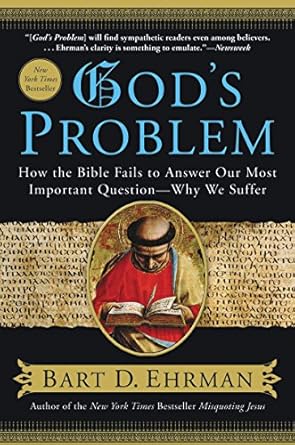
Christians search scripture for a solution to the problem of evil. In a book he titles, God’s Problem: How the Bible Fails to Answer our Most Important Question — Why We Suffer, biblical scholar Bart Ehrman explores what biblical writers say about God and suffering.[17] The Bible offers a range of answers.[18]
Many biblical authors believe pain and suffering are divine punishment. The book of Amos, for instance, describes God punishing humans for their transgressions. This includes burning, nakedness, famine, isolation, drought, pestilence, death, and other disasters (1:3-4, 6-8). It’s brutal! But divine punishment is not just found in Amos. It’s “the point of view of the majority of authors who produced the biblical texts,” concludes Ehrman.[19]
If an omnipotent deity punishes the wicked, people who suffer more than others must be more wicked. But this doesn’t fit life as we know it nor the witness of other biblical texts, such as the story of Job. Innocent babies sometimes suffer, and the wicked sometimes prosper. More importantly, the idea that evil is God’s punishment stands at odds with divine forgiveness. If true, God doesn’t always “turn the other cheek,” even though Jesus tells his disciples they must (Mt. 5:39). Therefore, the punishment view of evil portrays God as not always forgiving.
A second biblical view says suffering is the natural consequence that comes from sin, ours or the sins of others. The book of Judges, for instance, offers examples of victims who suffer because of the violence others do. The apostle Paul recounts suffering caused by humans and other creaturely factors, not God (2 Cor. 11:23-26). And New Testament writers say a sinless Jesus suffered and died at the hands of religious and political authorities.
The idea that sin brings natural negative consequences is the closest biblical writers come to free-will theodicy. But believers who embrace it, says Ehrman, usually believe in an “all-powerful Sovereign of this world who foreknows all things.” If an omnipotent and foreknowing deity causes or allows evil, says Ehrman, “there is very little we could do about it.[20]” It must be God’s will.
A third biblical response says evil is redemptive: God wants it for some good. The story of Joseph is thought to illustrate this (Gen. chs. 37-50), says Ehrman. Joseph was sold into slavery, but this evil made it possible for him, later, to save his brothers. The story of Moses leading people out of Egypt can be interpreted as God allowing evil (slavery) for some greater good (the promised land). Many say God wanted the death of Jesus, because “by his wounds we are healed” (Isa. 53:5). The idea that suffering is redemptive, says Ehrman, “is found throughout the Bible.[21]”
This answer fails to account for the fact that genuine evils lead to less good than what was otherwise possible. Take genocide as an example, or rape. Whatever goods that come from them are surely less beneficial than if these horrors had never occurred. If they aren’t, we should rejoice when mass killings and sexual abuse occur. But we don’t. In fact, “most suffering is not positive,” claims Ehrman. It “does not have a silver lining, is not good for the body or soul, and leads to wretched and miserable, not positive, outcomes.[22]”
Ehrman labels the final biblical answer to evil “apocalypticism.[23]” It says evil forces work against God and harm creatures. Those who embrace the apocalyptic view, says Ehrman, believe “God handed over control of the world to these forces of evil.” Those forces will eventually be overcome, however, when the kingdom of God has come in power (Mk 9:1). According to this view, says Ehrman, “God will reassert himself and wrest control of this world from the forces that now dominate it.[24]”
The apocalyptic answer is rife with problems, because most who hold this view think God is omnipotent. To overcome evil, an all-powerful deity doesn’t need to wait on anyone or anything; He can do it now. Besides, a perfectly loving deity would never give control to evil forces and figures. That’s like hiring a babysitter whom we know tortures children. And thinking God will eventually overcome evil singlehandedly should, logically, lead us to be complacent about solving life’s problems. Why make sacrifices now if, no matter what we do, God will later fix things singlehandedly?
After considering the Bible’s answers to the problem of evil, Ehrman finds none satisfying. Like atheists and agnostics, therefore, Ehrman stopped believing God exists. He “felt compelled to leave Christianity,” he says, although he left “kicking and screaming, wanting desperately to hold to the faith.[25]” He “could no longer explain how there can be a good and all-powerful God actively involved with this world, given… a cesspool of misery and suffering.[26]”
The Bible does not solve the problem that leads hundreds of millions to unbelief and billions to confusion.
Evil and Scripture – N. T. Wright
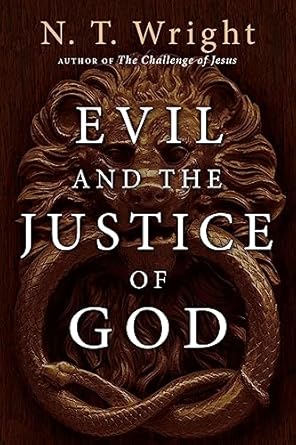
In his book Evil and the Justice of God, N. T. Wright also explores what scripture says about God and evil. Wright doesn’t address as many biblical passages as Ehrman does. But Wright’s exploration leads him to agree with Ehrman on some points and disagree on others.
Wright explicitly tells readers he doesn’t have an answer to why God fails to prevent evil. And like Ehrman, he believes biblical writers don’t solve the problem, let alone reveal evil’s origin. “We are not told — or not in any way that satisfies our puzzled questioning,” says Wright, “how and why there is radical evil within God’s wonderful, beautiful, and essentially good creation.[27]”
Several of Wright’s comments address well-known responses to the problem of evil, however. He’s skeptical of the view that God permits evil so that virtue can flourish, for instance.[28] Wright never says God allows evil to bring a greater good.[29] He sometimes talks about God’s “project” for creation and, in several comments, says sin is self-defeating.[30]
Wright never directly says, as I do, that God can’t prevent evil singlehandedly. But he makes statements that say or imply divine power has limits. He says, for instance, that “God cannot undo the good creation, even though it has gone wrong.[31]” That’s a ‘God can’t’ statement. Wright says God’s work to overcome evil isn’t easy. “God has had to work to bring the world out of the mess,” he says. Deity “has to get his boots muddy” and “his hands bloody.[32]” That suggests limits on divine power.
Importantly, Wright rejects the idea that “God is the omnicompetent managing director of a very large machine.[33]” That statement seems to admit God can’t do some things. But Wright says that for a reason he cannot understand, “the Creator God will not simply abolish evil from this world.[34]” The words “will not” suggest that God could abolish evil but chooses not to do so.
Wright’s main proposal for understanding God and evil includes a central role for the crucifixion of Jesus. The cross is “an event in which the living God deals with [evil].”[35] It is “confronted,” “defeated,” and “exhausted,” says Wright.[36] The cross is “the sign that pagan empire, symbolized in the might and power of sheer brutal force, has been decisively challenged by a different power, the power of love, the power that shall win the day.[37]” In other quotes like this last one, Wright prioritizes love over power.
God does not defeat evil by the cross alone, however, according to Wright. We also have a role to play. We “act as God’s wise agents…to bring his wise and healing order to the world, putting the world to rights under his just and gentle rule.[38]” We must “implement the victory of God in the world through suffering love.[39]”
How will God do this? Wright doesn’t provide specific details. But he points to forgiveness. Overcoming evil and bringing new creation involves God’s forgiving love. We must also forgive so that we “will no longer be affected or infected by [evil].[40]” This sentence summarizes Wright’s view: “When we understand forgiveness, flowing from the work of Jesus and the Spirit, as the strange, powerful thing it really is, we begin to realize that God’s forgiveness of us, and our forgiveness of others, is the knife that cuts the rope by which sin, anger, fear, recrimination and death are still attached to us.[41]”
So… how should we evaluate Wright’s proposals?
Because Wright does not solve the problem of evil, the book is, on that central issue, a failure. Readers are left with their main question unanswered: Why doesn’t God prevent genuine evil? And because the question remains, others arise. If God has the ability to abolish evil eventually, wouldn’t a loving deity do so now? Why wait? If God can resurrect Jesus without “undoing” creation, how can God resurrect the rest of us without undoing it? What’s the relation between divine sovereignty and suffering love?
The fact that the Bible fails to solve the problem of evil — something both Wright and Ehrman admit — does not mean the issue is inconsequential. The absence of an explicit answer in scripture doesn’t give us an excuse to pretend the problem doesn’t need solving. It does. But the Bible doesn’t solve it.
Wright’s focus on forgiveness is partly helpful. The Spirit’s forgiveness delivers us from worries about divine punishment. Our forgiving delivers us from resentment, bitterness, and self-loathing. But God’s forgiving and ours doesn’t deliver us from the harm we experience when we and others do evil. Worse, a deity who allows evil just to forgive it does not love victims.
Although a failure in one sense, Wright’s book is helpful in others. He shuns inadequate answers to evil, for instance, and admits that divine power has limits. Wright doesn’t dismiss evil as privation or say God allows suffering for some greater good. He never says God alone overcomes evil and often points to the role creatures play. His emphasis upon forgiveness opposes the idea that God punishes. Most promisingly, Wright rejects divine omnicompetence and brutal force.
According to Wright, God’s power is suffering and gentle love.
Conclusion

Ehrman’s and Wright’s exploration of scripture helps in several ways. Both scholars are clear that scripture cannot solve the biggest question both atheists and theists ask: why doesn’t God prevent genuine evil? The work of these two New Testament scholars should prompt us to look beyond the Bible.
In earlier chapters of my Systematic Theology of Love, I’ve proposed a view of a loving but uncontrolling Spirit and a doctrine of divine power I call “amipotence.” Following my engagement with Ehrman and Wright, I offer a six-fold solution to the problem of evil, because the problem has various dimensions. While my solution is not explicitly found in scripture, it draws from various biblical themes and ideas.
[To read the full chapter, including the six-fold solution to the problem of evil, consider becoming a paid Substack subscriber. Paid subscribers get a signed copy of the finished book and their names added to the book’s acknowledgements. See this link for info.]

Newsletter
For a 200-page book of Thomas Jay Oord's best-selling writings and to receive his newsletter, add your email address...
Comments
Have you given any thought to what Karl Barth wrote about evil being that nothingness which God rejected which he made His good creation, ex nihilo?
Have you given any thought to what Karl Barth wrote about evil being that nothingness which God rejected when he created His good creation, ex nihilo? Barth got that from reading Genesis, and you may like reading his Doctrine of Creation. This figures in also in his Doctrine of Reconciliation. This way, the Goodness of God and the goodness of His creation are foremost, as His creaturely human beings, His suitable covenant partner, and and Genesis can show us the particular features of our limited and needy creaturely human being, and the nature of good human being, as we see in Jesus, “the man for all others” (Barth’s good phrase) and the problem with evil becomes its insinuation into the covenant relationship between God and his good creaturely human beings (Genesis 3). God bless you! Jim
Thanks, Jim. I address Barth a bit on this subject in my new book. But I don’t find Barth’s proposal to be coherent, mostly because the “nothingness” he describes sounds like a something. And given how little Barth’s thought is addressed in contemporary discussions of the problem of evil, I suspect I’m among the majority who are unsatisfied with his proposals in the regard.