Breaking Free: Liberationist Postmodernism
For many on planet earth, life sucks. Liberationist postmodern theology offers hope.
Tonica lives in Kibera, a slum of nearly one million people in Nairobi, Kenya. The slum is the largest in Africa. Its shacks have no numbers, its rutted dirt alleys have no names. Garbage is strewn across most paths, pushed from the front of one “business” onto another. The air smells of smoke and stench, raw sewage winds among the alley crevices. “Flying toilets” — plastic bags with human excrement flung from shacks during dangerous nights – litter the walkways. Tonica lives here.
She moved here from the Kenyan countryside. Her village work dried up as government resources went toward obtaining advanced technology. The trees around Tonica’s village are nearly gone. They’ve been cut to serve the growing needs of urban civilization and to stoke the cooking fires of the villagers. Remaining with her family and culture is a luxury she could not afford.
As an African woman eking out an existence in this Nairobi ghetto, Tonica has many strikes against her. As a woman, she has far less social and physical power than men. As one with dark skin, she possess es far less political power than those with lighter skin on other continents and her own. As an impoverished squatter earning the equivalent of pennies per day, she owns less than most humans on planet earth. For Tonica, life sucks.
Many postmodernists argue that modern ideas, beliefs, and ways are largely to blame for Tonica’s suffering. The ideology of modernism is intrinsically oppressive. Liberationist postmodernists want to be free to live a better life. They want to escape the array of oppression oozing from modern ways of thinking and acting.
I will focus here on three postmodern liberationist voices: feminist, ethnic, and ecological.
Postmodern Feminism
Postmodern feminism places the issue of gender – specifically femaleness — at the fore of our attention. Many feminists claim that modern (and premodern) worldviews presuppose that males are superior to females. Modernists consider more valuable those traits typically identified with masculinity than those typically identified with femininity. Gender injustice is modernity’s calling card.
Males continue to be privileged i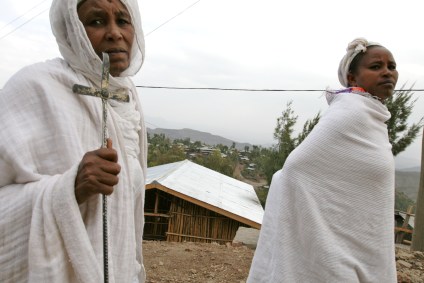 n part because modern linguistic habits privilege masculinity and stereotypically male characteristics. Common language perpetuates, often implicitly, the idea that women are inferior. Many postmodern feminists resist calling humans “men” or God “Father,” because these terms exclude women or influence us to worship traits commonly identified with masculinity. Postmodern feminists call upon contemporary people to speak and live in ways that empower rather than oppress women.
Postmodern feminists also criticize modernists for believing that detached and disembodied ways of knowing are superior. Modern ways of knowing are based upon the idea that abstract and universal thought provides the only or at least best way to understand reality. By contrast, postmodern feminist ways of knowing emphasize community, relatedness, intuition, and tacit knowing. The unique experiences derived from female (and male) bodies provide a better basis than abstractions for knowing about ourselves, others, the world, and God.
The truths that women grasp from pregnancy and childbearing, for instance, arise from embodied knowing. Although these truths cannot be captured by logical syllogisms and scientific analysis, this knowledge is as real and as important as almost any other knowledge. All humans draw from and rely upon this personally-gained wisdom.
Postmodern feminists call upon us to speak and live in ways that empower rather than oppress women. Share on XEthnic Postmodernism
Ethnic postmodernism places culture and race at the fore of our attention. The modern worldview considered everyone the same. Modernism either proclaimed or implied that biological similarities provide minorities the basis for equality and a sense of value. Ethnic postmodernists argue, by contrast, that cultural uniqueness establishes one’s value. This uniqueness should be the basis for one’s “voice.” White-bread homogeneity does not represent the diverse peoples of the world. Colonial oppression is a natur al outcome of believing that white is right.
James H. Cone’s book, Martin and Malcolm and America: A Dream or a Nightmare, illustrates well the difference between a modern and postmodern approach to issues of race and culture. Martin Luther King, Jr.’s dream of the unification of blacks and whites and the equality of all people illustrates the modern accent upon that which all humans share in common.
Malcolm X, by contrast, offered “a nightmare.” His solution to the race crisis was to accent what was culturally unique to African-Americans. Malcolm X called upon Blacks to withdraw from white society to cultivate African-American identity. One might call his approach “postmodern,” because it accented diversity and plurality rather than uniformity and sameness. Ethnic postmodernists stress cultural difference.
In recent years, the emphasis upon indigenous theological influences has come to be called “post-colonial theology.” Christian theologians around the world realize that some influences of those who colonized their non-European countries have not been positive. Modernism is therefore closely identified with colonial rule. Postmodern theology offers the hope of liberation and reclamation of religious roots.
Colonial oppression is a natural outcome of believing that white is right. Share on XEcological Postmodernism
Finally, ecological postmodernism places the issues of environmental well-being at the fore of contemporary attention. Modernity considered the world a machine and its creatures in need of human control. This mechanization of nature provided no grounds to affirm the intrinsic value, freedom, and purpose of nonhumans. Coupled with the evolutionary notion that humans are part of this nature machine, modernism also denied that humans possess intrinsic value, freedom, and purpose.
Ecological postmodernists argue that the world and its creatures are best understood in organic and organismic terms. Humans and nonhumans should be regarded as enlivened, enchanted, or animated. Mind, feeling, and experience are found in many if not all creatures on planet earth. Planet earth is alive.
Postmodern ecologists also argue that we must move beyond modernism’s preoccupation with human welfare alone. Postmodernism considers the good of all life. One way to work for the common good is to oppose modernism’s rampant consumerism. Consumerism objectifies others and thereby justifies their abuse. The postmodern ecological worldview promotes responsible nurture of the earth and all its resources. For God created the world and called it good.
One way to work for the common good is to oppose modernism’s rampant consumerism. Share on XTheological Implications
We shouldn’t be surprised that each of these strands of liberation postmodernism has theological implications, and some of those implications have already been noted. Others should be mentioned. Postmodern feminists argue, for example, that modernity’s (and premodernity’s) masculine God fails to affirm characteristics and ways of being typically identified with femininity. God is not male. Ethnic postmodernists argue that minorities have been conquered and slaughtered in the name of modernity’s White Man’s God. God is not white. Ecological postmodernists believe that the earth has been raped and debilitated in the name of the God whom modernists believed placed nonhumans under the domination of humans. God is not andocentric.
Some Christians believe, however, that theology provides unique resources by which to establish a postmodern response to anti-liberationist tendencies. God is essentially neither male nor female, say these postmodernists. And we should use genderless language to express this. God opposes the oppressor and sides with the broken and marginalized. God delights in diversity. God regards all creatures as intrinsically valuable and expects humans to treat all creation accordingly. God is green.
God regards all creatures as intrinsically valuable and expects humans to treat creation accordingly. Share on XSome liberation postmodernists have been attracted to deconstructive postmodernism because of its critique of power. It is little wonder that those typically trampled by the high and mighty would delight in the level playing field deconstructionists seek to provide. But the wedding of these two postmodern traditions seems detrimental to liberationists. Deconstruction provides no solid ground for the freedom liberationists desperately desire.
I believe a revisionist postmodernism is potentially more helpful to liberationist postmodernists of many stripes than the alternatives. In the next and final installment, I outline how revisionary postmodernism can help us formulate a postmodern theology that both accounts for the wisdom of the past and the emerging work of the Spirit today.

Newsletter
For a 200-page book of Thomas Jay Oord's best-selling writings and to receive his newsletter, add your email address...
Comments
“God opposes the oppressor and sides with the broken and marginalized.”
This sentence is what helps me to make sense out of all of this. Ethnic postmodernists stress difference, and ecological postmodernists consider the good of all life, but God sides with the broken. With postmodernity, the pendulum may have swung too far, but modernity was certainly not a middle ground. If we deconstruct everything, there is no reason to consider all life good or to consider the beauty and vitality of ethnic diversity. It is only when we believe in something greater than ourselves, some ultimate source of truth that we as humanity can rise above our petty troubles and pleasures. Perhaps that truth can not be known through intellectual endeavor, and perhaps that truth is more felt than studied, but either way, we either have hope or not. Personally, I choose hope.
While there are many good points in this article, the issue of ecological postmodernism is quite an important one. Postmodern theology, especially in an evangelical context, is beginning to explorea greater depth to its soteriology. Moving beyond mere “human welfare alone,” a theology of the cross that embraces the redemption of creation helps lay the foundation for these ecological considerations.
These should move beyond simple theologies of “creation care” that reminisce about the charge of dominion that was given to Adam and Eve in the Garden, although this is quite important. A holistic soteriology also considers that the whole earth is imbued with the presence of God. There is no part of the world that God will not go, especially in God’s work of reconciliation and restoration. This is a postmodern ecology that is truly sacramental, for it sees all of creation as a vehicle for the grace of God.
I agree with the conclusion of this article in its statement that any postmodern approach to the theology surrounding feminism, culture, and ecology needs to be centered around a revisionist approach. Deconstructivism might be more in line with traditional postmodern philosophy, but in an approach to the theological world it would hardly be helpful to tear everything down and begin again from scratch.
Instead, a revisionist approach gives us the chance to survey our mistakes and make the wrongs right. Without the mistakes of the past, we have no present guide for what to address, or how to know what to avoid. Too often I think the postmodern perspective is framed in a destructive way, as opposed to the revisionist approach of analyzing the past to improve upon the future. Understanding our traditions, even those in which we erred, are key to creating new ones.
In your blog, I couldn’t help but think of a conversation I had recently with a very conservative, modern Christian. We were discussing the need for missionary work in other countries. I shared that my family sponsors a child in Colombia through Compassion International. She said, “We have kids in America that need help. Why send money there?” I responded with a question, “Aren’t we all God’s children?” She had no response.
This is the mindset I see often in the church. We all kind of get stuck in our economic, social, even theological bubbles that we never branch out to include every in a global church society. Issues like taking care of the environment or animals, freeing slaves, helping addicts, visiting prisons, etc. are practices that are largely neglected. Can you imagine what would happen if every church rethought its practices and allowed the Holy Spirit to show them new ways of doing things how different the world would be?
There is no doubt that these injustices exist of they are not address we are not living as the Lord has called us. If we need new theology in order to address the problems of the world I am open to that. My concern is not no theology is written about in the Word and so I want to be careful to not elevate thoughts above the truth of the scripture. So if any of these theologies allows us to be the people that God has called us to be I am all for that.
It seems to me that there is a common yearning from each of the three postmodern liberationist voices. That yearning is the need for respect.
The postmodern feminist is demanding that women be respected for their femininity, treated with dignity, and no longer be held in oppression. The value that women contribute with their unique gifts and abilities should be appreciated and embraced all over the world. Jesus elevated women to a place of honor and equality with men, and our actions and words must convey that same message of love and respect.
In a day when the world has become so small and every community is touched by ethnic diversity, it’s important to understand and accept other cultures. People of every race should be able to express who they are and feel that their voice counts for something. We need to remember that everyone has something to offer and all of us have something to learn.
When God created this beautiful world, He relinquished the responsibility of caring for it to all human beings. What God created is beautiful and the earth and every living creature deserve our respect. We must find ways to tap into the earth’s natural resources without destroying her. We must learn to replenish what we take and cultivate what we leave behind.
A little over a year ago, I was in Nairobi for a medical mission trip and met many people like Tonica. We were actually reaching out to that area of the slum to provide free medical services. As they were waiting on line to be seen by a doctor or waiting for analysis and medication, there was a group of servants doing one-on-one evangelism.
They were not resistant to know that God is there father. A few children were making the line to receive health care while the parents were out working. You will see 3-5 years old kids, waiting for hope, waiting for some good news. Yes, their society might have them oppressed, but kids had big smiles and they always looked like they were happy. Their lifestyle didn’t face them because that’s all they knew.
I learned so many things during that mission trip. But the main one is that if a mother delivers an unhealthy child (handicap), the baby had to be ex-communicated. They strongly believe that the child carries a curse; therefore, it can’t mix with the rest of the people.
I saw women being pushed by men (husbands, bus drivers, Masai leaders, etc) – male roles. The mothers that had decided to keep their handicap children were also excommunicated. They were looked down upon.
But when we landed in Nairobi, we showed them the true meaning of the love of Christ. The one Christ who loves the lowly. He makes what is less desirable God makes them desirable.
Dr. Oord’s essay highlights different problems that surround us. All the theologies mentioned had vaslid points to make that Scripture would agree with or at least sympathize with. While probably all the writers of Scripture had a patriarchal bent, we can see a progression of God’s revelation where women become more honored and slaves do as well. Paul would have been considered a feminist in his day. Jesus allowed Mary to sit at his feet as a disciple! Junia was an apostle! But many Christians today are still ignorant of what it meant to be a father in the Ancient Near East. I think that is the place to start first so that it would be easier to see how Scripture really does evolve through the ages.
The ecological concern in Scripture is right in the beginning of Genesis. Gen. 1:26 says we are made as male and female in the image of God SO THAT we would rule over the earth, and in Gen. 2 humans act as caretakers of the world for God. Being made in the image of God means that we represent Him here on earth.
The ethnic argument is probably both the weakest yet most practical argument of all of them. If we look at why people go to a certain church, the majority of the time is because they feel comfortable culturally. We certainly are called to become more like the ones we are trying to reach than vice versa. But this argument can go too far. I don’t agree it is a good thing to have Messianic Jewish congregations in a neighborhood that is diverse. It is one thing to have one in Brooklyn, but another to have one in Philadelphia. In Brooklyn it makes sense, in Philly it is a head scratcher.
Two words immediately came to mind as I read through the different postmodern theologies: relation and affirmation.
People are looking for a way to relate to God, and they believe the modernist theologies get in the way of this. We need a theology that opens the way for many, regardless of gender or race or environmental activism, to relate to God equally and without reservation.
People are looking for affirmation. This goes along with the idea of relation because if God seems to be a being to whom they can relate, it likely means they feel validated in some way by God, and by the theologies that seek to describe God.
The unjust systems of the world are legion. They surround us and have thoroughly infiltrated our culture. The products we buy, found alike on the shelves at our large retail stores and the local hardware stores, serve to perpetuate labor practices and wages that treat humans as less than human.
Even in companies that serve to treat their people well (I state as an example a coffee company that owns a plantation in Papua New Guinea with which I am familiar), while they treat their employees well, part of their effort is to care for people and be an agent of change for the people of a nation that has centuries of history that dictate cultural norms. The owners of this plantation talk to their male workers about how they treat their wives and daughters, recommending that they be treated like princesses, not property.
You talk about the “array of oppression” that people desire to break free from, but the reality is that those that are oppressed are the least likely to be able to facilitate any real change. As a Christ-follower is it our role to face this oppression and try to accomplish change? How can awareness translate then, as it should, to meaningful action leading to change?
There is a great deal about postmodern thought that I find compelling and am drawn to. The primary focus of much of my training as a counselor was in, and remains within, the existential, Gestalt and Narrative schools all of which are heavily influenced by postmodern viewpoints. One of the central principles of the postmodern world view is that the choice of language used by an individual or group/school of thought creates their/its meaning or values. This is where I have an issue with the three
“schools” of postmodern theology presented here. While I can not dispute that they may well be postmodern approaches – the language they use seems to trap them within modernist methodology which I believe weakens their approach.
It is a general concept of postmodernism that, with the exception of such things as mathematics and other hard science, there are very few things that can be called “absolute” – that meaning and value are bound within the situation being observed or described.
The terminology chosen by each of these three “schools” is inherently antagonistic and adversarial. Use of terms such as “patriarchy”, “oppression”, “marginalize”, “exploit” and “liberate” does not encourage dialogue but rather a power struggle with those who are considered the oppressors by their victims. The goal – the overthrow of the oppressive power and liberation of the oppressed.
I’m sure it can and will be argued by some that I don’t fully understand these approaches since as a white American male I belong to the “power base” that they oppose. I simply have problems embracing a school of thought – be it in therapy or theology – that starts from a position of a victims struggle to liberate themselves from their oppressors instead of starting with the unique strengths and contributions each group can make to the whole of humanity. I am suspect of any approach to theology that is built upon the language of power struggle rather than the language of love.
As I read through your blog I keep thinking of my husband. I have always believed that his role as a pastor’s husband has some unique challenges. Everything from wondering where he would fit at a, Pastor and Wives retreat to watching his wife drive away for staff enrichment with 7 men.
While I can see that many pastoral families have difficult rhythms to navigate, ours seems like we are part of a unique people group as we are considered in role reversal by many—especially in the church. We’ve had to work really hard to develop and embrace our call in the midst of judgment and at times, criticism.
Through the assigned roles of a modern society, in which we grew up, this perceived role reversal creates doubt and question at the very least. This, I understand to a certain extent. However, what I have never considered until today is, how are these pre-assigned ideas that may be living in the minds of our peers, aka—old people! impacting my husbands perception of his worth and value and my worth and value.
I have never observed insecurities as he:
is home more than I.
appears content to serve selflessly along side me.
works 30 hours while I work 60+.
contributes MUCH more domestically.
contributes less monetarily.
watches our grandchildren so they never have to seek care elsewhere.
and…even watches a chick flick with me once in awhile.
This is nothing compared to Tonica’s life. Nor does it have equal comparison to the forms of Malcolm X. My point is—it seems that no matter the restrains we have an innate desire to breakfree, to fix-it, to find-it and to belong.
Dr. Oord’s article rounds out a discussion of Liberationist Post-modernism, specifically summarizing the feminist, ethnic, and ecological perspectives. Dr Oord’s title includes the statement “Liberationist postmodern theology offers hope.” Yet, he concludes with the promise of offering a revised postmodernism to be disclosed at a later date.
Like him, I want to glean wisdom offered by these perspectives, yet I am not satisfied that they encompass a satisfying meta-worldview. As one example, I think what is called feminist ways of knowing has much to offer, and yet those ways would be hard pressed to develop such knowledge as a comprehensive germ theory.
As such I am dissatisfied with completely abandoning the modernist paradigm, where our experiences and language are considered to have significant interface with reality. We must construct or articulate a new worldview, employing the best out of all available paradigms, which may not simply be modernism and postmodernism.
The most helpful and most challenging part of this blog is the conclusion: that the deconstructive expressions of postmodernism are not enough. It is the easier part of postmodern thought to define all that is broken with the prevailing systems, cultures, and worldviews.
However, the problems beg the question, “So now what?” That is precisely the question the Church can answer better than any other entity. So now, we continue the difficult task of restoring the dignity and worth of all people. We seek ways to change harmful ecological practices and restore the planet. We stand for justice in the face of human rights violations, and look for creative ways to support others who are doing so. If the message of Jesus is freedom, then we are the ones to get the word out.
The article touches the core of who I am. I ache inside at the thought of people suffering for any reason. It is here that I would consider the thought of gender neutral communication being relevant above all. It is here that I see the very depths of myself being broken over the hearts of these peopole being so lonely and abused and so UGH I just do not know. I sense anguish and desperation for those who are left to try to overcome and persevere in a world that seemingly hates them.
It is here that I sense the most need and my strongest desire to be there for those who are the outcast. My house is full of the downcast and lonely. My desire is to help them know that there is a place they can belong. But how? Where does one start to help those who need to have a place to be?
Liberationist postmodern theology seems to have positive qualities to it. Of the 3 areas that make up liberationist postmodern theology, I appreciated the postmodern feminist emphasis on community and relationships. The benefit of feminist emphasis is the concentration put on knowing ourselves, others and God. This view, for me, is vital for spiritual formation to happen in the life of the believer.
Ecological postmodernism is new to me but what I have learned so far I agree that this view needs to be implemented into our theology today. We are the stewards of the this earth therefore we must learn how to do this the way God wants it done.
Modernity holds the belief that everyone is the same and thus equal. Everyone derives his or her intrinsic value from being a person. Thus each person deserves everyone’s respect. We should then have seen that each person putting other first. Yet what modernity brings to us is oppression and colonialism, betraying moderns’ insincerity in their beliefs. Small wonder postmodernity is a reaction to the insincerity of modernity.
While tacitly accepting human intrinsic value, the Postmoderns emphasize community and uphold one’s uniqueness, which demands respect from others. But at the same time postmodern over magnification of ones cultural and individual uniqueness can lead to exclusivism and tribalism. They do not fare better than the moderns. The God’s will for human, moderns or postmoderns alike, however, is to give up egoism, genuinely loving each other, and seeing each other better than oneself.
Liberation postmodernism critiques Enlightenment thinking, Colonialism and the mechanized world view. I believe that these particular philosophies ideologies and theories oppress billions of people around the globe and are devastating to those who live under circumstances similar to Tonica’s.
It has been demonstrated by neuro-linguists that thought creates neuro-pathways in the brain, and language specifically metaphorical language builds these connections. When the language is habituated, it strengthens these connections, shaping not just our communication but the way we think and act. Postmodern feminists are correct in addressing the language of patriarchy and the idea that thinking is only abstract. Cognitive science has all but erased the enlightenment notion that reason is: logical, conscience, literal, universal, dispassionate, abstract, and disembodied. Neuro-science appears to be in agreement with the way postmodern feminists and womanists view reason. Reason is 98% subconscious, it relies heavily on metaphors and conceptual frames. Reason is embodied and based on the way our bodies work. Humans can’t be rational without being emotional, and their is no meaning without the capacity for imagination.
The oppression that results from a Colonial ideology silences the unique voice, the ethnically and culturally different. The ethnic postmodernist embraces and stresses ethnic and cultural diversity as the foundation for human value. I agree with the ethnic postmodernist position but hold a Trinitarian view of diversity. One God in three persons, relational in their diversity and function.
Finally, I share similar views to the ecological postmodernist. I often view God’s nonhuman creation through the lens of Native American people and the ancient Celts expression of Christianity. I believe that a mechanized world view turns living creatures including humans into objects to be used by those with power.
Dr. Oord, I enjoyed reading your blog and I am looking forward to your next installment on the topic of revisionary postmodernism.
Dr. Oord,
I think that your comment about deconstructionism being detrimental to liberation theology is a needed thought. When the liberation theologian gets done deconstructing the supposed oppressor, they then have to deconstruct their own theology as well.
Feminist and post colonial critiques of the faith have some valid, perhaps even pressing issues. The thoughts of embodied knowing as well as being careful not to force a change in culture just because one can are very valid points that need to be heard.
Dr. Oord,
The conditions that the majority of our world lives in today is both sad and appalling and is in dire need of action. Although I find myself disagreeing with the majority of the post-modern feminist movement, I can find common ground in that I also feel that all people should be empowered and not oppressed. Where I find myself disagreeing with the feminist is that they focus solely on women. There are certainly others who are oppressed, particularly children. Additionally, I find issues with the feminist refusing to refer to God as “Father,” in any sense. I think about Jesus and his prayer to the Father. Also, their viewpoint would alienate and exclude the Muslim from their influence as well. To the Muslim, Allah is a masculine deity and I would argue that world-wide, Muslim women are the most oppressed of all.
I find myself most drawn to and aligned with the ethic postmodern. As you stated, “ethic postmodernism places culture and race at the fore of our attention.” I think this is very important because unlike the feminist, the ethnic postmodernist takes into consideration both genders and all groups, when considering equality. I would see this group being different depending on the cultural context, based on which group found as the oppressed. To me, this is the most dynamic and flexible group. I also like the stance that this group takes that not everyone is the same and does not try to make everyone fit one single mode. God did not create a “white” world and we should not expect everyone to fit into that mold. We should strive to embrace and understand the many different cultures in which God created us and placed us in an attempt to draw us all closer to God and closer to one another.
As for the ecological postmodern, I can concede that I agree we should take care of the earth God has blessed us with and we should avoid intentionally abusing both the earth and the animals we are charged to care for. However, I also feel that God has given us this planet to use and enjoy, as well as the animals as a source of food and clothing as well as companionship. We are given the earth to use, but we should use it as good stewards of God’s gifts and blessings.
From this article, there is no doubt that we need to articulate theology in a way that is comprehensive to the peoples of our “postmodern” days. I would tend to a revisionary approach to theology instead of the deconstructive one. As Dr. Oord mentions I think you need to take in consideration the past, “the wisdom of the past”, meaning that you need to learn from mistakes to do differently and from the good done to do even better. The deconstructive approach seems to imply the elimination of everything.
In communicating God’s longing to relate to each individual in a personal way, in the context of community, we need to be aware of our own perspective and the others’. God is not bound by gender, nor by race, nor by humanity. God is Spirit and loves, and wants to be loved by, both women and men. God’s kingdom includes all tribes, languages, peoples and nations, with no exceptions. God’s creation includes not only human beings, but all other beings we need to respect and care for. In the [removed]verbally and non-verbally) of our relationship with God, we need to be sensitive of our own standpoint as well as the others’, so that there is intentionality of not being a hindrance to the message of God’s love coming across.
In reading about ecological postmodernism, I can’t help but think about Romans 8, no doubt, one of the ecological postmodernists primary scriptural texts: “For the creation waits in eager expectation for the children of God to be revealed. For the creation was subjected to frustration, not by its own choice, but by the will of the one who subjected it, in hope that the creation itself will be liberated from its bondage to decay and brought into the freedom and glory of the children of God. We know that the whole creation has been groaning as in the pains of childbirth right up to the present time.” (Romans 8:19-22)
We do not live apart from the created world, but instead are inextricably tied to it. If we are a sign to the world that Christ has begun the process of redemption, and if we partake in His redeeming work, we must take creation into account and be faithful stewards as co-recipients of God’s redeeming work!
“Some Christians believe, however, that theology provides unique resources by which to establish a post-modern response to anti-liberation tendencies.”
I identify with this, and adopted a personal wording.
“I believe, as do many others, that theology provides unique resources by which to fashion a more Godly response to oppression of people and mismanagement of the world over which we were given dominion.”
I must consider several dimensions.
I must consider the ways in which I have accepted and internalized human and environmental oppression. I must seek God’s grace to change my heart.
I must consider the ways in which my immediate community of believers has accepted misuse of power and must find loving ways to initiate productive communication on these issues.
I must consider the ways in which the larger church has accepted these things and find my place in continuing productive dialogue there.
I must consider the ways in which the world promotes these things and act in ways that can bring changes for the better.
5”The blind receive sight, the lame walk, those who have leprosy are cleansed, the deaf hear, the dead are raised, and the good news is proclaimed to the poor.” (Matthew 11:5)
I have trouble with the ecological aspect of things. I think that what I am trying to say is that I struggle to really pay attention to the affect I am having on the world. I think that my understanding of God making a New Heaven and a New Earth really impacts my discipline in the present.
I am conservative in politics. This puts me on the side of the aisle that tends to mock the ecological impacts of man. We laugh at the “tree-huggers” while consuming our red meats.
I don’t want to be guilty of “raping” God’s creation, though. Surely there is a healthy way of carrying out our dominion of the earth without being extreme on either side of the aisle.
This post was a welcome read for me to better understand the plight of the oppressed. Coming from the modernist age group, I have more post-modernist leanings than I realized. People and our planet have been disrespected and devalued for far too long, and power, or control, seem to be at the core. This ultimately leads back to the root of all sin, the desire to take over for God instead of leaving the control in the hands of the One who created all.
There is statement under the Postmodern Feminist section that actually sums up ideas behind all three areas that are addressed in the article. “By contrast, postmodern feminist ways of knowing emphasize community, relatedness, intuition, and tacit knowing. The unique experiences derived from female (and male) bodies provide a better basis than abstractions for knowing about ourselves, others, the world, and God. Although these truths cannot be captured by logical syllogisms and scientific analysis, this knowledge is as real and as important as almost any other knowledge. All humans draw from and rely upon this personally-gained wisdom.” Drawing on this type of wisdom would help all people to understand and appreciate the rest of creation more fully.
Dr. Oord as I read your blog I had to do some quick research as to pre-modernism, modernism, and post-modernism and what I found interesting is that each culture was developed out of rebellion for the previous culture.
Now I do not agree with the postmodern culture and yet I can I can find common ground in which I can work with. When it comes to how people are treated and how women have been considered a possession and not an equal I have disagreed with. When it comes to the consumerism attitude I can say that there are not many here in the USA that can say much about this especially those who live in a house with multiple rooms and indoor plumbing when it comes to those like Tonica. We in the western world have a much different view on what it means to not have than many in the world.
Now what we have to think about is what Jesus did when He came into this world. Jesus went into the culture of that time made an impact on it. Now we are not here to change any culture but to impact it so that they that live in it can see who Jesus truly is.
Jerry
I believe this is a great article. It deals with some of the postmodern ideas that are currently existing in the world. The specific areas that this article deals with are feminists, ethnic, ecological. I feel that we need to look at each of these points of view and be sensitive to their needs. For anyone trying to spread the Word of God, needs to be conscious of these viewpoints. I believe that we have to support and view how to make every effort to support the feminist point of view. This world has taken advantage of women in our societies for too long. They need to have a voice. Women suffer the bulk of the problems in the world. This is cause by male egos. Women are capable of great acts and we as men should support these contributions. Women are consider equal in God’s eyes and we should share that value.
One of the other problems is one of ethnics. I am sicken with this world that looks and makes judgements as to the color of a persons skin, the way they talk, the handicaps that they may have, and the culture that they have been raised into as children and adults. Humankind has developed with the help of all people. God did not make anyone superior to another. God is the only one superior to us all. All are consider to be great in the eyes of God. We should start to learn this fact before it is too late. The article brings out the suffering of people’s because they are not the right color. This is injustice and we will be judged on the final day if we look down on anyone.
The ecological concerns of the world need to be listen too. This planet has been entrusted to us by God. If we do not respect the planet and all creation, then we will suffer the consequences of our actions. We are destroying the future of our children if we do not respect all of creation. God has provided us with everything. However, we must be good stewards of what has been entrusted to us. If not, then God will punish us.
I found this article to be very revealing. It is important for all people to understand those who are trying to make a difference. We can never hope to gain their trust without seeing their point of view.
There are a few ideas that I can take away from this post on a liberationist postmodernism. The first of which, is that maybe I’ve taken things too literally in the sense of being equal and treated the same. I think there is value to people as individuals along with people as a whole group that make up humanity. I used to think that we are all meant to be treated as equals and that we are all the same, except we really aren’t. There are many backgrounds and cultures that would be erased if we fell under the complete umbrella of human and I think we need to be able to work together in all cultures, even if it means stressing the importance and differences in ethnicity, like Malcolm X was trying to do. There are values we all have in common but there are many differences as well and we need to look at both with the hope that we can still come together and understand each other.
I found great joy in reading the section on “Ecological Postmodernism” because it hits on this planet that we live on that God created as good and valuable. I think we should face what matters to us when it comes to being consumers in this world, and I think we should be held to a greater standard that questions what resources are being used up, so I can be satisfied in my time here.
Dr. Oord’s “Breaking Free: Liberationist Postmodernism” seems to systematically capture the goal of the different theories presented within week one of THEO6580. The idea of a theology that liberates us from an imperialist religious core is manifested in complex but interconnect postmodern views. In a country where being black while being woman is treated as a crime, one would appreciate the relief efforts such as postmodern ideologies. Postmodern ideologies seek to defy cultural and social-economical barriers by redefining divisive terms that restricts the nature of God to an exclusive masculine identity.
What sticks out most is the following statement:
“Consumerism objectifies others and thereby justifies their abuse.”
Consumerism is the product of mankind’s love of money. As a result consumerism rapes us of our God given identity at the expense of others such as Tonica. At best consumerism is pride, and causes consumers to exploit and abuse the earth’s natural resources. The idea that we are best in our organic state is true; however, when our organic state is unknown to us in real-time how do we get back to such a place?
The theological implications of post modern views seem extreme at first glance. As you dig deeper you will find that much of what we experience in the religious arena does not capture the essence of God’s totality. Feminists disdain for exclusively masculine characteristics of God are now understand in a postmodern era. God is not exclusively male in character and to present God as such says that woman-like characteristics of God are discrepant.
Leslie Oden
[email protected]
Dr. Oord, I was struck most by your comment on how “God is green.” We as humans are created in the image of God; this causes us to sometimes put human traits towards God. This is not always the most helpful and it separates us from who God really is. When we look at the situations mentioned in this article and the many other examples of hardship, we must then decide as Christians what we are going to do about it. We do this by beginning to move forward from the past into the future, seeking out change and spreading Christ’s actions into the world.
All three aspects of liberationist postmodern theology discussed here seem to share the concept of equal significance of life. They all rally around the idea that regardless of gender or sexual identity, ethnic or racial identity, human or other organism, all life should be equally valued and given significance. I appreciate this idea of giving equality to all of humanity (and even all of “life”), and think it is cohesive to a theology of love being the primary element of God. I wonder, however, if in giving greater voice and power to these postmodern theologies, those who hold to modern views of theology will be discriminated against in similar fashion as those who have been oppressed for so long. Would those in the postmodern camp be able to rise above those opposing them and not fall into the trap of becoming the oppressors themselves?
I find this article very difficult to read. I think of those who are oppressed and abused and marginalized living and having this position in life. I read this story and I truly have to think comparatively of the several kids in my local school district and how they are no longer with us because they were outcast and lonely and made to feel like second class citizens. These three kids did not go in and shoot up the school, they did not go home and cut themselves instead one hung himself, one took pills and the other drove while drinking. Much like these people in this story words hurt them, words made them feel unimportant and alone. I am not one who is a fan of politically correct nor am I one who thinks we should not teach our kids to be thick skinned. However, I have to ask why is it so important to make someone feel so low that they cannot see the light of day. God wants us to be willing to take responsibility for taking care of each other just like Jesus did when he was here. If we neglect that then how will we imitate Jesus!?
I recognize that there are many things about how humans have interpreted Scripture and behaved that need to be re-examined and corrected. However, I think there is a danger zone in post-modern thinking that we face when we try to look at God and Christianity through a worldview that does not fully accept the deity of God, His eternal, unchanging nature, and the inspired nature of Scripture. We borrow things from Eastern philosophies that are either godless or that stem from religions that embrace different gods. We do this in an attempt to make God more into the image of what is acceptable. This is not a new practice. When “Christianity” firs became a worldwide religion, it adopted many ideas, philosophies, and practices of the religions which it replaced. The result was the Dark Ages, and centuries without true Apostolic authority. We need to tread lightly.
While thinking about the theme of this blog the image of Christ coming to seek and save the lost and free us from the sin that binds us; His mission is much like the liberation that is being discussed here. Looking how each of these three desires to be free from the labels that bind them and are not able to let them see past each. So while each of these have their own set of truths with in them, and each has a very different sense to view their theology through I will never be able to relate to Tonica, or the feminist view. My greater concern is that with the rise of postmodern and how we live in a time where there is no absolute truth, we need to be careful that we are not making up our own god. The God of Abraham, Isaac, and Jacob is a loving God who sees the heart not the outward appearance and God does not judge like the world judges. So while I understand the importance of understanding how people view and relate to God based on their background we cannot put God in a box because God is greater then all of these areas, that effect people throughout the world.
Reading this article has made me think just about how lucky America has it compared to other countries around the world. My heart really went out to this young women in the article. Tonica tried to make a better life for herself but had many things against her. Example, her dark skin, and she did not have much strength compared to men. She was looked at as very weak. When I think about society today in other countries. Things have not really changed. I do like how the article clearly states that God is nor male or female. This should take away some of the gender issues. Knowing this I wonder why Christian men have issues with Christian women in the ministry.
This blog post briefly examines three different types of post modernism. There is feminism, ethnic, and ecological. Postmodern feminism has one major flaw to it. “Many postmodern feminists resist calling humans ‘men’ or God ‘Father,’ because these terms exclude women or influence us to worship traits commonly identified with masculinity” (Oord). While I do not disagree with being inclusive. I do disagree with not calling God Father, as God fulfills both roles as discussed by Henri Nouwen in “The Return of The Prodigal Son.”
I also have to disagree with the ethnic post moderns “that cultural uniqueness establishes one’s value” (Oord). Our value is one that is only placed by God. We should place no value in seeking value from others. What gives us value is not our cultural uniqueness, but who we are in Christ. Finally, I can see both sides of the ecological views and find myself in-between them.
Word Count: 151
Oord, Thomas Jay. “Breaking Free: Liberationist Postmodernism.” 12 February 2010. Thomas Jay Oord. Web. 19 October 2015.
I am not sure what the difference is this time when I read this. I have taken this class before and I read the article and then I read what I posted before and it does not hit me in the same spots anymore. I am bothered and very saddened by the stories here. However, it may be that I am extremely overwhelmed by the kids in my life and the people who surround me. I am not sure that I am making the differences that I should. I have youth that are struggle with their gender, with teen pregnancy and abuse or neglectful parents ( I am very careful what I call abuse). Is it that I am overwhelmed I pray that I am not becoming desensitized. I love and desire to love more and more like Jesus loves.
Dr. Oord
The different approaches to postmodernism is very thought-provoking blog. The opening statement of this blog caught me off-guard where it states: “For many on planet earth, life sucks. Liberationist postmodern theology offers hope” (Oord). Although, in reading the rest of the blog, I see where this statement comes from, I can only partly agree with this. I would think that post-modern thinking should have a strong push toward re-education and ultimately, context based, indigenous training and education. The ripple effect of this proper point of departure is too numerous to mention at this time but it has been the modern and even the pre-modern, colonial mindset to control through ‘gutter education.
The blog states: “Males continue to be privileged in part because modern linguistic habits privilege masculinity and stereo typically male characteristics” I want to add here that the inequality is not only to do with linguistics but our societies’ use of symbols (which is a deeply culturally rooted issue), plays into this “male-dominated society”. (Oord)
When I first read the post, my first thought was this was one of our mission books put out by World Missions. But it is not just in third world countries (although we see that it is widespread), it is on our own back yard. So we must rethink how we have been influenced and how our theology has been influenced. I may have been a little naive to think if we all just followed the Scriptures given to us that everything would be OK. Even though, I still believe we need to follow God’s Word I also believe that we need to be well aware of how other theologies or presuppositions have directed our beliefs as well.
Tonica’s plight, representative of unknown millions, moved me. At first there was a feeling of disgust, then powerlessness. Then as I read new hope emerged. I can give when opportunity presents itself and I can speak on behalf of the oppressed. It matters not whether the approach is modernism, post- modernism or whether it is liberationist, what is important is that right thinking Christians do all in their power, whether it be through advocating new theologies or through activism, to correct systemic injustices. No human being on this earth of plenty should live in such squalor.
The postmodern critique of modernism’s ‘rampant consumerism’ even though falling under ecological concerns, can also be applied to the suffering masses who work long hours in inhumane conditions to satisfy the wants of the never ending consumer hole of the western world. So bring on all the ‘isms’ but let that translate into real solutions for those living in sub- human conditions
As a Christian, it is my responsibility to join in with God’s work of redemption, which includes reconciling our relationships with each other and the rest of creation, as well as our relationship to him. This article brings to light the many instances where we have failed to do so. As life becomes more and more globally integrated we can no longer ignore the realities of the world around us. Choosing to sit by and do nothing while our brothers and sisters are mistreated and marginalized is not an option. Nor is it an option to be idle while the earth is pillaged of all its natural resources in the name of modern convenience and materialistic consumerism. We must find ways to bring equality and fairness to our relationships with each other and we must find sustainable ways to live in our modern world that reflect our love and stewardship of God’s creation.
Our world is filled with great injustice and abuse, not just of women but of race, religion and cultural background. Male dominated societies date back through human history, despite God’s intent for the human race to live in harmony and love for one another. This is well portrayed in the story of Tonica and the oppression under which she lives. Her value as a human being has been demeaned in unimaginable ways. Ways that go far beyond the use of language that is deemed to take away the meaning of the words “Father in heaven” because it is a male reference. The root issue goes far deeper in to the sinful, unrepentant heart of man and humanity in general.
I read an article like this one and want shout “what are we doing about it?” Is the love of Jesus in the hearts of both the men and women of Kibera? What are those of us that have doing to change the situation?
“White-bread homogeneity does not represent the diverse people of the world.” If one believes this to be true and colonialism the answer, they have missed the beauty of all of the differences. God created beautiful cultural differences amongst the peoples of the world. The answer does not lie in homogenization as “white” through colonialism. The answer lies in the love that God has for each of us and the intent from the very beginning of creation. The human race was created, each one special and unique. Created for relationship with God, one another and to care for the earth. We were not created to be all alike, if that were true there would be one world culture.
God is not male or female. God is both and much, more much. To call God our heavenly Father does not result in male domination, it simply describes strength, power and love. God is not just the heavenly Father. Male and female were not created in “just” the image of the Father. Male and female were created in the image of the three parts of God. The Father, the Son and the Holy Ghost. I feel sad when I hear that it requires the use of genderless language to express the beauty of who God is. All of the human race are reflection of that image of God. One race not superior to another, not man over woman, all created equally and equally loved God.
Has there and is there still male domination in this world? Yes there is and it is sinful. It is the love of Jesus Christ that transcends culture and brings the people who believe into the Kingdom of God as uniquely created members of the One Body. Marginalization does not come language. Marginalization comes from oppression. Oppression comes from the sinful hearts of man. It is the message of Jesus Christ and the indwelling of the Holy Spirit that changes hearts. Changed hearts is what will lift the oppression. In the meantime, God calls us to community. God calls us bring mercy into the world. Feeding the poor and the hungry, along with standing forth for what is right and against the oppression that exists is what is important. That is not done by enforcing “white-bread homo-geniality” on the beautiful cultures of the world. It starts with understanding those cultures, along with full reliance on the power and wisdom of God, to shine the light of truth on what is really happening. We are called to be like Jesus and LOVE! For God is love and whomever lives in love, love lives in God and God in them. Oppressors are not living in God’s love.
Postmodern Feminism
While gender injustice may be modernity’s calling card, modernity did not create this injustice. Unfortunately, it has perpetuated this injustice, even intensified it as power continues to accumulate to the few – principally males. As advances in technology has increased our ability to communicate more information from farther away, the world becomes aware of just how prevalent this gender injustice is. As I think about it, I would never have known the plight of Tonica without the presence of the internet. (Sure, I might have read about her in the paper). One significant challenge facing postmodern feminism is the ability to influence change in such a male dominated world, especially when that change would result in less power to them. Can males give up power they have worked so hard to gain?
It becomes a deeper question when it is mixed with theology. Men of faith face the stark contrast of a loving God who opposes the oppressor and sides with the marginalized versus the culture that encourages them to be oppressors and to marginalize others to get “ahead” in society. The competitive nature of humans is fed by the imbalance of rewards to the few who “win”. It will take courageous men to yield power and courageous women to wield it in order to change the centuries old false idea that men are naturally (in some way) better or more valuable than women.
This is a very powerful article by Thomas Oord. It does break my heart that this poor woman has many things against her and those things cause her not to succeed in society. Tonica gets treated poorly because not only is she female, but she lives in very poor area. Woman should not get paid less than men because of their gender. I wish that society would reevaluate how woman are treated. I wish we can all just take a step back and see that we are all considered equal in the eyes of God. I do know that other countries are very poor. We are definitely lucky to be living in such a rich like country.
My heart hurts for Tonica and others in Africa who gets treated so poorly. She and so many women like her need to feel loved and valued. I wonder what it would be like to be a missionary in a place like this in Africa. God can use missionaries to show love and compassion to people like Tonica. He can also use people to show them that race and gender don’t make a difference at all.
It seems to me that each great movement tries to define God based on their own beliefs and leanings. The patriarchal societies see God as male. The Matriarchal types see God as female. The question I have is whether the postmodern gender neutral definition of God honors who he is or is it another attempt to align God with the ideals of self. At times I think we are better off allowing God to decide his attributes and react to them according to what he shows us. Is it possible for an infinite God to allow himself to be seen in any or all of these lights? Or does God have one vision of who he is that we need to seek and honor? I am very comfortable with the idea God can identify himself. Likewise, I am convinced that, because God does not change, it must be our own ideas about him that have to be adjusted.
After reading this, the question that came to my mind was whether anything would ever be good enough for these movements. If we look at the feminism movement, women have come so far in their quest for equality. Are things perfectly equal? No. However, by focusing on the negative we neglect to see the positive. I see the same thing in the ethnic movement and the ecological movement. It doesn’t have to be an “us” and “them” fight.
One of the comments made reference to allowing the Holy Spirit to guide us and I agree with that. It seems to me that these movements assume that anyone who doesn’t believe as they do is wrong…what if we are all wrong? Does God really want such tensions between his creation? Aren’t we tasked with loving one another?
If we are going to look at Christian theology as it relates to these, or other, movements, we should be looking at how to love one another. If we are to mirror Christ’s love for us we cannot spend our energies focusing on all that we perceive as wrong. Our human nature is to get defensive when we believe we are being challenged which makes change difficult. Rather than pointing out all the perceived wrongs, why not focus on all the good as a way of reinforcing the behaviors and beliefs that are desired?
I really appreciated the diversity of the blog and certainly most of these postmodern strands present some implications for our future as the Christian Faith. The blog certainly challenges the church in the way in the way it gathers and engages the world. I think of the Regents Park Church of the Nazarene which was predominantly white since its inception and shortly after the fall of apartheid in South Africa this church seems to faces many new challenges. The community is diverse in so many ways and the way the church use to gather would no longer be relevant. The church suffered a loss of members, finances as most white people moved to different neighbourhoods. The Church took many years to realized that somehow it would need to adapt and embrace a more multicultural identify and with this diversity new challenges emerge in the ministry with regards to how we worship and how we identify ourselves moving forward. The Church has the responsibility in my view to pursuit the dream Martin Luther King Junior offers and not the dream Malcolm X offers our world. Cohesion is possible when we are driven by the love of Christ and His mission and ministry of reconciliation. The Church in South Africa is struggling to demonstrate this unity in our Churches because people might be fearful of the unknown or maybe it’s just easy to worship with the people who are most like us.
[240]
I used to come from a camp that vilified anything with the post-modern moniker on it, without a real sense of what that meant or how it affected me. We knew it was different, and therefore it must be a threat. However, the more I read about liberation postmodern theology, the more I find myself resonating with the desire of this road of thinking. We can see plainly the gender, racial, and ecological injustices of the past, and the current infractions as well. It would make sense to have a theology that seeks to right these wrongs. I do think that these particular views have a key and fatal flaw however. Most of what I can see in these groups is a desire to swing the pendulum in the other direction, seeking a complete turn around on all aspects of culture, rather than seeking a medium that correctly seeks to end the oppression without creating a new set of oppressors. This is where theology and the church will have a vital role, to discover where we have perhaps misused our tradition to unjustly oppress and provide a hope that is not found in the creation of a new social order just for the sake of it, but with a desire to continually bring heaven to earth. However we move forward, may it be with our eyes on God’s will being done here as it is there.
God bless everyone!
Bringing up the idea that God could be female is an insult to many of the ministers and church followers that I know. I would think that they would not want to change their prayers to satisfy a postmodern feminist just because the term “Father” excludes women or influences us to worship traits commonly identified with masculinity. I certainly appreciate this topic because it allows me to put more thought about how to minister with more sensitivity. I appreciate the idea of not oppressing women. Still, I do not know if it is enough to say that one is excluding women or influencing others to worship the traits commonly identified with masculinity by calling all humans “men” or God “Father”.
With regards to Malcolm X as a postmodern leader, it’s my understanding that his ideology about withdrawing from white society to cultivate African-American identity changed due to seeing that there was also a mixture of colors in Mecca. He saw people of all colors displaying a spirit of unity and brotherhood. It’s moments like this that I thank God for His love in giving us “free will” because He gives us the opportunity to think about new ideas and uncover truths about ourselves and the world that we never new. I believe that God wants us to think and be more attentive to others as we come together as a family, friends, neighbors, or even as a community in society.
Also, I certainly would agree with postmodern ecological worldview in promoting responsibility for nurture the earth and all its resources. All modern countries should consider the world and regarding all creatures as intrinsically valuable.
[Word Count: 277]
During the section on ecological postmodernism, I was reminded of the ways that Walter Brueggemann references consumerism and economy. For the US, Brueggemann pulls from the exodus narrative, in order to help describe how we live in a type of economy that draws us into a narrative that disregards anyone or anything else that stands in the way. Brueggemann is an incredible voice that deconstructs certain structures or words, but he is also helpful in achieving what Dr. Oord envisions in his last paragraph.
I appreciate how these different aspects of postmodern bring into light the different structures that we buy into, especially structures that we sometimes invest in without looking closely on the impacts they bring. There are numerous times where we buy into structures that not only hurt the environment, but also hurt humans. It is hopeful that in looking at our structures we can bring hope and restoration to those and the things that have been harmed in the life of the consumer.
While I believe that these are important issues that each of us should be concerned about, I do not believe that such extremes are the answer to facing them from a Christian perspective. An example of this can be found in Oord’s discussion regarding Ecological postmodernism. Oord states, “Ecological postmodernists argue that the world and its creatures are best understood in organic and organismic terms. Humans and nonhumans should be regarded as enlivened, enchanted, or animated. Mind, feeling, and experience are found in many if not all creatures on planet earth. Planet earth is alive” (Oord, NP). While I believe that all of God’s creatures should be treated with respect and care, in my mind, this must also be balanced with an understanding of what we value the most. For instance, if I have a choice between saving the life of a starving child or saving the life of a starving kitten, I would choose the child. Why? While I sincerely recognize the value of all God’s creatures, I must also recognize that as human beings we are inherently valuable beyond mere nature. Humankind is made in God’s image, with a soul, and Christ gave his life so that we might be in right relationship with our creator. It is when we balance these two extremes, equality of all creatures, and the exceeding value of humans, that we find at the center the humble stewards that God calls all of his people to be. We are to be people who care for God’s creation because we understand that we have been chosen by God to do so. Extremes are helpful in helping us to recognize both sides of the issues that we are facing, but for me, it is not until we find our way to the middle of the issues that we begin to find the true answers.
Honestly, as I read through this blog, the phrase that came to my mind throughout was this, “what a load of crap.” The reason I state that is because I wonder how often feminists have read through the entire bible and noticed how often God carries the same attributes that they have; for example, nurturing, loving, caring. When I think about the beginning of the bible and see the story of Adam, how God was with him but knew that he needed a helpmate. He cared for Adam so much that he created a woman from Adam’s own rib. Jesus cried when Lazarus died. He showed compassion to the little children. That shows much of the feminity that they complain about. God also shows the manly side by being the God of wrath, judgment and discipline.
I wonder about the ethnic postmodernists and how they think because i remember hearing stories from the 1970s and 1980s about how there were no blacks on television except for stereotypical roles and then came the cast of “The Jeffersons”, “The Cosby Show” and other similar. Those shows depicted minorities in typical white roles such as lawyers and doctors. Now you are telling me that they need to go back and be gangsters, slaves, or gospel singers instead of joining the “white people careers”? I believe that what Dr. King said is coming true because there are so many blacks who are in those types of roles of lawyers, doctors, preachers, teachers, police, and polititians.
I can honestly say that as I read this I found myself disagreeing with some but then agreeing with other parts of the three different liberationist postmodernism voices. While I do agree with the feminine voice that women have been marginalized, and many times oppressed. I do not agree that we should not call God “Father” as that was the model provided for us throughout the Bible but specifically by Jesus. Women should not be considered any less or any greater simply by virtue of their biological/sexual characteristics. I believe each person should be afforded the opportunity to considered by their merits and their being.
The ethnic voice was a little harder to clearly discern. On one hand it can be a very good thing for everyone to be considered equal. However, on the other hand then you do rob people of their unique characteristics, history, and background. For me personally, I think it should be a combination of the two. Realizing that we are unique in our makeups (white, black, Latino, Asian, African, Polish, Chinese, etc.) but that there is no one ethnic group or race that is any better than the other. We all bring something to the table and even if that something is different, it is not better or worse.
The last one of ecological I think is one that most people could agree on at some level. I am no tree-hugging hippie (I say that will all due respect) but I do agree that man has not been responsible with the earth and all that is upon it. In our greed and lust for money and power we have done terrible things to people, to animals, to plants, and to the planet as a whole. I am not excusing myself from this as I know we all contribute to it each day as we buy Starbucks, drive our cars, and use our smartphones. I do agree that we need to be doing a better job of respecting the planet that God gave us and all that is on it.
So how does this all affect ministry and life. Inevitably you are going to have people who are on opposite ends of the spectrum for these voices and as pastors we will have to sometimes mediate. They will come to us looking for Biblical answers to support their side. We have to be careful that we are very diligent in our study and in our communication with God on how to answer them. I think as time goes by this is going to become a bigger and bigger issue in churches and may even ultimately lead to church splits or church death. There is no reason for that and we will need to make sure that we are as in tune with the Holy Spirit as we can be. Because we certainly will have no power to do anything on our own.
Many people in our society think that the issues of the past have gone by the wayside simply because the “times have changed.” America no longer displays prejudice or discrimination or should be labeled racist because we have an African-American president. Women are treated as equals in the workplace because there is now a female referee and a female official in the National Football League. America must be changing, right? The Church much like America sees progress much more easily than it can recognize ways and practices that have hurt those inside of it.
Gender, racial and ecological issues are all areas where specific groups of people have been marginalized and made to feel less than others and in those same ways the Church has as times supported and helped perpetuate the process of marginalization. One of the common threads in the voices being raised by impacted groups is an invitation to hear an unpopular and sometimes painful story of how things don’t always work out well. It is important for the Church to be willing to hear those voices so it can see if there is truly a way the Church can help promote healing. When we commit sin, God doesn’t just want us to repent and act as though no harm was committed. I believe God wants us to be truly grieved by our actions to the point of having godly sorrow that involves considering those who have been impacted by our sin. God wants us to think about our actions and attitudes so that we don’t want to continue in that same pattern of behavior. In the same way, understanding where the Church has been complicit in supporting oppressive behavior, we need to understand what those actions looked and felt like to others so that we can recognize ways we can prevent similar things from happening in the future.
The liberationist voices have helped to bring attention to issues that, in order to live life well, we need to be highly aware of what Dr. Oord wrote, “For many on planet earth, life sucks.” In my own thinking, the fall of humanity because of sin has fractured this world into the brokenness that is experienced in the gender and ethnic inequities. Even creation is affected by this brokenness. It is in Jesus Christ that we find redemption and the power to overcome sin and its effects. Therefore, believers have the unique opportunity to bring reconciliation, life, and liberation to gender, ethnic, and ecological issues when they bring Christ into them. As Dr. Oord suggested, using genderless language in reference to God may be helpful, as well as bringing attention and aid to the broken and marginalized are good starting points.
The confusing part for me is how believers bring reconciliation, life, and liberation to ecological issues. Stewardship of creation is important, but there are some things that are just out of human control. As protectors and managers of creation, humans should see the sacredness of all living creatures. There is much about God that is revealed in the natural world. Realizing that even creation is broken and groans for liberating redemption (Romans 8:20-22) helps us to understand that we can only do so much. Liberationist postmodernism helps us to realize that we must do something. Even if we cannot bring about a complete restoration of creation, there are steps we can take to limit how much harm we, as human beings, cause.
This blog, for me, was a helpful summary in the way liberation postmodernist think and view the world. Even though I may not agree with all their points of view, there are some I do respect, including some of the views of the ecological postmodernism. We should be responsible and nurture the earth and all its resources. Each part of the ecosystem depends on the other. For example, we count on trees to create oxygen and clean water to keep us healthy. If we destroy these, we put ourselves in danger.
The one thought going through my mind during while reading about postmodern feminism and ethnic postmodernism was that Jesus died for all of us. He didn’t see us as a gender or color. He didn’t pick and choose who to die for, He chose to die for all of us. God gave hope for us all, isn’t this the message we (Christians) should be focusing on and sharing?
I found Dr. Oord’s essay extremely helpful in helping me understand these three different liberation theories. I agree with these three theories, but I also agree with Dr. Oord’s assessment at the end of his essay. All of these beliefs behind who God is, are not true to what I believe about God, either. Unfortunately, it is easy for people to make statements about who God is and do things, terrible things, in the name of “God.” It is unfortunate that people’s perception of God has been tainted by humans. I am glad people are trying to make this world a better place for all, women, our environment, and those that are minorities and culturally different from others. However, I can see potential issues with each theory too. We must be careful in all areas as we are proclaiming the name of the Lord. This is why theology matters, because what we do each day demonstrates to others what we believe. Our daily lives show our true theology.
The opening line of the post struck me. (Oord) is a powerful statement; one that makes sense. Reading this post, I began to realize a little more about how feminism, ethnic postmodernism and ecological postmodernism affect the lives of many people. It isn’t just a field of study. Due to the culture and the history of oppression of both woman and those of darker ethnicity, Tonica was barely considered human by her surrounding world. This is a harsh reality for many people and it is important that we use these postmodern principle to liberate those oppressed by a cultural history. Not only are we liberating those oppressed in extreme circumstances, but liberating those in well-off lifestyles whose oppression goes unnoticed (such as men being paid more).
As I thought about Tonika, and the multiple levels of oppression and injustices she has had to rise up against in her short life, I felt a sense of shame and guilt. Even though as a woman, I have experienced “less social and physical power than men,” I cant begin to relate to her plight as a black woman, forced to leave home, living as an “impoverished squatter.” To be honest, I haven’t been as proactive as I should at seeking to fully understand and help with the injustices of this world. It truly does suck. Gender injustice, ethnic oppression and consumerism are all barriers to the freedom God desires for each one of us. Each injustice has been brought on by humans and each injustice can be made right by humans, living in the image of a loving and just God. I have a lot to learn from “the personally gained” wisdom of those around me. Through knowledge and exposure, I can begin to empower myself and others rather than impede progress. “God opposes the oppressor and sides with the broken and marginalized. God delights in diversity. God regards all creatures as intrinsically valuable and expects humans to treat all creation accordingly.” Understanding oppression and injustice is key. When we understand, we can then take a stand in the margins where it is occurring, becoming the hands and voice of God.
As I read this for the second time and have already posted in the past I will say my position has stayed the same and the post is best the same.
Dr. Oord as I read your blog I had to do some quick research as to pre-modernism, modernism, and post-modernism and what I found interesting is that each culture was developed out of rebellion for the previous culture.
Now I do not agree with the postmodern culture and yet I can I can find common ground in which I can work with. When it comes to how people are treated and how women have been considered a possession and not an equal I have disagreed with. When it comes to the consumerism attitude I can say that there are not many here in the USA that can say much about this especially those who live in a house with multiple rooms and indoor plumbing when it comes to those like Tonica. We in the western world have a much different view on what it means to not have than many in the world.
Now what we have to think about is what Jesus did when He came into this world. Jesus went into the culture of that time made an impact on it. Now we are not here to change any culture but to impact it so that they that live in it can see who Jesus truly is.
Jerry
As I read this, I cannot help but feel sympathy for those like Tonica. I cannot imagine being oppressed at such great lengths. There is still so much progress that our world needs to make.
At the same time, I wonder if the liberationist postmodern viewpoint draws more lines than it does build bridges. It creates lines between the modernist and the postmodernist, men and women, white and black. Certainly, there have been those who have experienced marginalization and those who have experienced privilege. I cannot make light of that. Nor do I desire to erase diversity.
At the same time, it becomes very easy to villainize and point fingers in unhelpful ways. In saying, “God opposes the oppressor and sides with the broken and marginalized,” do we not offer a chance for the oppressor to repent? Or do we cast aside the oppressor, and all who are alike in race, gender and creed, as bigoted, hateful, and irredeemable?
Postmodern feminism has one major flaw to it. “Many postmodern feminists resist calling humans ‘men’ or God ‘Father,’ because these terms exclude women or influence us to worship traits commonly identified with masculinity” (Oord). While I do not disagree with being inclusive. I do disagree with not calling God Father, as God fulfills both roles as discussed by Henri Nouwen in “The Return of The Prodigal Son.” Nouwen shares about how God fulfills both “roles,” due to the fact that God has no gender. At the same time, if you examine all of creation one can see how God is aware of gender. How else could God know to create for man a partner in woman with which we can have a unique relationship?
Oord, Thomas Jay. “Breaking Free: Liberationist Postmodernism.” 12 February 2010. Thomas Jay Oord. Web. 19 October 2015.
Reading this blog and especially the story of Tonica, caused me a lot of discomfort and uneasiness in regards to my embedded theology. The challenge I believe for anyone reading the blog is how do we, as Christians help Tonica and others like her, in this postmodern
age? As explained in the blog, “Ethnic postmodernism places culture and race at the fore of our attention whereas the modern worldview considered everyone the same. ” The modern worldview has allowed the atrocities of these stories to go on for too long and now that the world has been made aware of these wrongs, something must be done.
Unfortunately, Tonica’s story is not unique or an isolated event. I cannot image what her days look like and to have to wake up each morning facing all of the challenges to make it through the day. I am not able to relate to anything in Tonica’s life except the fact that we both are women and we both have value. Like many others I must conclude my comments with this statement by Oord; “God opposes the oppressor and sides with the broken and marginalized. God delights in diversity. ”
My prayer would be that I can help bring about more hope and support to those who do not feel there is anything or anyone who cares.
My mind goes to the Chinese version of the tortoise and the hare. Where the hare will never reach where the tortoise is at because it is always running to the place the tortoise is at when the assessment occurs and the tortoise is continually moving forward focused upon the goal and not upon catching anyone else. The reason why my mind wanders here is because I think many liberation lines of thinking lack the creativity to tailor a path fit to themselves and see what they don’t have and try and get there and once that place is reached the group holding power has moved to a different place and holds power at a new place.
While in no way do I support those who act in a manner that degrades or oppresses others, I get the sense after reading this blog post that certain postmodernist ideas require obtaining their sense of value from humanity rather than God. Under “Ethnic Postmodernism” Oord says, “Ethnic postmodernists argue, by contrast, that cultural uniqueness establishes one’s value.” In more generalized terms, I think some may be seeking personal value through a physical means rather than accepting God’s view of them. It is understood that many humans oppress others due to a wide variety of physical properties and do not see as God sees, but I do not think that obtaining value through that or another physical property is the real solution. Also, it can be seen that ethnic postmodernism offers the same but different solution to past issues with highlighting differences in culture that both unites those with a particular physical trait and separates them from those with another physical trait. We are all one in Christ, and in Christ we have our value.
Some of my greatest memories of flying in the Air Force were the few weeks during my many deployments where I got to support Combined Joint Task Force: Horn of Africa. Through that campaign we worked with our coalition partners and the host African nations to revitalize infrastructure and improve the communities. This would also help to deter terrorism. I’ve been to Nairobi and seen the slums of Mombasa. I’ve seen the local populace of Djibouti scrounging for food. I’ve seen the lines of people waiting to get their khat rations. It truly breaks my heart to see in person Tonica’s reality. We were making headway with the work we were doing in Djibouti, Ethiopia, Kenya, and Uganda. It’s been some years since I’ve been back to Africa. Some things are better, some are worse. This is a long haul problem.
I think I disagree with some of the postmodern thinking in that it appears to assign labels and divides rather than unites. It appears to shun masculinity for the sake of shunning masculinity without regarding any of its positive traits. There are positive traits to both masculinity and femininity. Recognizing our weakness and using our strengths to overcome them is how we become greater than the sum of our parts.
Now the one postmodern idea that I can definitely get on board with is ecological postmodernism. Dr. Oord writes, “The postmodern ecological worldview promotes responsible nurture of the earth and all its resources. For God created the world and called it good.” As a hunter, fisherman, and avid outdoorsman, I couldn’t agree more. We were created to be the stewards of Earth. We are supposed to “dominate” the Earth, but that comes with great responsibility. Yes, we should explore for oil and other natural resources. But we need to encourage the development of better use of those resources and to also develop cleaner, better, and more efficient ones. Our animal and floral friends rely on us to keep the world clean. Otherwise, “Mother Nature” tends to throw a reset at us every once in a while that rebalances the population and status quo. Ecological postmodernism is a great way to to expand the love for all humanity to include all of God’s Creation.
Regarding Ethnic Postmodernism, I found it interesting that the “modern worldview considered everyone the same,” while “postmodernists argue…that cultural uniqueness establishes one’s value.” It seem odd to me that African-Americans and other races have fought so hard to gain their equal standing with whites, yet now leaders of the Black community are calling for them to “withdraw from white society to cultivate African-American identity.” I wonder if this pattern occurs in other ways, to seek to assimilate then once successful, to reverse and withdraw again, turning the tables on those they once sought to be equal with. I wonder what Martin Luther King Jr. would think about Malcolm X and his crusade to call Blacks to withdraw.
In the 1999 movie the Matrix, Morpheus (Laurence Fishburne) tells Neo (Keanu Reeves) about the Matrix. Morpheus holds a blue pill and red pill in each hand and says, “You take the blue pill – the story ends, you wake up in your bed and believe whatever you want to believe. You take the red pill – you stay in Wonderland, and I show you how deep the rabbit-hole goes.” There is a fan theory; neither pill does anything. The people who think that they are outside the Matrix are still inside, and the machine has created a program that they enter and believe they are now fighting the machine.
“The slave does not remain in the house forever; the son does remain forever. So if the Son makes you free, you will be free indeed.” (John 8:35-37 NASB) I am not saying that these ideas of Liberation are not in line with Jesus bringing freedom; however, I ask the question, are they? Also, is it possible for a person to be deceived into believing they are fighting for freedom only to become the slave of another oppressor?
I agreed with much of the article, but I could not fully endorse ethnic postmodernism’s position that cultural uniqueness establishes one’s value. Malcolm X, who encouraged Blacks to develop their own ethnic identity by removing themselves from white society, is looked upon as a postmodern example for highlighting diversity and plurality. While I disagree with modernity’s attempt to paint one broad brushstroke by glossing over our real differences, I think that it is possible to overemphasize our uniqueness and dissimilarities to the point of becoming divisive and negative. I believe that looking for our commonalities and points of intersection is a worthwhile pursuit. Perhaps what we need is an honest effort to see what unites us, while also learning how to celebrate our diversity that can be so enriching. If our cultural uniqueness gives us value and a voice, we may possibly place an undue focus on our divisions, and it grants an almost unassailable voice to different cultural views. Such presuppositions may preclude us from honest dialogue and necessary discernment.
I want to highlight two sentences from the Ecological Post-modernism heading. First: “Consumerism objectifies others and thereby justifies their abuse”. I believe that objectification of woman, ethnic groups, and nature is at the core of the problem. The self-centered focus on our own welfare at the cost of others and nature is a foundational problem. We can see this in the colonialism and in the idea that the men are superior than women, and this is also reflected in the exploitation of nature and the environment.
Second: “Postmodernism considers the good of all life”. Here is where the solution for the objectification can begin. “And God saw all that He had made, and behold, it was very good.” (Genesis 1:31a). Tonica’s life and the lives of millions of people living in slums are valuable. The plants and rivers, mountains and oceans are valuable and good.
Some form of consumerism is at the heart of Colonialism, male superiority, and exploitation of nature. “God opposes the oppressor and sides with the broken and marginalized. God delights in diversity. God regards all creatures as intrinsically valuable and expects humans to treat all creation accordingly. God is green.” If this is what post-modern theology stands for, I am a post-modern liberationist feminist, ethnic, and ecological.
You write, “postmodern feminist ways of knowing emphasize community, relatedness, intuition, and tacit knowing.” While I can’t fully embrace all that post-modernity emphasizes, I do agree with the its focus on community and relationships as a means to knowledge and wisdom, as opposed to the modern focus on simple rationalism and absolutes. The modernist tends to idealize individualism, and affirms that “abstract and universal thought provides the only or at least best way to understand reality.” The Kingdom of God as expressed in the person and work of Jesus, however, is based on community and relationship. We as Christians are the “body of Christ” on earth and we need each other.
I think Post-modernism more accurately reflects the community bent of Christianity. “We together” are stronger and wiser than “we segregated.” This gives everyone a place in the group. That said, the “ethnic postmodernist” would want the identity of the minority group to be maintained to preserve its uniqueness, as in the case where Malcolm X encouraged people of color to “withdraw from white society to cultivate African-American identity.” I think we could find a balance somewhere between segregation and absolute assimilation to the ruling culture. Unity in diversity is a great solution to this, with its idea of multiple groups coming together, not as a “melting pot” but as more of a “stew pot” where diversity is seen and affirmed as good, even in the midst of the unity.
There are several things that I can honestly say that I agree with in this article, and there are some things that I do not see eye-to-eye with. The statement, “Postmodern feminists call upon contemporary people to speak and live in ways that empower rather than oppress women” argues for empowering women. I believe women have been oppressed as a whole throughout much of history, and empowering them is very important. I do not necessarily agree that women need to be “at the fore of our attention” in order to be empowered. Why not accept women as equals, and leave it at that? That would probably be considered a modernist view.
Because I believe in being a good steward over the earth, I agree with many of the tenets of Ethnic Postmodernism. We should protect the earth; keep it clean. We should not overhunt, abuse, or use the creatures upon it in unnecessary ways. To say that God is not androcentric, however, goes against my theology, and specifically my view of the nature of God, and how God’s nature relates to our own. I believe that we were literally created in God’s image and likeness. God looks like a human, and humans are the creatures with whom God has gifted with a living soul. God gave Adam and Eve dominion over the earth, and that dominion is our birthright. I also have dominion over aspects of my life, but that, in no way, means that I should abuse that right and privilege.
It is my sincere belief and opinion that postmodernist Christians have the best of intentions in their beliefs. However, I think that people, in general, tend to imagine God with qualities and traits that they have, and sort of create God in their own image. Who knows who is right or wrong about these things? The important thing is that we love God with all our heart, mind, strength, etc., and that we love our neighbor as ourselves. If we can honestly say that we do these things, I believe everything else works itself out in the end.
I discovered a mistake in my post that I had not realized before I posted it–in my second paragraph, I meant to say that I agree with many of the tenets of ecological postmodernism; not Ethnic Postmodernism.
I thought this was a great summary and synthesis of several hermeneutics discussed throughout this week in class. Particularly of interest, in that it is something explicitly stated in the this blog post but only implicit in the readings this week, is that all these theologies have their foundation in postmodernity. It is through the rejection of modernity and its thought processes that these forms of feminist, ethnic, and ecological criticism have been able to rise. These theologies have fluctuated to the forefront of theological imagination as the lingering grasp of modernity continues to be washed away. What is of interest is looking at the hermeneutics of postmodernity, modernity, and pre-modernity, it is not the Gospel that has changed. Christianity has not added or subtracted any canonical books within this timeframe (though we may have updated the translations a bit). Instead it is the worldview of the reader that is changing, causing Christians to engage the texts in newer, ever-changing ways.
Post Modern Feminism has the view of empowering women than oppressing them. Their emphasis is on building up rather than tearing down ideas. Community is essential for growth among the postmodern feminist. My heart has been drawn to those that are broken and will not step inside the church. The gender-neutral communication being relevant is essential for these individuals to grasp the unconditional love of Jesus. I am wondering when studying Feminism, Postmodern Feminism, Gender Neutral communication that it is the individuals within these that are broken and are seeking a voice to heard. I am observing that within these groups they speak only of women, but is it not within these women that they are oppressed, shut off, and sometimes excommunicated from their family and the world.
Ethnic Postmodernism puts the emphasis on culture and race. It is within the culture that one finds value it is where one can find their voice to what they believe and to portray it to others. This is where my heart is drawn to because it bases their voice on their culture, a culture that has valuable lessons to learn if one listens. There is a uniqueness among each individual and there is equality.
The theological implications illustrating that God is neither male nor female is intriguing because at first I thought what! but then when I started investigating and stepping outside of my own box that I realized that this is essential. It is within the Bible that it is stated that ‘The Lord is close to the brokenhearted he saves those whose spirits are crushed. God is no respecter of persons should we not ourselves not be a respecter of persons no matter if they are male or female.
Though Oord gives solid descriptions of 3 types of postmodernism, the one I feel is most necessary is Ethnic Postmodernism. A person’s “cultural uniqueness, is the basis for one’s voice.”
Oord compares Martin Luther King and Malcolm X. Luther suggested that all humans are equal and for them to find ways in which they were alike. While Malcolm X suggested that blacks withdraw from the white culture to cultivate African-American identity. This is how the Ethnic Postmodernist believes.
I believe both of these ideologies to be lacking. But if I were to choose one Postmodernist, seems to line up more equally with biblical teaching. To be who God created you to be, be proud of your uniqueness, not to strive to be like another. This I feel can be the basis for not only cultural differences but for anyone wanting to be something other than what God created them to be.
The existence of Tonica is heartbreaking. Although, there is much more “Tonica’s” in our world. It is easy to forget when one does not see it every day. As Christians our task is to help the poor, hurting, discouraged, and lonely in our world. But I believe it needs to start one reaching to our neighbors, communities, cities. It is where it starts but what is needed is people coming together to work for change. I may be wrong, but it seems like many different groups are doing their own thing—feminists, womanist, ethnic, ecological, as well as Christians. It is all these groups coming together working to make life better for all people.
The Postmodern Feminist places the issue of gender as the first order of business.
Do not get me wrong some of their issues are valid, and some things need to change. I believe one should begin with the most evil of injustices. Once that is dealt with one can move on to the next issue. I agree with many parts of the world male dominance needs to give way to equal opportunity for all—female and male.
As Christians, one understands that God’s love reaches out to the broken and it should be our first task; so women, child, and men do not need to live like Toncia.
The final sum for me was that the post-modernist has become disenfranchised with where the power has fallen in the modernist world that we live in today. This is a plight that groups of people have felt for millennia and while I will not take the blame off of modernity’s influence I think the fact that these inequalities existed before is an indicative of a deeper issue. My main dislike was with the idea of finding worth based upon belonging to a certain group. Even those who claim to be Christians are not necessarily in a better circumstance as the world often confuses religion with relationship. Our first goal now and always must be the dissemination of the Gospel.
“God is not a male…God is not white….God is not andocentric.” God opposes the oppressor, delights in diversity, and values all creatures. Not if we could only get humans on this earth to think in this manner. The story of Tonica is one that I have witnessed first hand. I spent 9 weeks serving in South Africa in a orphanage. During this time, I was able to see the injustices that were happening not only to the innocent babies, but also to the mothers. I found Oord’s article one that is challenging us to do better. We need to look at what part that we play in oppressing those around us. How can work towards togetherness? Changing our verbiage to be more gender inclusive not only in church but in our everyday lives is what I have been striving for. This change was challenging, but completely worth it. Teaching our world that God does not see gender or race or ethnicity when God looks at us is of significant importance., but doing this in a manner that celebrates gender, race and ethnicity is just as important.
Dr. Oord points out something so refreshing about postmodern theology, that, “God delights in diversity. God regards all creatures as intrinsically valuable and expects humans to treat all creation accordingly.” These are foundational truths which have too long been ignored by modernity, that are now making a comeback under postmodern direction. If the church can truly begin to lean into these truths the church and the world will be a better place because we will have learned to love each other and love the world with the heart of The Creator.
As Christians we should seek to celebrate the intrinsic differences of all people, while keeping in mind that all people deserve the same basic rights as everyone else. While this gets confusing politically because utopian standards of equality often prove to end in lack of incentive to become better and successful, as a church our main concern should be the salvation of the whole person and not obtaining worldly measures of success. Therefore, we should help people find eternal salvation, but also make sure that they have what they need to live well today. We cannot tell preach the good news without demonstrating the good news in our lives. The Bible teaches, “If one of you says to them, “Go in peace; keep warm and well fed,” but does nothing about their physical needs, what good is it” (James 2:16)? What good indeed.
Liberationist Postmodernism, whichever flavor it comes in, feminist, ethnic, or ecological, is grasping at freedom, but instead of just leveling the playing field, I think it goes too far. Postmodern feminists want to push back against the seemingly ingrained idea that women are inferior to men at the basest level, but in so doing trample on the differences between men and women that make the sexes together a good team. Ethnic postmodernism is tricky. Modernism made the claim that all of us are biologically the same, so that we are all equal. Postmodernism celebrates the differences in culture and race, and it is desirable to be loud and proud about what makes us different. This can go too far by causing further separation between races and cultures, instead of coming together in our common humanity and appreciating our differences. Ecological postmodernism is not a bad thing. Certainly we should have more regard for the well-being of the planet, but once again, I feel it goes too far. Humans and spiders are not equally valuable. There needs to be balance in respecting all of the earth and everything in it as God’s, but also being aware that humanity was created in the image of God, and is so important to God that He sent His Son to die for us.
It is dangerous to deny our history or to turn from all that has been done in the past. Not all male-female dynamics are evil or wrong. Nor all race relations and environmental decisions of the past evil. We have an opportunity to understand our present from the perspective of our past. This must then inform our future. How do we know where we are going if we do not know where we have come from? It sounds like revisionary postmodernism takes a stance of learning from the past so that we can move forward and grow rather than villainizing the past.
I acknowledge there exists denial of women and girl’s rights and abilities. Throughout history, this has existed, and it continues at some level today. I experience this in my family of origin and the church. This does not mean I fight it. It means I embrace where I have come from and try to honor a different future for my children. The same for the ethnic issues and the environment, let us be informed by our history and work toward a better tomorrow.
In the church, I see the need for a willingness to grow. The church is alive; we are made up of people who live and respond to the time in which they are born. As someone who is in church leadership today, I want to build a church that is sustainable into the future. I want the children I minister to, to belong to Christ all the days of their lives. I do not see that this needs to be on the church campus or in an organic church in someone’s home. I do see that we need to be in a relationship with other Christians and held accountable to the Gospel. We should not focus on righting all past wrongs but building a better tomorrow.
Dr. Oord, your blog post brings to mind several things. You write that “modern ideas, beliefs, and ways are largely to blame for Tonica’s suffering.” One aspect of these modern beliefs and ways is the colonialism of the nineteenth century. Among its many evils was the belief that light skin is superior to dark skin. What is particularly tragic is that Africans have internalized this belief, as you mention Tonica’s dark coloring placing her in a lower social position than her “lighter” country men and women. Why do we do these things to ourselves? Colonialism should be a thing of the past, but we carry its destructive thought patterns within us; history tells us that these “seeds” can come violently into bloom, as with the Tutsis and Hutus in Rwanda or the black riots in Ferguson, Missouri. This sobering reality is why I see danger in “ethnic postmodernism” which argues that, as you write, “cultural uniqueness establishes one’s value.” Pride in one’s uniqueness can go sadly astray. In another vein, I remember reading a book by feminist Carolyn Heilbrun in which she noted that women are often held back not by men but by other women. Tonica seems so alone. She has left her family and culture. Can she find other “sisters” in her new home who will provide mutual support and a voice? If she can, she may have hope. As you write, “postmodern feminist ways of knowing emphasize community, relatedness, intuition, and tacit knowing.” A woman alone is powerless. Tonica has never heard of “revisionist postmodernism,” and she is too far down the Maslow hierarchy to care. Can she be helped without the helper(s) having at least some paternalistic motives? That would not fit postmodernism’s goals at all.
Testing…my earlier post didn’t show up!
Dr. Oord, your blog post brings to mind several things. You write that “modern ideas, beliefs, and ways are largely to blame for Tonica’s suffering.” One aspect of these modern beliefs and ways is the colonialism of the nineteenth century. Among its many evils was the belief that light skin is superior to darker skin. What is particularly tragic is that Africans have internalized this belief, as you mention Tonica’s dark coloring placing her in a lower social position than her “lighter” country men and women. Why do we do these things to ourselves? Colonialism should be a thing of the past, but we carry its destructive thought patterns within us; history tells us that these “seeds” can come violently into bloom, as with the Tutsis and Hutus in Rwanda or the black riots in Ferguson, Missouri. This sobering reality is why I see danger in “ethnic postmodernism” which argues that, as you write, “cultural uniqueness establishes one’s value.” Pride in one’s uniqueness can go sadly astray. In another vein, I remember reading a book by feminist Carolyn Heilbrun in which she noted that women are often held back not by men but by other women. Tonica seems so alone. She has left her family and culture. Can she find other “sisters” in her new home who will provide mutual support and a voice? If she can, she may have hope. As you write, “postmodern feminist ways of knowing emphasize community, relatedness, intuition, and tacit knowing.” A woman alone is powerless. Tonica has never heard of “revisionist postmodernism,” and she is too far down the Maslow hierarchy to care. Can she be helped without the helper(s) having at least some paternalistic motives? That would not fit postmodernism’s goals at all.
One of the important points this article makes applies to all situations. It says. “All humans draw from, and rely upon personally gained wisdom.” I wanted to look at this a little deeper for a moment. When we talk about a personally gained knowledge it means that this is something we have personally experienced and walked through. It is NOT knowledge that you gained from a lesson on a smart board, or by watching it on tv, or through a friend who went through it.
I think the easiest way to explain this is by using an example that I have from my personal knowledge. When I was pregnant with my first son, I was given a ton of tips and advise from other women, and sometimes men, about childbirth and about being a mother. I read books, did research and made informed decisions. I took time to write a 4 page long birth plan on just how I wanted everything to be. None of this actually prepared me for childbirth or for being a mother. The physical pain, sheer exhaustion and the labor process were what everyone described but they were also so much more. After a horrific delivery I held my son and what I felt was something that can never truly be described by the words in our language. I know that I simply cannot explain it to you because there is not an accurate representation of this experience.
How much more is the unconditional love and grace of our Heavenly Father like this? We can spend a lifetime trying our best to describe what it feels like to be caught up in the love and grace that He pours out but until we actually experience it for ourselves, we simply cannot understand. It is impossible.
We need to encourage people to jump in with both feet, to leave all fear behind to experience what the Father has for them. If we can get them to experience what we have already experienced then we will have no work left to do as they will be “all in”. But, we must realize that that our words cannot replace that experience for themselves. We must show them the way and the step out of HIS way so they can experience what they need to.
I should clarify that this is like a child who it told the stove it hot repeatedly, but then they touch it anyway. They learn far more from their personal experience that they possibly could from the parent repeatedly saying the stove was hot. I hope that helps clear up any confusion for those that have not experienced childbirth.
Dr Oord. This article is a reminder of how far humanity has come. Women were not considered equal to men, nor did they have any say in society. Women wanted to break free from oppression so that they could “live a better life.” I think we all want that, and I am glad that there were movements that brought us to the point of equality, but it may have come with a price. The story of Tonica is unfortunate and very real. Unfortunately, women and children still live a life of oppression and are subjugated to male counterparts. Women in other areas don’t have the opportunities we have in education, career, family, receiving medical help, and social life. As Tonica is experiencing these struggles, those of us who live in better conditions forget that oppression that still occurs in many parts of the world. Does modern ideas and beliefs play a significant role in the condition of Tonica? I think maybe modernism has pushed the more impoverished communities into slums because the economy calls for more resources and cheaper labour. It is difficult to see liberation postmodernism to work when many are still suffering because they do not have the freedom to be who they want to be, the resources to build and to eat, nor do they have the “right” ethic/culture. I thought we have broken free from the past when the color of your skin will determine who you will become; however, Tonica struggles to succeed because of her skin color. This is a good time to reflect on what God tells us to do and that his ways are perfect. We treat others equally, “God regards all creatures as intrinsically valuable and expects humans to treat all creation accordingly.” It may be difficult to change other people’s prospective, but we can start with our own.
A quote from the article that I felt really captured more than a thought was, “Males continue to be privileged in n part because modern linguistic habits privilege masculinity and stereotypically male characteristics. Common language perpetuates, often implicitly, the idea that women are inferior. Many postmodern feminists resist calling humans “men” or God “Father,” because these terms exclude women or influence us to worship traits commonly identified with masculinity. Postmodern feminists call upon contemporary people to speak and live in ways that empower rather than oppress women.”
We have come to a place where women do not feel as important, or as able to do the things a man can do. I feel like we have to learn to. I remember a few years ago I was preaching and after I finished an older man came up to me with a lot to say about me being a female and unable to be a pastor preaching the word. His only reason was because I was a female and it wasn’t right. Sadly, this man was not the first, and definitely will not be the last to belittle a female based on her desire to do ministry.
As for not calling God, “Father” – I have always wanted and needed a Father, so God being my Daddy has been easy for me. I know that He holds me closer than a mother when I come before him and need His love. So, to say that it is better to not associate God with Father does not seem like the right choice in my opinion. I think God is beyond what we know, think, understand and consider. With that in mind, I am going to enjoy seeing God use a female in ministry.
Word Count: 291
Hi,
Postmodern feminism, ethnic postmodernism, and ecological postmodernism provide insightful perspective into how we can interpret theology. This insight approaches comprehension of the bible in ways that theology typically does not. While some of these perspectives provide refreshing ways of interpreting theology, there are also ways in which it deters from the teachings of Christ.
The examples provided by Dr. Oord assert ways in which postmodernism differs from common theology. Postmodern feminism would support the concept of God being female. Ethnic postmodernism would argue of a White Man’s God. And ecological postmodernism would assert that all living beings are created equally. These claims stemming from postmodern beliefs do not, in my opinion, align with the teachings of the bible. They are contrary to practices taught in the bible, and they oppose the examples lived through Christ.
In contrast, the idea that “God opposes the oppressor and sides with the broken and marginalized” as set forth because of postmodernism brings light into how Christians should act. It’s a reminder that the church is for all people- not just church people. It’s the teaching that we should go and make disciples of all nations- not just some nations or the nations we like.
So we see how postmodern thought can be both contradictory and supportive of theology, and it’s important that we remain faithful to the word of God in order to decipher where the balance is. Postmodern ideas can be limiting, but they can also provide a new way of interpreting theology.
Reading this article made me think about how culture has influenced our theology. I think of growing up and watching the Jesus Film and the fact that Jesus was white in the film. Many of our churches have this image of Jesus being white. I also believe this is part of the reason many people in South Africa won’t become Christian because this white figure still represents an oppressive image. The fact that God is a God of justice and cares deeply for those who have been oppressed is an appealing gospel especially to those who have been oppressed. That God is on the side of the broken and marginalized. I do believe in articulating our theology it is important that we speak about our freedom in Christ and this is how we make our churches relevant in some of these communities. I do believe postmodern thinking can challenge to think beyond our current realities that are oppressive and calls us to action.
I both agree and disagree with the postmodern liberation line of thought.
First, I believe the idea that we shouldn’t try to force everyone to be the same in order to have equality is important. We need to celebrate what makes us unique, not try to sweep the differences under the rug. For example, one way women have tried to fight for equality in the past is to focus on their ability to do everything a man can do. While this isn’t necessarily wrong it has led to some women shaming other women for things like being a stay-at-home mom or working in roles that have traditionally been held by females like child care, teaching, etc. We shouldn’t try to deny the nurturing, motherly qualities women typically have in our fight for equality but rather celebrate them and incorporate them into our discussion. This is the same for people of other races and cultures. We shouldn’t try to “modernize” them and force them to live the white-western consumeristic life-style and deny their own culture and heritage. Instead we should seek to make life better for all people while allowing them to continue their way of life. For example, in the discussion at the beginning of Tonica, we shouldn’t force her to live in a westernized society, but instead we should seek to provide safety, security, and basic human needs in such a way that she could thrive within her own culture.
What I struggle with is how many people who take on this line of thought go about implementing it. There are feminists who don’t want equality so much as a role-reversal where women have all the power and men are oppressed. There are also people of different races who are seeking a role reversal between minorities and those who have typically oppressed them. True equality is where we all have equal rights, equal value, equal voice not where the oppressed become the oppressors. Some may argue that this extreme is necessary for now because we do not yet have equality and once everyone is treated equal then this line of thinking will fade away, but I am skeptical and believe that if we promote this role-reversal we will keep treating others poorly, it will just be different groups of people than are already treated poorly.
As Christians we should be fighting for a reality in which all living things are treated with love and respect. Humans must love one another no matter what gender, race, religion, or other category we place people in they are. Loving one another requires us to advocate for their well being which includes having basic human needs met, being able to have education, a job, and other things we place value on, and it means that we celebrate our differences and what makes us unique rather than trying to make us all look and act the same, among other things. It also means that we must care for creation and not waste the world which God has made or abuse the resources, plants, and animals that are a part of it.