Thanksgiving Theologies
The Thanksgiving holiday is a terrific time to talk theology. But some theologies make more sense when offering thanks to our loving Lord.
Whether the setting is private or public, secular or sacred, hundreds of millions express gratitude. Often, even the day’s newscasts are laden with words of Holy appreciation.
For what, however, are we to thank God? What credit is due the divine? And which theologies best account for our desire to express gratitude?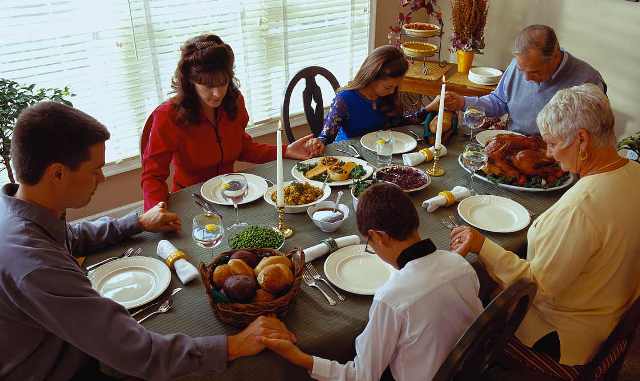
Atheists
One group giving thanks consists of those who consider theology a mere form of language without a Referent. There is no Holy Reality, they say, to which their rituals relate. Theology is nothing more than anthropology. Giving thanks to God is merely an expression of a shared cognizance that life is not entirely within our control.
These folks can utter the words, “Thank you, God.” But their disbelief in a Being exists to whom they should be grateful makes their theological sleight of hand far from satisfying.
A Controlling God
Many eager to express their indebtedness at Thanksgiving have ties to a second option in Christian theology. This view says God either directly or indirectly controls everything. When someone from this tradition says, “Thank you God for _____,” he or she can fill the blank with any event.
Such events in that blank may be joyous and hopeful. But others are utterly evil and horrific. The God of this theology is responsible for respect and rape, peace and pain, havens and holocausts. God directly or indirectly controls everything.
Most in this theological tradition express gratitude at Thanksgiving only for events they deem good. Reminding them their view implies God is also responsible for evil dampens their holiday spirit.
Classical Free-will Theology
A third theological alternative at Thanksgiving takes the form of classical free-will theology. Those in this tradition believe they sidestep theological potholes in which other believers fall. They thank God for good and benevolent acts, while blaming free agents or natural forces for evil.
A closer look at cl assical free-will theology, however, reveals that the God of this theology is culpable for failing to prevent genuine evil. Classical free-will theology says God voluntarily gives freedom to others, but God essentially retains the ability to prevent genuine evils by taking that freedom away or failing to provide it in the first place.
The God with the capacity to control others entirely by either failing to provide, withdrawing, or overriding their freedom is ultimately culpable for failing to prevent dastardly deeds. Although free creatures initiate evil in classical free-will theology, the view implies that God is ultimately culpable for whatever occurs. After all, this God has the capacity to control others entirely should God so decide.
Those affirming classical free-will theologies could insert any event into the “Thank you God for _____” phrase. The God they espouse voluntarily permits free creatures to use their freedom to cause genuine evil.
Essential Kenosis Theology at Thanksgiving
A fourth option may be more adequate as the theological framework for this year’s Thanksgiving prayer. I call this framework “essential kenosis,” because it says God necessarily loves in each moment without ever trumping creaturely agency and/or freedom.
Essential kenosis says God’s eternal nature of love includes giving freedom and/or agency to creation. Because God’s nature is this kind of love, God cannot fail to provide, cannot withdraw, and cannot override the freedom and agency God necessarily gives.
Essential kenosis theology says God’s loving actions in each moment present a spectrum of possibilities to each creature for response. This is not deistic theology, in which God sits uninvolved on the sidelines. God actively creates, provides, and interacts with creation.
Not only does the God of essential kenosis offer possibilities, God also calls creatures to respond to the best possibilities. Our loving Creator inspires and empowers creatures to love. Genuine evil results from the responses these creatures make contrary to God’s call.
Essential kenosis theology affirms at Thanksgiving that every good and perfect gift originates in God. God alone is the source of good. But the good things we enjoy also require creatures to respond well to God’s loving activity. In other words, we should thank God for being the source of goodness, but we should also thank the chef for making a great Thanksgiving meal!
Without scruples, the Christian adopting essential kenosis theology can offer thanks to God for being the source of all this good and not the one responsible for causing or allowing evil. She can also thank God for inspiring, empowering, and creating others to act in love, peace, and beauty.
Believable thanksgiving theology thanks God for good without also implying God causes or allows evil. Share on XA Short Thanksgiving Prayer
“Our loving God, in deepest gratitude, we thank You for the good you have done and are doing. We thank you for empowering and inspiring us to respond well to your perfect goodness. We are grateful now and forever. Amen!”

Newsletter
For a 200-page book of Thomas Jay Oord's best-selling writings and to receive his newsletter, add your email address...
Comments
Tom, I’m really hoping you will write a book on Essential Kenosis and Eschatology. If you manage to “give the reason for the hope that you have” (1 Peter 3:15) in a way that enables us to put our hope in God, you will have tackled what I think is the main problem with Essential Kenosis. It would (I sincerely hope) be a huge boast for it’s adoption.
Happy Thanksgiving Tom.
I do thank God for all goodness and don’t think that love allows Him to coerce thereby relieving Him of culpability in evil.
However, I, like Hans, would like to see Essential Kenosis and Eschatology developed. Not that I don’t see hope in EK as it stands, I’m just not really able to articulate it at the moment.
I’m thankful for this blog and that God predestined you (if he even exists) to write this blog.
On the Sunday before New Years I would lead a prayer before my congregation. I asked them to think about every bad thing that happened to them the previous year, every illness, every failure, every tradgey, every loss. The people would look up at me and wonder what I was doing! Then I would say “Now, thank God for having brought you through all of them to today.”
I see suffering and dying every day. Yet God helps me cope and gives me the opportunity to help those who, for no fault of their own, face death through terminal illness. I kid people by saying, “Living stinks then you die.” Then I qualify that statement. “Our role is to cope and bring comfort to those suffering the consequences of living.” Isn’t this what Jesus was saying, Love God and Love your neighbor as your self.
My thankfulness is that God has brought me through all kinds of near desasters and afforded me the opportunity to help those facing terminal illness through hospice chaplaincy and other means.
Thanks God for your faithfulness and your call upon my life.
Tom,
I would have included Eastern Pantheism in your list of Thanksgiving theologies.
The Eastern Pantheist would not express gratitude to God because in their mind God is not personal. They would not thank God for personal hardships and trials as they would tend to think of such things as mere illusion or the result of human perception. Thanksgiving for them might include meditation where oneness with the universe is sought (atman is brahman). Practicing meditation might also help the pantheist eliminate desire and self focus. And since there is no overall narrative to life, for them Thanksgiving is just another day to be at one with all.
Anyway, just wanted to kick that out there since Eastern religions are becoming more at home here in the West.
Have a great Thanksgiving!
Wow! Something to really be thankful for. Gods love and our freedom to love just like God. Putting our love into action. What a great Grace this is.
I sat today and witnessed this love at the Room in the Inn/Campus for Human Development in Nashville. Well over 350 meals served. Gods Love was surely present in this group today. The way the people who serve these meals today(like every day of the year) have chosen to love as God loves, by being filled with love for what many may call the least of creation, the poor.
Moreover, how the poor exemplify Gods Love by teaching me so much about Christ. In each face of the homeless, God is revealed to me daily. The love they have for the staff and each other is their way of being God to all those they touch. The Grace they allow to flow for just a meal and a Church pew to sleep on. Giving openly the love that influences God creation who often have so much.
In this we see just another day that those, many would call the least of Creation become so much to so many. This allowing all of creation to scream with the love of God. Let all thanks be to the creation which we enjoy so much. Mostly the acts we so for all of creation and benefit from creation!
Tom,
I appreciated your post, and am enjoying learning about the concept of essential kenosis. I certainly resonate with the reality that God does respond to us, and interact with us on more of a relational level than what a deterministic view of God would allow for. It does, however, remind us that we have a large responsibility to cooperate with God! He has definitely taken risks by entrusting the building of His kingdom into our care!
E
I am a huge fan of continually giving thanks as it orientates the self to what is truly important in life. I have never pondered the idea of who others give thanks to as I have a dynamic loving relationship with Christ. My mind wanders to Muslims that live here in the states as from what I understand they lean towards a very controlling God and how does that effect their life of giving thanks especially if they have not been able to live a comfortable life or one that is fulfilled.
“These folks can utter the words, “Thank you, God.” But their disbelief in a Being exists to whom they should be grateful makes their theological sleight of hand far from satisfying.”
I think I am close-to the Aetheist group you write of as I don’t think of God as a Being. I do believe in God. I am very thankful and I am very satisfied. I heard a conservative radio host say he didn’t understand folks who were “just thankful” without a God to be thankful to. So I think this notion is widely held by theists. But I’m here to say, I don’t think it’s so.
Thank you, Tom, for offering your ideas on which we can chew along with the great Thanksgiving meal our family will share. I’m happy that no matter what school of thought we have been born into or have, for some reason, stumbled into, we all can have a thankful heart and celebrate with gratefulness the good things of this wonderful world and the Artist who created it.
Dr. Oord,
I read with interest your post about the variety of Thanksgiving responses that several theological views might put forth. I especially noted your comments regarding free-will theism and your “essential kenosis” view. I have two basic comments: 1) I do not believe you fairly represent the free-will theist view. 2) Once fairly represented, the free-will theism view does not differ from your “essential kenosis” view.
First, you claim that free-will theism is “culpable for failing to prevent genuine evil” since in it “God essentially retains the ability to prevent genuine evils by taking that freedom away or failing to provide it in the first place.” Yes, God does have the ability to unilaterally prevent genuine evil, and he does so whenever it is the wisest course of action. You do not define any examples of how he “takes freedom away or fails to provide it,” so it is difficult to intelligently respond to that aspect. However, the God of your view also retains the ability to prevent genuine evil—consider how God limited evil in his destruction of Pharaoh and his army, the destruction of most of humanity during the days of Noah, his destruction of the peoples of Sodom and Gomorrah, his threatened destruction of Israel at the golden calf incident, his manipulation of the will of Sihon, King of Heshbon (and other kings in OT times), his favor to the exiles through Cyrus, King of Persia (no doubt some coercion there), or calling John the Baptist providentially before birth to be the forerunner of Christ (Would not Jeremiah also be under God’s providential control?). Is not this your God, too? You admit that free-will theists believe that “God voluntarily gives freedom to others” and that they can “initiate evil” (both true), but then somehow conclude that the view “implies that God is ultimately culpable for whatever occurs.” What? That is a non sequiter if ever I’ve seen one. They are responsible for evil, not God. However, the God of free-will theism uses providential intervention rarely and has created humans to function under the persuasive effect (not causation) of love and sometimes the possibility of punishments. Does not the God of “essential kenosis” do the same?
Second, and by way of summary, the God you describe as essentially kenotic is the same God of the free-will theist. What you say is true, except for the comment that God “cannot fail to provide, cannot withdraw, and cannot override the freedom and agency God necessarily gives.” The biblical examples above, however, are in direct contradiction to this statement. Yes, much of the time God rules us by persuasion and influence. However, sometimes he must unilaterally intervene, as the examples I gave illustrate.
I recommend to you the booklet The Moral Government of God by Gordon C. Olson and my own blog entry on https//mikechr2014.wordpress.com for further explanations.
Mike – Thanks for your kind response. I like how you think! Unfortunately, a short blog doesn’t do justice to the nuances that you rightly suggest I should make.
May I be so bold as to recommend my new book, The Uncontrolling Love of God? In it I offer the kinds of distinctions you’re wanting in your good response.
Blessings,
Tom